




Manuscript
263 boeken gevonden








--
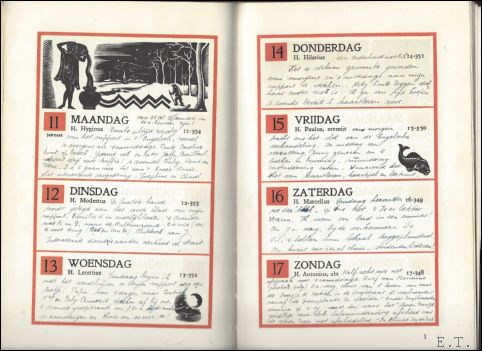
De wenteling der weken: graphisch almanak agenda voor het jaar ... 1943 / De Wenteling der Weken; Graphisch Almanak Agenda voor het jaar O.H. MCMXLIII uitgegeven door V. van Dieren te Antwerpen in de Venusstraat
Antwerpen., Van Dieren, 1943. Gebonden, Hardcover, linnen met opdruk,. met handgeschreven dagboek ; dagelijkse gebeurtenissen beschreven door Corneel Damien Perck, 1893 (Ruysbroek ) - 1972.
Almanak geillustreerd met Houtsneden van D.Acket, N. Degouy, L. De Jaegher.
Boeknummer: 51236 | Prijs: EUR 65.00
--
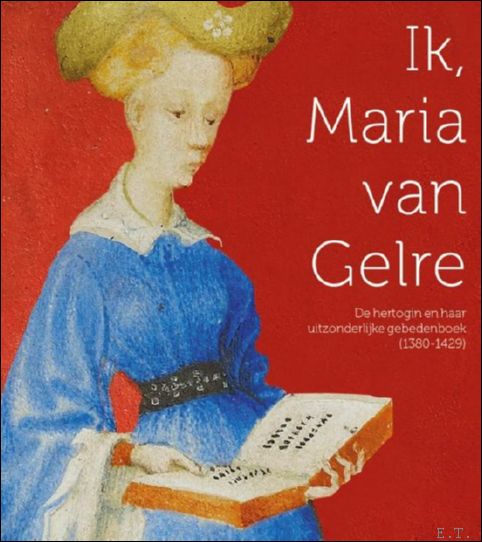
Ik, Maria van Gelre De hertogin en haar uitzonderlijke gebedenboek.
PB, 270 x 240 mm, 224 p, 125 illustrations. NL edition. ISBN: 9789462622012
Haar gebedenboek is een van de grootste Nederlandse kunstschatten van kort na 1400. Het verhaal van haar leven was tot voor kort vrijwel onbekend. Maria, hertogin van Gulik en Gelre en gravin van Zutphen, was een bijzondere vrouw. Ze is geboren in Normandie in 1380 en opgegroeid aan het Franse hof. Jarenlang was ze hofdame van Valentina Visconti, moeder van de beroemde dichter Charles d'Orleans. Die Franse wereld van geleerdheid, schoonheid en zelfverzekerdheid heeft haar gevormd. Ze had smaak, was intelligent en daadkrachtig als bestuurder, wanneer ze daarvoor de ruimte kreeg. Ik, Maria van Gelre. De hertogin en haar uitzonderlijke gebedenboek vertelt voor het eerst het levensverhaal van deze sterke vrouw van 600 jaar geleden, laat de rijke wereld zien waarin zij leefde en biedt de tot nu toe meest uitvoerige kennismaking met haar spectaculaire gebedenboek.
Boeknummer: 51978 | Prijs: EUR 24.95
--
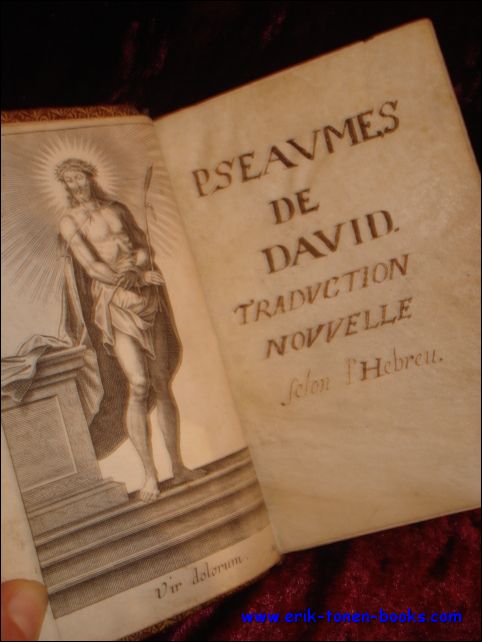
PSEAUMES DE DAVID. TRADUCTION NOUVELLE SELON L'HEBREU,
1736**. Manuscrit, relie en veau a l'impression dore et au 5 nerfs, plattes interieures decorees, gravure en frontispice, page de titre, 95 x 150mm., pages ne sont pas numerotees, 3 gravures.
Manuscrit du XVIIIe siecle. En bon etat.
Boeknummer: 17297 | Prijs: EUR 450.00
A. Michel;
Scribes, souscripteurs et temoins dans les actes prives en France (VIIe - debut du XIIe siecle),
Turnhout, Brepols, 2005. Paperback, 490 p., 99 b/w ill., 160 x 240 mm. ISBN: 9782503516288
Les souscriptions sont un des elements les plus importants des actes du Haut Moyen Age. Il s'agit en effet du principal, voire meme souvent de l'unique moyen de validation. L'etude des souscriptions permet de passer en revue la vocabulaire de la souscription, les signes graphiques mis en oeuvre (entre autres la croix, le monogramme, le chrisme...). Elle offre aussi l'occasion de mieux comprendre comment se deroulait l'elaboration, la souscription et la promulgation d'un acte, quelle etait la part d'autographie dans ces souscriptions, quels etaient les scribes qui ecrivaient ces actes. Elle remet donc en perspective la place de l'ecrit dans la societe medievale. Languages: French.
Boeknummer: 34006 | Prijs: EUR 66.00
A. Nichols;
Cambridge
Christ's College, Clare College, Corpus Christi College, Emmanuel College, Gonville and Caius College and the Fitzwilliam Museum,
Turnhout, Brepols, 2009. Paperback, 234 p., 23 b/w ill., 210 x 270 mm. ISBN: 9781905375370
Languages : English.
Boeknummer: 39076 | Prijs: EUR 82.50
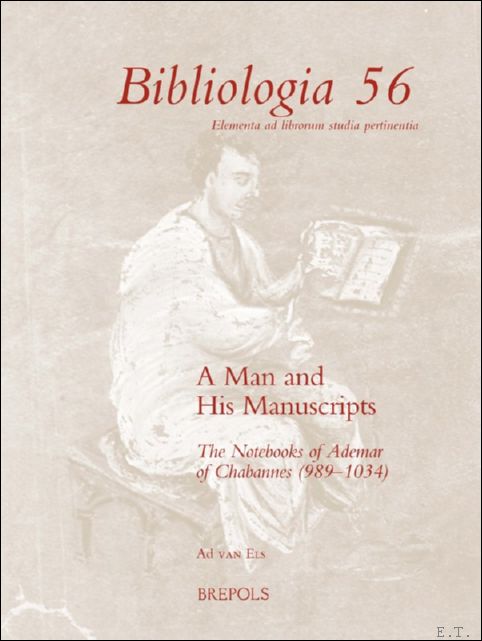
Ad van Els
A Man and His Manuscripts. The Notebooks of Ademar of Chabannes (989?1034)
Brepols, 2020. Paperback, 338 pages, Size:216 x 280 mm, Illustrations:154 col., Language: English. ISBN: 9782503587790
Summary This book is devoted to the life, autograph notebooks and manuscripts of Ademar of Chabannes (989-1034), a monk of Saint-Cybard in Angoulême and Saint-Martial in Limoges. Together Ademar's writings bear witness to his enormous productivity and to his many talents as a historian, preacher, musical composer, liturgist, teacher and artist. His notebooks in particular, assembled in manuscript VLO 15 at the University Library of Leiden, shed a unique - and neglected - light on Ademar's capacities as a teacher. An analysis of the texts in VLO 15 shows that Ademar was interested in an extended curriculum (including medicine and Arabic astrology) and that he used a variety of techniques and methods to instruct his pupils. In this study extensive attention is paid to a critical, palaeographical and codicological investigation of the extant manuscript evidence, including some newly discovered material. Ademar's versatile writing habits, his way of preparing his parchment and the flexible way in which he constructed and used his quires are discussed, with detailed descriptions of palaeographical samples and numerous colour plates. These will enable the reader to follow the investigations into past ascriptions of manuscripts to Ademar. The evidence here presented offers a more positive and nuanced view of Ademar, who in recent years has been portrayed as a solitary forger leading a marginal life at Saint-Cybard, his place of exile, on account of his attempts to promote his patron saint St Martial to a position as one of Christ's disciples. Allegedly, the ensuing conflict led to his decision to depart for the Holy Land, never to return. However, the evidence of the manuscripts makes this unlikely and proves that Ademar had every intention of returning to his beloved monastery to continue his work there. TABLE OF CONTENTS Chapter I. Ademar of Chabannes: Enigma or Open Book? Chapter II. The Corpus of Ademar's Manuscripts Chapter III. Unity in Diversity: the Manuscript Vossianus Latinus Octavo 15 Chapter IV. Recognizing Ademar's Hand Chapter V. Ademar as a Teacher: Collecting, Storing and Transmitting Knowledge Chapter VI. Epilogue Appendix 1. List of Ademar's Autographs (Texts and Drawings) Appendix 2. Summary Table of Scribal Features Appendix 3. The Stratigraphy of VLO 15: Quire and Text Diagram Appendix 4. Contents of VLO 15 Appendix 5. Tironian Notes in VLO 15 Bibliography Index of Manuscripts General Index
Boeknummer: 65754 | Prijs: EUR 95.00
Ad van Els
A Man and His Manuscripts. The Notebooks of Ademar of Chabannes (989?1034)
Brepols, 2020. Paperback, 338 pages, Size:216 x 280 mm, Illustrations:154 col., Language: English. ISBN: 9782503587790
Summary This book is devoted to the life, autograph notebooks and manuscripts of Ademar of Chabannes (989-1034), a monk of Saint-Cybard in Angoulême and Saint-Martial in Limoges. Together Ademar's writings bear witness to his enormous productivity and to his many talents as a historian, preacher, musical composer, liturgist, teacher and artist. His notebooks in particular, assembled in manuscript VLO 15 at the University Library of Leiden, shed a unique - and neglected - light on Ademar's capacities as a teacher. An analysis of the texts in VLO 15 shows that Ademar was interested in an extended curriculum (including medicine and Arabic astrology) and that he used a variety of techniques and methods to instruct his pupils. In this study extensive attention is paid to a critical, palaeographical and codicological investigation of the extant manuscript evidence, including some newly discovered material. Ademar's versatile writing habits, his way of preparing his parchment and the flexible way in which he constructed and used his quires are discussed, with detailed descriptions of palaeographical samples and numerous colour plates. These will enable the reader to follow the investigations into past ascriptions of manuscripts to Ademar. The evidence here presented offers a more positive and nuanced view of Ademar, who in recent years has been portrayed as a solitary forger leading a marginal life at Saint-Cybard, his place of exile, on account of his attempts to promote his patron saint St Martial to a position as one of Christ's disciples. Allegedly, the ensuing conflict led to his decision to depart for the Holy Land, never to return. However, the evidence of the manuscripts makes this unlikely and proves that Ademar had every intention of returning to his beloved monastery to continue his work there. TABLE OF CONTENTS Chapter I. Ademar of Chabannes: Enigma or Open Book? Chapter II. The Corpus of Ademar's Manuscripts Chapter III. Unity in Diversity: the Manuscript Vossianus Latinus Octavo 15 Chapter IV. Recognizing Ademar's Hand Chapter V. Ademar as a Teacher: Collecting, Storing and Transmitting Knowledge Chapter VI. Epilogue Appendix 1. List of Ademar's Autographs (Texts and Drawings) Appendix 2. Summary Table of Scribal Features Appendix 3. The Stratigraphy of VLO 15: Quire and Text Diagram Appendix 4. Contents of VLO 15 Appendix 5. Tironian Notes in VLO 15 Bibliography Index of Manuscripts General Index
Boeknummer: 65754 | Prijs: EUR 95.00
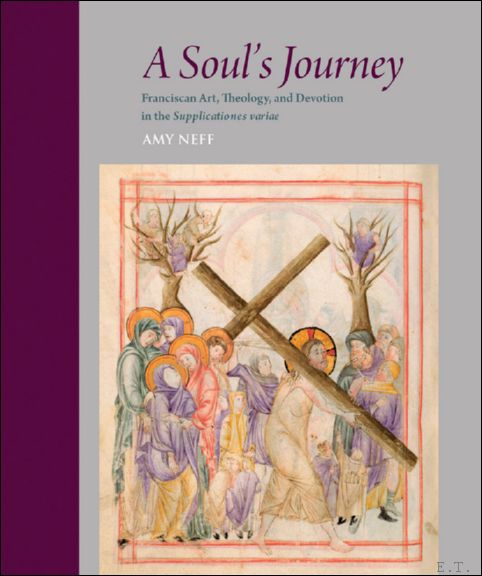
Amy Neff
A Soul's Journey. Franciscan Art, Theology, and Devotion in the Supplicationes variae
Brepols, 2019. Hardback, xviii + 354 pages, Size:245 x 297 mm, Illustrations:244 col., Language: English. ISBN: 9780888442109
Summary The Biblioteca Medicea Laurenziana in Florence houses an extraordinary manuscript: an anthology of devotional texts and images called the Supplicationes variae, dated 1293 and made for use in Genoa, that ends with a remarkable series of full-page illustrations. Although the Supplicationes does not include or illustrate Bonaventure's seminal text, The Soul's Journey into God, the manuscript is effectively the site for performance of a spiritual pilgrimage, for it is through the Franciscan theologian's mystical and poetic concepts that the deeper meanings of its images can be discerned. The decorative program of the Supplicationes mirrors Bonaventure's theology of Christ as Center. Circular in composition, the introductory drawing of the Dextera dei visualizes the book's underlying thematics of the center, while at the manuscript's actual midpoint, Christ is pictured as the Man of Sorrows, who conjoins opposites, human suffering and divine glory. Yet the manuscript is also a progressive journey of ascent. In the Supplicationes, as in Bonaventure's influential book, the path to salvation begins in the world, where humankind has fallen away from God. In its Labors of the Months and marginal drolleries, the manuscript's calendar gives unusual emphasis to the hard work, ignorance, sin, and distance from God that are part of earthly existence. But there is hope: even imperfect human nature innately reaches upwards, craving relief from misery. God answers human neediness, Bonaventure writes, with the gift of prayer, and the Supplicationes pictures this gift in an unusual miniature depicting Trinitarian grace descending on David in prayer. David becomes a model for the reader's subsequent journey through the manuscript's progressively higher levels of prayer, from the vocal prayers of psalms and offices to the contemplative prayer of reading. But it is especially remarkable that in this Franciscan book the highest level of prayer consists in contemplating images. In the sequence of tinted drawings that closes the book, text yields to image, as the reader-viewer performs a non-verbal, experiential imitatio Christi, perusing the thirty-three illustrations of Christ's life as if following the number of years of his life, and passing through Christ's humanity to salvation.
Boeknummer: 66022 | Prijs: EUR 140.00
Amy Neff
A Soul's Journey. Franciscan Art, Theology, and Devotion in the Supplicationes variae
Brepols, 2019. Hardback, xviii + 354 pages, Size:245 x 297 mm, Illustrations:244 col., Language: English. ISBN: 9780888442109
Summary The Biblioteca Medicea Laurenziana in Florence houses an extraordinary manuscript: an anthology of devotional texts and images called the Supplicationes variae, dated 1293 and made for use in Genoa, that ends with a remarkable series of full-page illustrations. Although the Supplicationes does not include or illustrate Bonaventure's seminal text, The Soul's Journey into God, the manuscript is effectively the site for performance of a spiritual pilgrimage, for it is through the Franciscan theologian's mystical and poetic concepts that the deeper meanings of its images can be discerned. The decorative program of the Supplicationes mirrors Bonaventure's theology of Christ as Center. Circular in composition, the introductory drawing of the Dextera dei visualizes the book's underlying thematics of the center, while at the manuscript's actual midpoint, Christ is pictured as the Man of Sorrows, who conjoins opposites, human suffering and divine glory. Yet the manuscript is also a progressive journey of ascent. In the Supplicationes, as in Bonaventure's influential book, the path to salvation begins in the world, where humankind has fallen away from God. In its Labors of the Months and marginal drolleries, the manuscript's calendar gives unusual emphasis to the hard work, ignorance, sin, and distance from God that are part of earthly existence. But there is hope: even imperfect human nature innately reaches upwards, craving relief from misery. God answers human neediness, Bonaventure writes, with the gift of prayer, and the Supplicationes pictures this gift in an unusual miniature depicting Trinitarian grace descending on David in prayer. David becomes a model for the reader's subsequent journey through the manuscript's progressively higher levels of prayer, from the vocal prayers of psalms and offices to the contemplative prayer of reading. But it is especially remarkable that in this Franciscan book the highest level of prayer consists in contemplating images. In the sequence of tinted drawings that closes the book, text yields to image, as the reader-viewer performs a non-verbal, experiential imitatio Christi, perusing the thirty-three illustrations of Christ's life as if following the number of years of his life, and passing through Christ's humanity to salvation.
Boeknummer: 66022 | Prijs: EUR 140.00
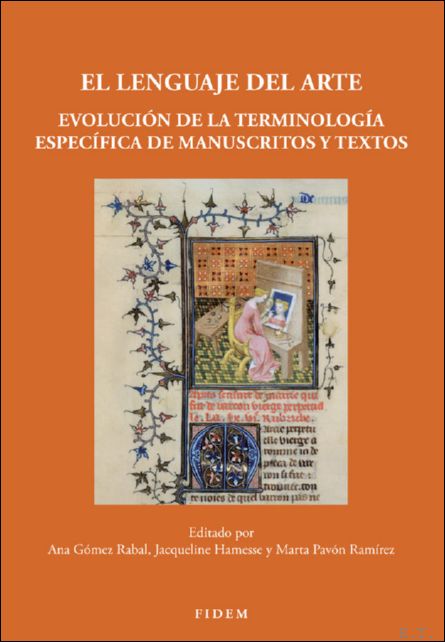
Ana Gómez Rabal, Jacqueline Hamesse, Marta Pavón Ramírez (eds)
El lenguaje del arte. Evolución de la terminología específica de manuscritos y textos
Brepols - Fidem, 2020. Paperback, xxxi + 243 pages, Size:165 x 240 mm, Illustrations:24 col., 14 tables b/w., Languages: Spanish, English, Italian. ISBN: 9782503587912
Summary El análisis de la evolución de la terminología técnica utilizada en la descripción científica de textos y manuscritos desde la Edad Media hasta nuestros días es el argumento que los responsables de este volumen pretenden poner al alcance del lector como tema de discusión y de reflexión. La particularidad del libro manuscrito reside en constituir un unicum donde los elementos materiales, estructurales y de contenido (texto e imagen) se relacionan necesariamente entre sí. Asimismo, los usos lingüísticos de los coetáneos de los manuscritos medievales para denominar su propia realidad libresca y textual se erigen en un objeto de estudio que ahonda en la consideración del manuscrito y del texto, de su forma y de su contenido, como entidades indisociables. Es recomendable, por lo tanto, un acercamiento multidisciplinar al libro manuscrito, un acercamiento que exige la colaboración de especialistas de disciplinas diversas, cada una de ellas con una terminología técnica propia. Con esa perspectiva, los trabajos presentados en estas páginas servirán como descripción del estado de la cuestión y, a la vez, como punto de partida útil para que paleógrafos, codicólogos, historiadores del arte o filólogos comparen sus respectivos modos de abordar el análisis del libro manuscrito y de sus textos, enriqueciéndose unos a otros mediante sus conocimientos propios y particulares sobre la cuestión, todo ello con el fin de favorecer la utilización de un vocabulario adecuado y, si se considera posible y conveniente, común. El presente libro tiene su origen en el Coloquio Anual de la Fédération Internationale des Instituts d'Études Médiévales organizado en Barcelona en julio de 2017, en la Institución Milá y Fontanals del CSIC. Cuenta con las contribuciones de Marina Bernasconi, Joanna Fronska, Ana Gómez Rabal, Jacqueline Hamesse, Christine Jakobi-Mirwald, Marta Pavón Ramírez, Mercè Puig Rodríguez-Escalona, Elena E. Rodríguez Díaz y Pere J. Quetglas. TABLE OF CONTENTS Ana Gómez Rabal, Jacqueline Hamesse, Marta Pavón Ramírez, Usos y utilidades en la terminología sobre los manuscritos y sus textos: razones para una discusión reflexiva Mercè Puig Rodríguez-Escalona, El laberinto de los libros y sus nombres. Procedimientos denominativos en la Alta Edad Media Pere J. Quetglas Nicolau, Para problemas, los colores. Variación e innovación en la terminología cromática de la latinidad altomedieval hispánica Elena E. Rodríguez Díaz, Reflexiones sobre terminología codicológica en España Joanna Fronska, Between Medieval and Modern Use of Terms, Patricia Stirnemann's Vocabulary and the Technical Terminology Relating to Illuminated Manuscripts in France Christine Jakobi-Mirwald, Flourish and Blotts or How We Name Salient Ornament Features in Manuscripts Marina Bernasconi Reusser, Le biblioteche digitali influenzeranno il modo di descrivere i manoscritti miniati? L'esperienza di e-codices
Boeknummer: 65854 | Prijs: EUR 50.00
Ana Gómez Rabal, Jacqueline Hamesse, Marta Pavón Ramírez (eds)
El lenguaje del arte. Evolución de la terminología específica de manuscritos y textos
Brepols - Fidem, 2020. Paperback, xxxi + 243 pages, Size:165 x 240 mm, Illustrations:24 col., 14 tables b/w., Languages: Spanish, English, Italian. ISBN: 9782503587912
Summary El análisis de la evolución de la terminología técnica utilizada en la descripción científica de textos y manuscritos desde la Edad Media hasta nuestros días es el argumento que los responsables de este volumen pretenden poner al alcance del lector como tema de discusión y de reflexión. La particularidad del libro manuscrito reside en constituir un unicum donde los elementos materiales, estructurales y de contenido (texto e imagen) se relacionan necesariamente entre sí. Asimismo, los usos lingüísticos de los coetáneos de los manuscritos medievales para denominar su propia realidad libresca y textual se erigen en un objeto de estudio que ahonda en la consideración del manuscrito y del texto, de su forma y de su contenido, como entidades indisociables. Es recomendable, por lo tanto, un acercamiento multidisciplinar al libro manuscrito, un acercamiento que exige la colaboración de especialistas de disciplinas diversas, cada una de ellas con una terminología técnica propia. Con esa perspectiva, los trabajos presentados en estas páginas servirán como descripción del estado de la cuestión y, a la vez, como punto de partida útil para que paleógrafos, codicólogos, historiadores del arte o filólogos comparen sus respectivos modos de abordar el análisis del libro manuscrito y de sus textos, enriqueciéndose unos a otros mediante sus conocimientos propios y particulares sobre la cuestión, todo ello con el fin de favorecer la utilización de un vocabulario adecuado y, si se considera posible y conveniente, común. El presente libro tiene su origen en el Coloquio Anual de la Fédération Internationale des Instituts d'Études Médiévales organizado en Barcelona en julio de 2017, en la Institución Milá y Fontanals del CSIC. Cuenta con las contribuciones de Marina Bernasconi, Joanna Fronska, Ana Gómez Rabal, Jacqueline Hamesse, Christine Jakobi-Mirwald, Marta Pavón Ramírez, Mercè Puig Rodríguez-Escalona, Elena E. Rodríguez Díaz y Pere J. Quetglas. TABLE OF CONTENTS Ana Gómez Rabal, Jacqueline Hamesse, Marta Pavón Ramírez, Usos y utilidades en la terminología sobre los manuscritos y sus textos: razones para una discusión reflexiva Mercè Puig Rodríguez-Escalona, El laberinto de los libros y sus nombres. Procedimientos denominativos en la Alta Edad Media Pere J. Quetglas Nicolau, Para problemas, los colores. Variación e innovación en la terminología cromática de la latinidad altomedieval hispánica Elena E. Rodríguez Díaz, Reflexiones sobre terminología codicológica en España Joanna Fronska, Between Medieval and Modern Use of Terms, Patricia Stirnemann's Vocabulary and the Technical Terminology Relating to Illuminated Manuscripts in France Christine Jakobi-Mirwald, Flourish and Blotts or How We Name Salient Ornament Features in Manuscripts Marina Bernasconi Reusser, Le biblioteche digitali influenzeranno il modo di descrivere i manoscritti miniati? L'esperienza di e-codices
Boeknummer: 65854 | Prijs: EUR 50.00
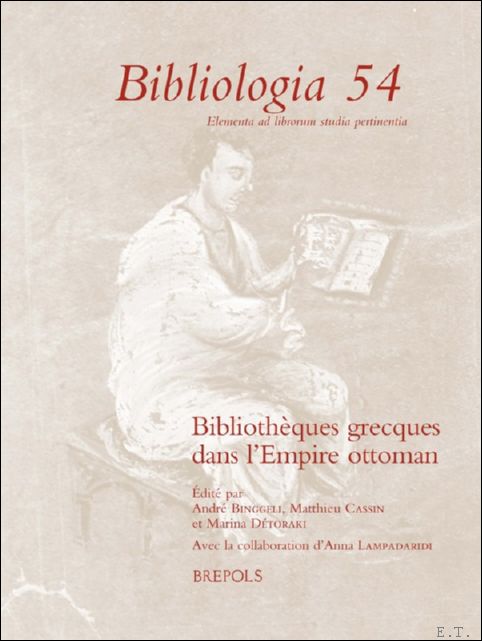
André Binggeli, Matthieu Cassin, Marina Detoraki (eds)
Bibliothèques grecques dans l'Empire ottoman
Brepols, 2020. Paperback, 456 pages, Size:216 x 280 mm, Illustrations:25 b/w, 32 col., Languages: French, English, Italian.*new ISBN: 9782503585604
Summary Le développement de l'histoire des bibliothèques, du livre et de la lecture a jusqu'à présent largement laissé de côté les bibliothèques grecques dans l'Empire ottoman, en particulier pour les XVIe et XVIIe?siècles. La rareté des sources documentaires liées aux livres et aux bibliothèques, qui se réduisent pour l'essentiel aux informations fournies par les livres eux-mêmes, explique en partie cette faille. Quelques bibliothèques, dont celle de la Sainte-Trinité de Chalki, refondée au milieu du XVIe?siècle par le patriarche Métrophane?III, fournissent cependant des dossiers documentaires riches et précieux. Le présent volume, qui rassemble la plupart des contributions de deux colloques organisés en 2015 à Rethymno et à Istanbul, est né du désir de répondre à cette double nécessité, à la fois combler un manque historiographique dans le domaine de l'histoire des bibliothèques grecques à la période moderne et comprendre le contexte historique dans lequel a pu se constituer et se développer la bibliothèque de la Sainte-Trinité de Chalki, prise comme paradigme. Le volume, construit de manière historique et géographique, s'articule en trois parties: Le Patriarcat de Constantinople et les institutions monastiques (XVIe-XVIIe?s.)?; Livres et bibliothèques à Constantinople (XVe-XVIIe's.); Circulation des livres en Méditerranée et renouveau des bibliothèques (XVIIe-XIXe?s.). Il rassemble 18 contributions, que complètent dans la plupart des cas soit l'édition de dossiers documentaires liés aux bibliothèques étudiées, soit des tableaux synthétiques qui présentent le contenu et la provenance des manuscrits concernés. TABLE OF CONTENTS André Binggeli & Matthieu Cassin, Introduction : Nouvelles perspectives pour l'histoire des bibliothèques grecques dans le monde ottoman 1. Le Patriarcat de Constantinople et les institutions monastiques (XVIe-XVIIe s.) Dimitris G. Apostolopoulos, Métrophane III Patriarche et lettré Jean-Pierre Grélois, Le Patriarcat de Constantinople vu par quelques voyageurs occidentaux (XVIe-XVIIe siècles) Iouli Evangelou, : The Founding and Restoration of Monasteries in the Ottoman Empire, 16th Century Véra Tchentsova, Les monastères des Îles des Princes et la Russie moscovite 2. Livres et bibliothèques à Constantinople (XVe-XVIIe s.) Diether Roderich Reinsch, Greek Manuscripts in the Sultan's Library Marie-Hélène Blanchet, Présence et usage de livres au patriarcat de Constantinople durant la seconde moitié du XVe et la première moitié du XVIe siècle Christian Gastgeber, Ogier Ghislain de Busbecq und seine griechischen Handschriften Stephanos Kaklamanis, « Questa è robba mia ! » : Une affaire de réclamation de manuscrits constantinoplitains à La Canée en 1596 Paul Géhin, Scribes du milieu patriarcal dans les années 1607-1610 : le protosyncelle Gabriel Soumaroupa, le didascale Anthime et le didascale Hilarion Gradenigos Pierre Augustin, In aedibus Dn. Legati Angliae Constantinopoli Galatae : Henry Savile, Samuel Slade et les manuscrits de Galata-Péra en 1610 3. Circulation des livres en Méditerranée et renouveau des bibliothèques (XVIIe-XIXe s.) Vassa Kontouma, Vestiges de la bibliothèque de Dosithée II de Jérusalem au Métochion du Saint-Sépulcre à Constantinople Anna Lampadaridi, La bibliothèque du Métochion du Saint-Sépulcre à Constantinople à travers ses inventaires anciens Niccolò Zorzi, Da Creta a Venezia passando per le Isole Ionie: per la storia del fondo di manoscritti greci della famiglia Nani ora alla Biblioteca Nazionale Marciana a Venezia Nicolas Pissis, La bibliothèque princière de Nicolas Mavrocordatos : pratiques de collection et de lecture Alexis Politis, 1800 Kostas Papadakis, The Scholarly Hieromonk Methodios Olympites and the Adventures of his Book Collection Venetia Chatzopoulou, Ignatios Sarafoglou from Adrianople, Bishop of Nazianzos: Scribe, Scholar, and Owner of Manuscripts Zisis Melissakis, "Monsieur le Ministre, je fais un catalogue de la bibliothèque de chaque couvent" : Minas Minoidis and the First Effort to Produce Systematic Catalogues of the Libraries of Mount Athos Index des manuscrits & Index général
Boeknummer: 65824 | Prijs: EUR 95.00
André Binggeli, Matthieu Cassin, Marina Detoraki (eds)
Bibliothèques grecques dans l'Empire ottoman
Brepols, 2020. Paperback, 456 pages, Size:216 x 280 mm, Illustrations:25 b/w, 32 col., Languages: French, English, Italian.*new ISBN: 9782503585604
Summary Le développement de l'histoire des bibliothèques, du livre et de la lecture a jusqu'à présent largement laissé de côté les bibliothèques grecques dans l'Empire ottoman, en particulier pour les XVIe et XVIIe?siècles. La rareté des sources documentaires liées aux livres et aux bibliothèques, qui se réduisent pour l'essentiel aux informations fournies par les livres eux-mêmes, explique en partie cette faille. Quelques bibliothèques, dont celle de la Sainte-Trinité de Chalki, refondée au milieu du XVIe?siècle par le patriarche Métrophane?III, fournissent cependant des dossiers documentaires riches et précieux. Le présent volume, qui rassemble la plupart des contributions de deux colloques organisés en 2015 à Rethymno et à Istanbul, est né du désir de répondre à cette double nécessité, à la fois combler un manque historiographique dans le domaine de l'histoire des bibliothèques grecques à la période moderne et comprendre le contexte historique dans lequel a pu se constituer et se développer la bibliothèque de la Sainte-Trinité de Chalki, prise comme paradigme. Le volume, construit de manière historique et géographique, s'articule en trois parties: Le Patriarcat de Constantinople et les institutions monastiques (XVIe-XVIIe?s.)?; Livres et bibliothèques à Constantinople (XVe-XVIIe's.); Circulation des livres en Méditerranée et renouveau des bibliothèques (XVIIe-XIXe?s.). Il rassemble 18 contributions, que complètent dans la plupart des cas soit l'édition de dossiers documentaires liés aux bibliothèques étudiées, soit des tableaux synthétiques qui présentent le contenu et la provenance des manuscrits concernés. TABLE OF CONTENTS André Binggeli & Matthieu Cassin, Introduction : Nouvelles perspectives pour l'histoire des bibliothèques grecques dans le monde ottoman 1. Le Patriarcat de Constantinople et les institutions monastiques (XVIe-XVIIe s.) Dimitris G. Apostolopoulos, Métrophane III Patriarche et lettré Jean-Pierre Grélois, Le Patriarcat de Constantinople vu par quelques voyageurs occidentaux (XVIe-XVIIe siècles) Iouli Evangelou, : The Founding and Restoration of Monasteries in the Ottoman Empire, 16th Century Véra Tchentsova, Les monastères des Îles des Princes et la Russie moscovite 2. Livres et bibliothèques à Constantinople (XVe-XVIIe s.) Diether Roderich Reinsch, Greek Manuscripts in the Sultan's Library Marie-Hélène Blanchet, Présence et usage de livres au patriarcat de Constantinople durant la seconde moitié du XVe et la première moitié du XVIe siècle Christian Gastgeber, Ogier Ghislain de Busbecq und seine griechischen Handschriften Stephanos Kaklamanis, « Questa è robba mia ! » : Une affaire de réclamation de manuscrits constantinoplitains à La Canée en 1596 Paul Géhin, Scribes du milieu patriarcal dans les années 1607-1610 : le protosyncelle Gabriel Soumaroupa, le didascale Anthime et le didascale Hilarion Gradenigos Pierre Augustin, In aedibus Dn. Legati Angliae Constantinopoli Galatae : Henry Savile, Samuel Slade et les manuscrits de Galata-Péra en 1610 3. Circulation des livres en Méditerranée et renouveau des bibliothèques (XVIIe-XIXe s.) Vassa Kontouma, Vestiges de la bibliothèque de Dosithée II de Jérusalem au Métochion du Saint-Sépulcre à Constantinople Anna Lampadaridi, La bibliothèque du Métochion du Saint-Sépulcre à Constantinople à travers ses inventaires anciens Niccolò Zorzi, Da Creta a Venezia passando per le Isole Ionie: per la storia del fondo di manoscritti greci della famiglia Nani ora alla Biblioteca Nazionale Marciana a Venezia Nicolas Pissis, La bibliothèque princière de Nicolas Mavrocordatos : pratiques de collection et de lecture Alexis Politis, 1800 Kostas Papadakis, The Scholarly Hieromonk Methodios Olympites and the Adventures of his Book Collection Venetia Chatzopoulou, Ignatios Sarafoglou from Adrianople, Bishop of Nazianzos: Scribe, Scholar, and Owner of Manuscripts Zisis Melissakis, "Monsieur le Ministre, je fais un catalogue de la bibliothèque de chaque couvent" : Minas Minoidis and the First Effort to Produce Systematic Catalogues of the Libraries of Mount Athos Index des manuscrits & Index général
Boeknummer: 65824 | Prijs: EUR 95.00
André Bouwman , Irene O'Daly
Schatten op schrift, 50 manuscripten uit middeleeuws Europa
Lannoo, 2025. Hardback, 328 pages, Illustrated. 31.5x25cm. Nederlands, *Nieuw ISBN: 9789401432870
Al eeuwenlang bestuderen we de werken van Homerus, Cicero en Lucretius. We halen inspiratie uit de verhalen van koning Artur en zijn ridders van de Ronde Tafel. Onze kennis van poëzie, filosofie, theologie en recht bouwt voort op de geschriften van klassieke en middeleeuwse geleerden. Maar zonder de ijverige monniken en kopiisten uit de middeleeuwen zouden deze teksten niet bewaard zijn. De wereld van vandaag is ondenkbaar zonder deze overdracht van geschreven kennis. Schatten op schrift laat je kennismaken met de fascinerende wereld van de middeleeuwse manuscripten. Uit de collectie van de Universitaire Bibliotheken Leiden zijn vijftig handgeschreven boeken geselecteerd: wondermooie pronkstukken maar ook snel genoteerde werken op tweederangs perkament. Achtendertig experts belichten hun inhoud, uiterlijk en vormgeving, en hun reis langs generaties lezers en bezitters naar onze tijd. De verhalen uit dit boek gidsen je door middeleeuws Europa, langs koninklijke hoven, kloosterbibliotheken, scriptoria en universiteiten. Het is een reis vol ontmoetingen met auteurs en kopiisten, verzamelaars en geleerden, met bibliothecarissen en conservatoren, aan de hand van vijftig bijzondere manuscripten. 'Middeleeuwse boeken met eigen ogen zien, is als ervaring niet te overtreffen. Maar in dit prachtboek komen deze unieke handschriften ons dichterbij dan ooit.' - Frits van Oostrom
Boeknummer: 67120 | Prijs: EUR 49.99
André Bouwman , Irene O'Daly
Schatten op schrift, 50 manuscripten uit middeleeuws Europa
Lannoo, 2025. Hardback, 328 pages, Illustrated. 31.5x25cm. Nederlands, *Nieuw ISBN: 9789401432870
Al eeuwenlang bestuderen we de werken van Homerus, Cicero en Lucretius. We halen inspiratie uit de verhalen van koning Artur en zijn ridders van de Ronde Tafel. Onze kennis van poëzie, filosofie, theologie en recht bouwt voort op de geschriften van klassieke en middeleeuwse geleerden. Maar zonder de ijverige monniken en kopiisten uit de middeleeuwen zouden deze teksten niet bewaard zijn. De wereld van vandaag is ondenkbaar zonder deze overdracht van geschreven kennis. Schatten op schrift laat je kennismaken met de fascinerende wereld van de middeleeuwse manuscripten. Uit de collectie van de Universitaire Bibliotheken Leiden zijn vijftig handgeschreven boeken geselecteerd: wondermooie pronkstukken maar ook snel genoteerde werken op tweederangs perkament. Achtendertig experts belichten hun inhoud, uiterlijk en vormgeving, en hun reis langs generaties lezers en bezitters naar onze tijd. De verhalen uit dit boek gidsen je door middeleeuws Europa, langs koninklijke hoven, kloosterbibliotheken, scriptoria en universiteiten. Het is een reis vol ontmoetingen met auteurs en kopiisten, verzamelaars en geleerden, met bibliothecarissen en conservatoren, aan de hand van vijftig bijzondere manuscripten. 'Middeleeuwse boeken met eigen ogen zien, is als ervaring niet te overtreffen. Maar in dit prachtboek komen deze unieke handschriften ons dichterbij dan ooit.' - Frits van Oostrom
Boeknummer: 67120 | Prijs: EUR 49.99
André Bouwman , Irene O'Daly
Written Treasures, 50 Manuscripts from Medieval Europe
Lannoo, 2025. Hardback, 328 pages, Illustrated. 31.5x25cm. *New. ISBN: 9789401432917
For centuries, we have studied the works of Cicero, Lucretius and Homer. We draw inspiration from the tales of King Arthur and his Knights of the Round Table. Our knowledge of poetry and philosophy, theology and law builds on the writings of classical and medieval scholars. But without the diligent monks and scribes of the Middle Ages, these texts would not have been preserved. Today's world is unimaginable without this transmission of written heritage. Written Treasures introduces you to the fascinating world of medieval manuscripts. Fifty handwritten books are selected from the collections of Leiden University Libraries ? stunning masterpieces as well as hastily copied works on second-rate parchment. Thirty-eight experts highlight their content, appearance, design and journey through generations of readers and possessors to our times. The stories in this book will guide you through medieval Europe, past royal courts, monastic libraries, scriptoria and universities. It is a journey full of encounters with authors and scribes, collectors and scholars, librarians and curators, all told through fifty extraordinary manuscripts. 'There is nothing quite like being able to see a medieval book with your own eyes, but this superb book brings us closer than ever to these unique manuscripts.' - Frits van Oostrom
Boeknummer: 67119 | Prijs: EUR 49.99
André Bouwman , Irene O'Daly
Written Treasures, 50 Manuscripts from Medieval Europe
Lannoo, 2025. Hardback, 328 pages, Illustrated. 31.5x25cm. *New. ISBN: 9789401432917
For centuries, we have studied the works of Cicero, Lucretius and Homer. We draw inspiration from the tales of King Arthur and his Knights of the Round Table. Our knowledge of poetry and philosophy, theology and law builds on the writings of classical and medieval scholars. But without the diligent monks and scribes of the Middle Ages, these texts would not have been preserved. Today's world is unimaginable without this transmission of written heritage. Written Treasures introduces you to the fascinating world of medieval manuscripts. Fifty handwritten books are selected from the collections of Leiden University Libraries ? stunning masterpieces as well as hastily copied works on second-rate parchment. Thirty-eight experts highlight their content, appearance, design and journey through generations of readers and possessors to our times. The stories in this book will guide you through medieval Europe, past royal courts, monastic libraries, scriptoria and universities. It is a journey full of encounters with authors and scribes, collectors and scholars, librarians and curators, all told through fifty extraordinary manuscripts. 'There is nothing quite like being able to see a medieval book with your own eyes, but this superb book brings us closer than ever to these unique manuscripts.' - Frits van Oostrom
Boeknummer: 67119 | Prijs: EUR 49.99
Angela Cossu, Elvira Zambardi (eds)
Uses and Reuses of Medieval Manuscript Books / Usi e riusi del libro manoscritto nel Medioevo. Southern Italy. Latin Manuscripts / Italia meridionale. Manoscritti latini
Brepols, 2026. Hardback, Pages: 280, Size:216 x 280 mm, Illustrations:24 b/w, 83 col., 8 tables b/w., Languages: Italian, French, English. ISBN: 9782503616827
Summary Manuscript books have many lives. Once assembled, they scarsely remain unchanged. They can be read and re-read, annotated, supplemented, dismembered, restored and physically moved, even more than once. The volume 'Uses and Reuses of Medieval Manuscript Books. Southern Italy. Latin Manuscripts' investigates these multiple lives through an interdisciplinary approach that embraces codicology, paleography, philology, and art history. With a focus on book circulation in Latin Southern Italy, the volume brings together 14 contributions written in three languages. Through rich and diverse case studies, the authors offer a new perspective on the history of the book. Divided into three thematic sections ('Uses and Reuses of Classical Texts, 'Manuscripts en route', 'Material and Immaterial Reuses'), the book explores the 'marginal' traces left by readers, the philological reception of texts, material transformations, and the journeys of codices. The volume reconstructs through these lenses the influence of manuscripts on medieval intellectual activity and offers insights that extend from the specific context of southern Italy to broader geographical and diachronic scales. L'histoire d'un codex commence à la fin de sa fabrication, après la copie du texte. Mais les livres manuscrits n'ont pas qu'une seule vie : ils peuvent être lus et relus, annotés, intégrés, divisés, ou encore déplacés, à plusieurs reprises, de leur lieu de conservation. Bien que non prévues dans le projet initial, les annotations marginales des lecteurs, les corrections du texte, les ajouts au décor sont des opérations qui témoignent de la réutilisation du manuscrit, et donc de son véritable usage au fil du temps. Ces traces laissées par les lecteurs permettent de reconstituer l'influence des livres dans l'activité intellectuelle, personnelle et collective dans un lieu ou une période donnée. Le volume Usi e riusi del libro manoscritto nel Medioevo meridionale s'insère dans cette dimension de renouvellement des études, avec un focus sur la circulation du livre en Italie méridionale, en particulier dans le domaine latin, par le biais d'une approche interdisciplinaire, qui allie la codicologie, la paléographie, la philologie, l'histoire de l'art et des bibliothèques. La storia di un codice inizia quando esso finisce di essere allestito e copiato. Ma i manoscritti non hanno una sola vita: vengono letti e riletti, annotati, integrati, smembrati, risarciti e, inoltre, possono essere spostati, anche più di una volta, dal loro luogo di conservazione. Benché non previste nel progetto iniziale, queste operazioni testimoniano il vero uso, e quindi riuso, del manoscritto. Le tracce lasciate dai lettori, le manipolazioni e gli spostamenti permettono così di ricostruire l'influenza dei libri nell'attività intellettuale, personale e collettiva, di un determinato luogo o periodo. Il volume Usi e riusi del libro manoscritto nel Medioevo meridionale si inserisce in questa dimensione di studio, con un focus sulla circolazione libraria nel Meridione italiano, in particolare latina, attraverso un approccio interdisciplinare che abbraccia codicologia, paleografia, filologia, storia dell'arte e storia delle biblioteche. TABLE OF CONTENTS Introduction, Angela Cossu - Elvira Zambardi I. Uses and Reuses of Classical Texts / Usi e riusi dei testi classici Adriano Russo, Riuso dei libri e trasmissione dei classici: la tradizione della prima Deca in Italia centro-meridionale Filomena Bernardo, L'Ovidius Neapolitanus: la storia di un manoscritto attraverso il suo (ri)uso come antigrafo Caterina Pentericci, El Escorial Codex T. II. 8 and the beginning of Plautine Itala recension II. Manuscripts en route / Manoscritti in viaggio Andrea Puglia, Migrazioni di codici dall'Italia meridionale alla Toscana nordoccidentale tra XI e XII secolo. Prime ricerche Valeria De Fraja - Francesco Siri, Dn 11, les craintes après les Vêpres siciliennes, et la bibliothèque de la cathédrale de Messine Claudia D'Alberto, The ?Cronico del Re Giovannino? in the Latin Barberini Fund of the Vatican Apostolic Library: Connections, Provenance and Reuses Franco Benucci - Matteo Calzone, Da Padova a Parigi: usi e riusi d'un Giuseppe Flavio nel Medioevo meridionale III. Material and Immaterial Reuses / Riusi materiali e immateriali Jérémy Delmulle, Vittore, vescovo di Capua (541-554), lettore, annotatore e revisore di codici Michele Campopiano, Storia e memoria nell'Italia meridionale. Rappresentazioni del passato e pratiche compilative: alcuni esempi e la loro influenza (secoli IX-XI) Anna Gili, Lire la «?Pantegni?» entre le xiiie et le xive siècles : le témoignage du codex Napoli, Biblioteca Nazionale Vittorio Emanuele III, VIII.D.39 dans son contexte Chiara De Angelis - Elvira Zambardi, Reuses of Reuses: The Case of Glossed Biblical Fragments at Montecassino Chiara Paniccia, Nuovi materiali per la storia della miniatura (secc. XII-XV). Le pergamene reimpiegate dell'Archivio di Stato di Viterbo e della Biblioteca degli Ardenti Closing words, Marilena Maniaci - Università di Cassino e del Lazio Meridionale
Boeknummer: 70467 | Prijs: EUR 110.00
Angela Cossu, Elvira Zambardi (eds)
Uses and Reuses of Medieval Manuscript Books / Usi e riusi del libro manoscritto nel Medioevo. Southern Italy. Latin Manuscripts / Italia meridionale. Manoscritti latini
Brepols, 2026. Hardback, Pages: 280, Size:216 x 280 mm, Illustrations:24 b/w, 83 col., 8 tables b/w., Languages: Italian, French, English. ISBN: 9782503616827
Summary Manuscript books have many lives. Once assembled, they scarsely remain unchanged. They can be read and re-read, annotated, supplemented, dismembered, restored and physically moved, even more than once. The volume 'Uses and Reuses of Medieval Manuscript Books. Southern Italy. Latin Manuscripts' investigates these multiple lives through an interdisciplinary approach that embraces codicology, paleography, philology, and art history. With a focus on book circulation in Latin Southern Italy, the volume brings together 14 contributions written in three languages. Through rich and diverse case studies, the authors offer a new perspective on the history of the book. Divided into three thematic sections ('Uses and Reuses of Classical Texts, 'Manuscripts en route', 'Material and Immaterial Reuses'), the book explores the 'marginal' traces left by readers, the philological reception of texts, material transformations, and the journeys of codices. The volume reconstructs through these lenses the influence of manuscripts on medieval intellectual activity and offers insights that extend from the specific context of southern Italy to broader geographical and diachronic scales. L'histoire d'un codex commence à la fin de sa fabrication, après la copie du texte. Mais les livres manuscrits n'ont pas qu'une seule vie : ils peuvent être lus et relus, annotés, intégrés, divisés, ou encore déplacés, à plusieurs reprises, de leur lieu de conservation. Bien que non prévues dans le projet initial, les annotations marginales des lecteurs, les corrections du texte, les ajouts au décor sont des opérations qui témoignent de la réutilisation du manuscrit, et donc de son véritable usage au fil du temps. Ces traces laissées par les lecteurs permettent de reconstituer l'influence des livres dans l'activité intellectuelle, personnelle et collective dans un lieu ou une période donnée. Le volume Usi e riusi del libro manoscritto nel Medioevo meridionale s'insère dans cette dimension de renouvellement des études, avec un focus sur la circulation du livre en Italie méridionale, en particulier dans le domaine latin, par le biais d'une approche interdisciplinaire, qui allie la codicologie, la paléographie, la philologie, l'histoire de l'art et des bibliothèques. La storia di un codice inizia quando esso finisce di essere allestito e copiato. Ma i manoscritti non hanno una sola vita: vengono letti e riletti, annotati, integrati, smembrati, risarciti e, inoltre, possono essere spostati, anche più di una volta, dal loro luogo di conservazione. Benché non previste nel progetto iniziale, queste operazioni testimoniano il vero uso, e quindi riuso, del manoscritto. Le tracce lasciate dai lettori, le manipolazioni e gli spostamenti permettono così di ricostruire l'influenza dei libri nell'attività intellettuale, personale e collettiva, di un determinato luogo o periodo. Il volume Usi e riusi del libro manoscritto nel Medioevo meridionale si inserisce in questa dimensione di studio, con un focus sulla circolazione libraria nel Meridione italiano, in particolare latina, attraverso un approccio interdisciplinare che abbraccia codicologia, paleografia, filologia, storia dell'arte e storia delle biblioteche. TABLE OF CONTENTS Introduction, Angela Cossu - Elvira Zambardi I. Uses and Reuses of Classical Texts / Usi e riusi dei testi classici Adriano Russo, Riuso dei libri e trasmissione dei classici: la tradizione della prima Deca in Italia centro-meridionale Filomena Bernardo, L'Ovidius Neapolitanus: la storia di un manoscritto attraverso il suo (ri)uso come antigrafo Caterina Pentericci, El Escorial Codex T. II. 8 and the beginning of Plautine Itala recension II. Manuscripts en route / Manoscritti in viaggio Andrea Puglia, Migrazioni di codici dall'Italia meridionale alla Toscana nordoccidentale tra XI e XII secolo. Prime ricerche Valeria De Fraja - Francesco Siri, Dn 11, les craintes après les Vêpres siciliennes, et la bibliothèque de la cathédrale de Messine Claudia D'Alberto, The ?Cronico del Re Giovannino? in the Latin Barberini Fund of the Vatican Apostolic Library: Connections, Provenance and Reuses Franco Benucci - Matteo Calzone, Da Padova a Parigi: usi e riusi d'un Giuseppe Flavio nel Medioevo meridionale III. Material and Immaterial Reuses / Riusi materiali e immateriali Jérémy Delmulle, Vittore, vescovo di Capua (541-554), lettore, annotatore e revisore di codici Michele Campopiano, Storia e memoria nell'Italia meridionale. Rappresentazioni del passato e pratiche compilative: alcuni esempi e la loro influenza (secoli IX-XI) Anna Gili, Lire la «?Pantegni?» entre le xiiie et le xive siècles : le témoignage du codex Napoli, Biblioteca Nazionale Vittorio Emanuele III, VIII.D.39 dans son contexte Chiara De Angelis - Elvira Zambardi, Reuses of Reuses: The Case of Glossed Biblical Fragments at Montecassino Chiara Paniccia, Nuovi materiali per la storia della miniatura (secc. XII-XV). Le pergamene reimpiegate dell'Archivio di Stato di Viterbo e della Biblioteca degli Ardenti Closing words, Marilena Maniaci - Università di Cassino e del Lazio Meridionale
Boeknummer: 70467 | Prijs: EUR 110.00
Angela Daneu Lattanzi, Marguerite Debae
Italiaanse miniaturen van de 10de tot de 16de eeuw
Koninklijke Bibliotheek Albert I, 1969. Paperback, 93 pagina's, 25.5 x 17.5 cm, NL. *goede staat
. Tentoonstellingscatalogus. z/w illustraties buiten de tekst Boeknummer: 69730 | Prijs: EUR 18.00
. Tentoonstellingscatalogus. z/w illustraties buiten de tekst Boeknummer: 69730 | Prijs: EUR 18.00
Angela Daneu Lattanzi, Marguerite Debae
Italiaanse miniaturen van de 10de tot de 16de eeuw
Koninklijke Bibliotheek Albert I, 1969. Paperback, 93 pagina's, 25.5 x 17.5 cm, NL. *goede staat
. Tentoonstellingscatalogus. z/w illustraties buiten de tekst Boeknummer: 69730 | Prijs: EUR 18.00
. Tentoonstellingscatalogus. z/w illustraties buiten de tekst Boeknummer: 69730 | Prijs: EUR 18.00
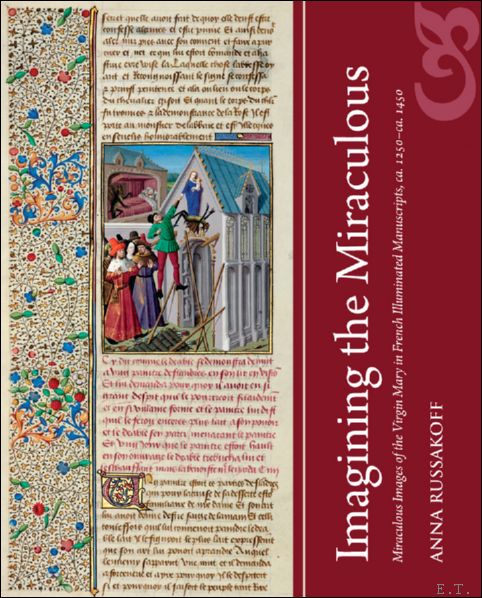
Anna Russakoff
Imagining the Miraculous: Miraculous Images of the Virgin Mary in French Illuminated Manuscripts, ca. 1250-ca. 1450
Brepols, 2019. Hardback, xvii + 194 pages, Size:205 x 255 mm, Illustrations:94 b/w, Language: English. ISBN: 9780888442154
Summary This is not a book about miraculous images of the Virgin Mary (be they icons, sculptures, altarpieces, or reliquaries) but about their representations in French illuminated manuscripts from ca. 1250 to ca. 1450. Most of these depictions of the Virgin Mary cannot be identified even tangentially with particular surviving images (such as the Virgins of Rocamadour, Soissons, Chartres, and Laon). Rather, these illustrations point to the ubiquity of local miraculous Marian images in devotional practices from the thirteenth to the fifteenth century in French-speaking regions. This book analyzes depictions of material images and the animated miracles they perform, and traces their evolution from the earliest narratives of Marian miracles written in Old French to texts and images produced at the Burgundian court of the late Middle Ages. Beginning with the most extensive compilation of Gautier de Coinci's Miracles de Nostre Dame, the study then examines lesser-known anonymous works such as the Vie des Pères and encyclopedic collections including the French version of Vincent of Beauvais' Speculum historiale and the Ci nous dit, as well as a theatrical production of the Miracles de Nostre Dame par personnages, before concluding with the prose rendering of the Miracles by Jean Miélot. Imagining the Miraculous explores the ways in which these works depict physical images, such as panel paintings and sculptures, on the manuscript page. Each chapter provides a detailed iconographical analysis of the miniatures and the diverse techniques of visual narrative they harness, serving also to show how attentive reading of their reception can help us understand how the miniatures themselves might have led viewers to imagine the miraculous moment when an image comes to life.
Boeknummer: 66047 | Prijs: EUR 90.00
Anna Russakoff
Imagining the Miraculous: Miraculous Images of the Virgin Mary in French Illuminated Manuscripts, ca. 1250-ca. 1450
Brepols, 2019. Hardback, xvii + 194 pages, Size:205 x 255 mm, Illustrations:94 b/w, Language: English. ISBN: 9780888442154
Summary This is not a book about miraculous images of the Virgin Mary (be they icons, sculptures, altarpieces, or reliquaries) but about their representations in French illuminated manuscripts from ca. 1250 to ca. 1450. Most of these depictions of the Virgin Mary cannot be identified even tangentially with particular surviving images (such as the Virgins of Rocamadour, Soissons, Chartres, and Laon). Rather, these illustrations point to the ubiquity of local miraculous Marian images in devotional practices from the thirteenth to the fifteenth century in French-speaking regions. This book analyzes depictions of material images and the animated miracles they perform, and traces their evolution from the earliest narratives of Marian miracles written in Old French to texts and images produced at the Burgundian court of the late Middle Ages. Beginning with the most extensive compilation of Gautier de Coinci's Miracles de Nostre Dame, the study then examines lesser-known anonymous works such as the Vie des Pères and encyclopedic collections including the French version of Vincent of Beauvais' Speculum historiale and the Ci nous dit, as well as a theatrical production of the Miracles de Nostre Dame par personnages, before concluding with the prose rendering of the Miracles by Jean Miélot. Imagining the Miraculous explores the ways in which these works depict physical images, such as panel paintings and sculptures, on the manuscript page. Each chapter provides a detailed iconographical analysis of the miniatures and the diverse techniques of visual narrative they harness, serving also to show how attentive reading of their reception can help us understand how the miniatures themselves might have led viewers to imagine the miraculous moment when an image comes to life.
Boeknummer: 66047 | Prijs: EUR 90.00
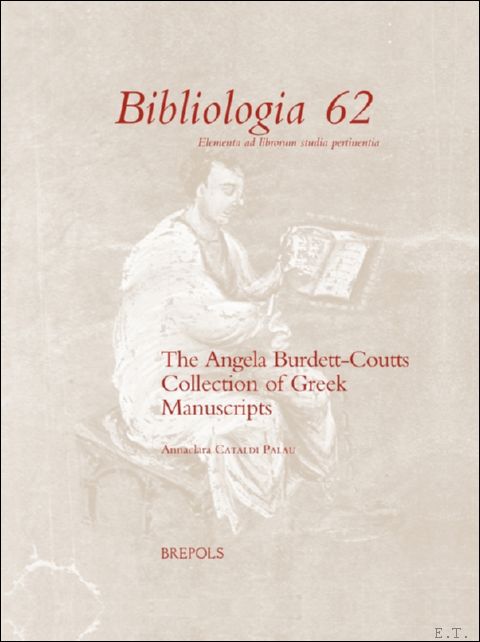
Annaclara Cataldi Palau
The Angela Burdett-Coutts Collection of Greek Manuscripts
Brepols, 2021. Hardback, 472 pages, Size:216 x 280 mm, Illustrations:80 b/w, 102 col., Language: English. ISBN: 9782503593760
Summary Baroness Angela Burdett-Coutts (1814-1906), descendant of a wealthy and well-known family of bankers, inherited quite young, through a series of unpredictable circumstances, the enormous fortune of Thomas Coutts, her maternal grand-father. She spent most of her long life in London, where she occupied a prominent position in society, becoming well-known not only for her splendid life-style and her important literary and political acquaintances, as, for instance, Charles Dickens and Admiral Nelson, but also for her active role as a philanthropist. This book explores a little-known side of her life; although she did not know Greek, she became the owner of ca. 100 Greek manuscripts, mostly theological, datable between the tenth and the sixteenth century, a part of which she donated to Highgate School. The manuscripts, with all the Baroness's possessions, were dispersed at auction in 1921 and in 1987 and are now mainly divided between American and European University Libraries. This book has identified for the first time the Baroness's Greek manuscripts, located and described them in detail, with special attention to their script style and their origin, adding to their description one or two plates of each codex. TABLE OF CONTENTS Part I: History of the collection Chapter 1: Angela Burdett-Coutts' life. The formation of her collection of Greek manuscripts Chapter 2: The sale of Angela Burdett-Coutts collection of Greek manuscripts Chapter 3: Angela Burdett-Coutts Greek manuscripts Chapter 4: Provenance of the Burdett-Coutts manuscripts Chapter 5: List and description of Burdett-Coutts manuscripts from Epirote monasteries or churches Chapter 6: Burdett-Coutts manuscripts from the Meteora. Their present location in various libraries Chapter 7: Two Burdett-Coutts manuscripts with plaques from the Russian monastery of Solovki applied to the bindings Chapter 8: Ann Arbor, University of Michigan Library, SCRC, Mich. Ms. 15 (B.-C. III. 5), a manuscript belonging to the Ferrar Group ('Family 13') Chapter 9: Burdett-Coutts manuscripts with a decoration Chapter 10: Burdett-Coutts manuscripts with a remarkable decoration Part II: Description of the Burdett-Coutts manuscripts Description of the Burdett-Coutts manuscripts in Ann Arbor Description of the Burdett-Coutts manuscripts in Athens Description of the Burdett-Coutts manuscripts in various libraries The lost manuscripts Appendix Index of Manuscripts and Illustrations Index of Names
Boeknummer: 65114 | Prijs: EUR 90.00
Annaclara Cataldi Palau
The Angela Burdett-Coutts Collection of Greek Manuscripts
Brepols, 2021. Hardback, 472 pages, Size:216 x 280 mm, Illustrations:80 b/w, 102 col., Language: English. ISBN: 9782503593760
Summary Baroness Angela Burdett-Coutts (1814-1906), descendant of a wealthy and well-known family of bankers, inherited quite young, through a series of unpredictable circumstances, the enormous fortune of Thomas Coutts, her maternal grand-father. She spent most of her long life in London, where she occupied a prominent position in society, becoming well-known not only for her splendid life-style and her important literary and political acquaintances, as, for instance, Charles Dickens and Admiral Nelson, but also for her active role as a philanthropist. This book explores a little-known side of her life; although she did not know Greek, she became the owner of ca. 100 Greek manuscripts, mostly theological, datable between the tenth and the sixteenth century, a part of which she donated to Highgate School. The manuscripts, with all the Baroness's possessions, were dispersed at auction in 1921 and in 1987 and are now mainly divided between American and European University Libraries. This book has identified for the first time the Baroness's Greek manuscripts, located and described them in detail, with special attention to their script style and their origin, adding to their description one or two plates of each codex. TABLE OF CONTENTS Part I: History of the collection Chapter 1: Angela Burdett-Coutts' life. The formation of her collection of Greek manuscripts Chapter 2: The sale of Angela Burdett-Coutts collection of Greek manuscripts Chapter 3: Angela Burdett-Coutts Greek manuscripts Chapter 4: Provenance of the Burdett-Coutts manuscripts Chapter 5: List and description of Burdett-Coutts manuscripts from Epirote monasteries or churches Chapter 6: Burdett-Coutts manuscripts from the Meteora. Their present location in various libraries Chapter 7: Two Burdett-Coutts manuscripts with plaques from the Russian monastery of Solovki applied to the bindings Chapter 8: Ann Arbor, University of Michigan Library, SCRC, Mich. Ms. 15 (B.-C. III. 5), a manuscript belonging to the Ferrar Group ('Family 13') Chapter 9: Burdett-Coutts manuscripts with a decoration Chapter 10: Burdett-Coutts manuscripts with a remarkable decoration Part II: Description of the Burdett-Coutts manuscripts Description of the Burdett-Coutts manuscripts in Ann Arbor Description of the Burdett-Coutts manuscripts in Athens Description of the Burdett-Coutts manuscripts in various libraries The lost manuscripts Appendix Index of Manuscripts and Illustrations Index of Names
Boeknummer: 65114 | Prijs: EUR 90.00
Anne-Marie Cheny, Philippe Trélat (eds)
Biographie d'un manuscrit impérial. Le Turonensis 980, de Constantinople à Tours, via Chypre
Brepols, 2026. Hardback, Pages: 385, Size:156 x 234 mm, Illustrations:18 b/w, 10 col., 7 tables b/w., Language(s):French, English. ISBN: 9782503621494
Summary Du palais impérial de Constantinople au rayonnage feutré de la bibliothèque municipale de Tours, en passant par Chypre, la Provence et Paris, le manuscrit Turonensis 980 traverse les siècles, les lieux et les cultures. Commandé au Xe siècle par l'empereur byzantin Constantin VII Porphyrogénète, ce volume d'encyclopédie impériale - probablement issu de la prestigieuse bibliothèque de la cour - a connu un destin aussi singulier que fascinant. Les actes du colloque international « Le destin d'un manuscrit. Du vice et de la vertu : de Constantinople à Tours, via Chypre », tenu à Tours en 2021, rassemblent les contributions de spécialistes venus d'horizons variés. À travers des approches croisées - philologiques, historiques, codicologiques -, ils éclairent la genèse, les usages, les pérégrinations et les réappropriations successives de ce témoin précieux de l'érudition byzantine. Qu'il s'agisse des méthodes de compilation de Constantin VII, des usages intellectuels de l'île de Chypre à la Renaissance ou encore de la redécouverte du manuscrit par Peiresc et Henri de Valois au XVIIe siècle, cet ouvrage offre une plongée érudite dans le destin mouvant d'un texte hors du commun. Dépassant la seule étude d'un manuscrit, ce volume interroge les liens multiples entre pouvoir, savoir et mémoire écrite dans l'espace méditerranéen. Il rend hommage à ceux qui, hier comme aujourd'hui, ont contribué à sa transmission. TABLE OF CONTENTS Introduction (Paul Magdalino) Constantinople 1 The Turonensis 980 (Codex Peirescianus) as the Key Witness to the Excerpta Constantiniana (András Németh) 2 Les sources des Excerpta constantiniens à la lumière de celles de la Bibliothèque de Photius. Quelques réflexions (Filippo Ronconi) 3 The Polybian Excerpts in the Turonensis 980 (Codex Peirescianus) as Interpretation of Suda's Working Methods (Francesco Maria Ferrara) 4 Les Excerpta Constantiniana et le métier d'historien au xe siècle : le livre VI du Theophanus Continuatus et le poème de Léon le Diacre (Juan Signes Codoñer) Chypre 5 La circulation des textes profanes grecs à Chypre (xiiie-xvie siècle) : un désert culturel ? (Philippe Trélat) 6 Byzantine Orthodox Culture in a Multi-confessionnal Island During the Renaissance (Chrysovalantis Kyriacou) Provence, Tours 7 Peiresc et les manuscrits de Constantin Porphyrogénète. Intérêt, acquisition, analyse et mise à disposition (Anne-Marie Cheny) 8 Autour de l'édition d'Henri de Valois en 1634 (Jean-Pierre Grélois) 9 Comment le manuscrit de Lesdiguières est devenu le Turonensis 980 (Régis Rech) Appendices A Description of Turonensis 980 (András Németh) B Paratexts of Turonensis 980 (András Németh) C Images of Turonensis 980 (András Németh) D Biographie d'Henri Valois (Paris, 10.09.1603-07.05.1676) (Jean-Pierre Grélois) Liste des contributeurs et de la contributrice Index
Boeknummer: 70445 | Prijs: EUR 115.00
Anne-Marie Cheny, Philippe Trélat (eds)
Biographie d'un manuscrit impérial. Le Turonensis 980, de Constantinople à Tours, via Chypre
Brepols, 2026. Hardback, Pages: 385, Size:156 x 234 mm, Illustrations:18 b/w, 10 col., 7 tables b/w., Language(s):French, English. ISBN: 9782503621494
Summary Du palais impérial de Constantinople au rayonnage feutré de la bibliothèque municipale de Tours, en passant par Chypre, la Provence et Paris, le manuscrit Turonensis 980 traverse les siècles, les lieux et les cultures. Commandé au Xe siècle par l'empereur byzantin Constantin VII Porphyrogénète, ce volume d'encyclopédie impériale - probablement issu de la prestigieuse bibliothèque de la cour - a connu un destin aussi singulier que fascinant. Les actes du colloque international « Le destin d'un manuscrit. Du vice et de la vertu : de Constantinople à Tours, via Chypre », tenu à Tours en 2021, rassemblent les contributions de spécialistes venus d'horizons variés. À travers des approches croisées - philologiques, historiques, codicologiques -, ils éclairent la genèse, les usages, les pérégrinations et les réappropriations successives de ce témoin précieux de l'érudition byzantine. Qu'il s'agisse des méthodes de compilation de Constantin VII, des usages intellectuels de l'île de Chypre à la Renaissance ou encore de la redécouverte du manuscrit par Peiresc et Henri de Valois au XVIIe siècle, cet ouvrage offre une plongée érudite dans le destin mouvant d'un texte hors du commun. Dépassant la seule étude d'un manuscrit, ce volume interroge les liens multiples entre pouvoir, savoir et mémoire écrite dans l'espace méditerranéen. Il rend hommage à ceux qui, hier comme aujourd'hui, ont contribué à sa transmission. TABLE OF CONTENTS Introduction (Paul Magdalino) Constantinople 1 The Turonensis 980 (Codex Peirescianus) as the Key Witness to the Excerpta Constantiniana (András Németh) 2 Les sources des Excerpta constantiniens à la lumière de celles de la Bibliothèque de Photius. Quelques réflexions (Filippo Ronconi) 3 The Polybian Excerpts in the Turonensis 980 (Codex Peirescianus) as Interpretation of Suda's Working Methods (Francesco Maria Ferrara) 4 Les Excerpta Constantiniana et le métier d'historien au xe siècle : le livre VI du Theophanus Continuatus et le poème de Léon le Diacre (Juan Signes Codoñer) Chypre 5 La circulation des textes profanes grecs à Chypre (xiiie-xvie siècle) : un désert culturel ? (Philippe Trélat) 6 Byzantine Orthodox Culture in a Multi-confessionnal Island During the Renaissance (Chrysovalantis Kyriacou) Provence, Tours 7 Peiresc et les manuscrits de Constantin Porphyrogénète. Intérêt, acquisition, analyse et mise à disposition (Anne-Marie Cheny) 8 Autour de l'édition d'Henri de Valois en 1634 (Jean-Pierre Grélois) 9 Comment le manuscrit de Lesdiguières est devenu le Turonensis 980 (Régis Rech) Appendices A Description of Turonensis 980 (András Németh) B Paratexts of Turonensis 980 (András Németh) C Images of Turonensis 980 (András Németh) D Biographie d'Henri Valois (Paris, 10.09.1603-07.05.1676) (Jean-Pierre Grélois) Liste des contributeurs et de la contributrice Index
Boeknummer: 70445 | Prijs: EUR 115.00
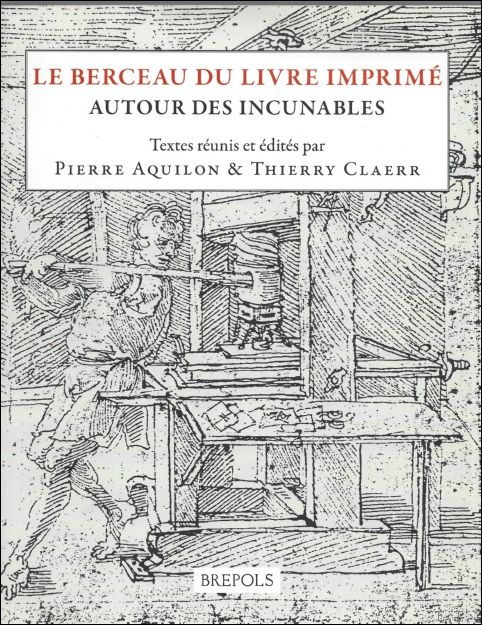
Aquilon, T. Claerr (eds.)
Le Berceau du livre imprime. Autour des incunables
Brepols - Harvey Miller, 2010. Softcover, 380 p., 100 b/w ill., 210 x 270 mm, Languages: French, German. ISBN: 9782503525754
Cet ouvrage réunit les actes des communications regroupées en fonction de leurs contenus respectifs en quatre sections. La première est consacrée à la genèse et au développement des inventaires régionaux et nationaux. La seconde réunit les communications concernant la mise en texte des savoirs. La troisième section a pour objet l?étude des exemplaires et de leurs particularités. La quatrième section ressemble des communications concernant les perspectives nouvelles offertes à la recherche par l?informatisation des catalogues d?incunables et le traitement numérique de leurs données. Table des matières: Jean-Marie Arnoult, Le catalogue des incunables des bibliothèques de la Région Champagne-Ardenne - Dominique Frasson-Cochet, Les coutumes du Bourbonnais de 1498: sur 3 exemplaires composites - Geneviève Guilleminot-Chrétien & Magali Vène, Imprimeurs et libraires parisiens du XVIe siècle: les manuscrits de Philippe Renouard à l?épreuve des ressources en ligne - Martine Lefèvre, Les incunables du Marquis de Paulmy - Yves Jocteur Montrozier, De l?inventaire au catalogue, le destin des incunables de la Grande-Chartreuse - Valérie Neveu, La Vita Christi du Pseudo-Bonaventure et un ?lectionnaire? en français: deux unica de la Bibliothèque Municipale de Rouen - Ezio Ornato, Division du travail et pratiques de composition dans l?atelier de Günther Zainer (Augsburg, 1469) - Annie Taurant-Boulicaut, À propos de deux éditions scolaires parisiennes - Ludo Vandamme, Colard Mansion et le monde du livre à Bruges - Lauriane Firoben & Nicolas Petit, Icono 15, base iconographique des incunables illustrés français de la Bibliothèque nationale de France - Bettina Wagner, Inkunabeln im Internet. Online-Projekte zur Katalogisierung und Digitalisierung in Deutschland - Philippe Nieto, Cartographie de l?imprimerie au XVe siècle. Un exemple d?application de la base bibliographique ISTC à la recherche en histoire du livre - Thierry Claerr, Les monographies d?imprimeurs et libraires parisiens des XVe et XVIe siècles - Karine Rebmeister-Klein, Les marques de possession, une approche de l?histoire des bibliothèques - Marie-Claire Waille, Les incunables de la Bibliothèque Municipale de Besançon. Catalogue, provenances, marques de possession: quelques pistes - Guy Lanoë, L?apport de l?analyse des reliures (1470-1530) à l?histoire des bibliothèques - Emmanuelle Toulet, Les collections d?incunables et d?éditions du XVIe siècle de la Région Picardie - Malcolm Walsby, Les premiers temps de l?imprimé vernaculaire français - Yann Sordet, Les incunables chez quelques collectionneurs français des XVIIe et XVIIIe siècles: élection, distinction, manipulations
Boeknummer: 53603 | Prijs: EUR 95.00
Avril, Francois
L'Enluminure a l'Epoque Gothique: 1200-1420
Bibliotheque De L'image, 1995. Couverture souple, 143 pages, 32 x 24 cm, FR. *En bon état . ISBN: 9782909808130
L'Enluminure a l'Epoque Gothique: 1200-1420
Boeknummer: 69958 | Prijs: EUR 15.00
Avril, Francois
L'Enluminure a l'Epoque Gothique: 1200-1420
Bibliotheque De L'image, 1995. Couverture souple, 143 pages, 32 x 24 cm, FR. *En bon état . ISBN: 9782909808130
L'Enluminure a l'Epoque Gothique: 1200-1420
Boeknummer: 69958 | Prijs: EUR 15.00
B. Brinkmann;
Die Flamische Buchmalerei am Ende des Burgunderreichs. Der Meister des Dresdener Gebetbuchs und die Miniaturisten seiner Zeit, 2 volumes
Turnhout, Brepols, 1998. Hardback, 760 pages., incl. 63 colour + 474 bl/w ill., 210 x 297 mm. in 2 volumes ISBN: 9782503505657
The present publication offers the first comprehensive survey of manuscript illumination in Flanders during a period of rapid and exciting transition: the reign of Charles the Bold and the time following his death until c.1530. This is the area of the so-called Ghent-Bruges School when illuminators set out to develop a completely new aesthetic approach to the painted page. The author traces the origins of this development and demonstrates how it is rooted in historical and economical changes of the period. He does so by investigating in detail the careers of half a dozen illuminators, the most prolific figure among them the Master of the Dresden Prayerbook. Being long since recognized as one of the inventors of genre painting on the basis of his remarkable sense for psychological observation, the present study identifies him as a great landscape painter, too. In more than ten years of research the author has been able to enlarge the corpus of works attributable to the Dresden Master from 20 to 61. Among the newly discovered items are more than a dozen dated or datable works, which for the first time allow to establish a sound chronology of his oeuvre. Thus, in addition to reconstructing the biographies of several major artists and presenting ideas about the market for and the production of manuscripts in Flanders, the study will make a hitherto largely unknown body of material available to scholars, art lovers and all those interested in the history of Flanders in the 15th and 16th century. Ein Gebetbuch, das sich heute in Dresden befindet, hat dem vielleicht bemerkenswertesten flamischen Buchmaler des spaten Mittelalters seinen kunsthistorischen Notnamen gegeben. Als einfuhlsamer Psychologe besticht dieser Kunstler ebenso wie als temperamentvoller Erzuhler, er gestaltet stimmungsvolle Landschaften ebenso geschickt wie lebendige Genreszenen und ist nicht zuletzt ein begnadeter Kolorist. Von den Zeitgenossen, die oft nur Vorlagen reproduzieren, hebt ihn seine besondere Gabe ab, neue Bilderfindungen zu schaffen. Deshalb bevorzugten ihn seine Auftraggeber besonders dann, wenn es galt, Szenen aus der Antike oder der zeitgenussischen Geschichte, entlegene Episoden des Alten Testaments oder eine Dichtung der Christine de Pizan zu illustrieren. Dem Kunsthistoriker Bode Brinkmann ist es in jahrelanger Arbeit gelungen, diesem huchst produktiven Anonymus ?ber 60 Werke zuzuweisen, darunter nicht nur illuminierte Handschriften, sondern auch Kupferstiche und kolorierte Federzeichnungen in Fr?drucken. In seinem nun vorliegenden Buch ludt der Autor den Leser dazu ein, mit ihm die Fahrte des unbekannten Meisters zu verfolgen. Die Reise Beginnt gegen 1450 mit der Lehrzeit in Utrecht und fuhrt uber Gesellenjahre und das erste eigene Atelier in Brugge sowie einen maglichen Abstecher nach Gent schlieBlich uber Tournai bis nach Amiens. Nach einigen Jahren in der Hauptstadt der Pikardie ist der Dresdener Meister dann wieder nach Brugge zuruckgekehrt, wo er bis gegen 1520 noch mehrere Jahrzehnte lang fruchtbar gewirkt hat. Schritt furr Schritt wird die Rekonstruktion einer Kunstlerbiographie. Viele seiner Werke hat der Dresdenerer Gebetbuchmeister ganz alleine geschaffen; in manchen jedoch arbeitet er mit anderen Kunstlern seiner Zeit zusammen: mit beruhmten Tafelmalern wie Gerard David und Simon Marmion, aber auch mit eine Reihe von Kleinmeistern, die hier zum ersten Mal benannt und charakterisiert werden. Infolgedessen geht die vorliegen. Languages: German.
Boeknummer: 33720 | Prijs: EUR 75.00
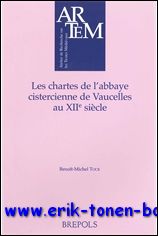
B. Tock (ed.);
Les chartes de l'abbaye cistercienne de Vaucelles au XIIe siecle ,
Turnhout, Brepols, 2010. Paperback, 300 pages, 14 colour ill., 156 x 234 mm. ISBN: 9782503531564
L'abbaye de Vaucelles, pres de Cambrai, etait une des plus grandes abbayes cisterciennes, comptant parfois des centaines de moines et convers. L'edition des chartes de l'abbaye pour le XIIe siecle (176 chartes, dont 125 inedites) permet de voir la croissance de l'abbaye, l'extension de son domaine, l'etablissement d'un reseau de relations sociales (comtes de Flandre, de Hainaut, de Vermandois, de Soissons..., duc de Lotharingie, eveques de Cambrai et de Noyon), la mise en place d'une politique d'exemptions de peages. Dynamique, l'abbaye commence aussi progressivement a ecrire elle-meme les chartes qu'elle recoit, et developpe un archivage systematique. Languages: French.
Boeknummer: 34009 | Prijs: EUR 66.00
B.-M. Tock, M. Courtois, M.-J. Gasse-Grandjean, P. Demonty;
La diplomatique francaise du Haut Moyen Age. Inventaire des chartes originales anterieures a 1121 conservees en France,
Turnhout, Brepols, 2001. Paperback, XVIII+858 p., 160 x 240 mm. ISBN: 9782503510019
Cet ouvrage donne la table et les index de la base de donnees de l'ARTEM de Nancy, relatifs a quelque 4.800 chartes originales anterieures a 1121 et conservees en France. Cette table et ces index se constituent comme suit: - Introduction developpee, presentant l'evolution, au moins quantitative, de la diplomatique francaise (evolution chronologique, diversites regionales et typlogiques). - Table generale des chartes, par numero de classement de l'ARTEM. - Differents index: chronologique, auteurs, destinataires, genre diplomatique, sceaux. Ces index renvoient a la liste des chartes.Languages: French.
Boeknummer: 34001 | Prijs: EUR 102.00
Backhouse, Janet.
The Isabella Breviary
British Library, 1993. Softcover, 64 pages, Colour and b/w. illustrations, 27.5 x 22 cm, EN. *As new. ISBN: 9780712302692
The Isabella Breviary
Boeknummer: 69381 | Prijs: EUR 10.00
Backhouse, Janet.
The Isabella Breviary
British Library, 1993. Softcover, 64 pages, Colour and b/w. illustrations, 27.5 x 22 cm, EN. *As new. ISBN: 9780712302692
The Isabella Breviary
Boeknummer: 69381 | Prijs: EUR 10.00
Becco, Stéphane (edit.) / Fulacher, Pascal (edit.) / Neplaz, Johanna (edit.) / e.a.
Museum der letteren en manuscripten van Brussel : bloemlezing.
Tielt, Lannoo, 2011. Gebonden, linnen met stofomslag, 335pp., 23x28cm., rijkelijk geïllustr. in kleur en z/w., NL. *Zeer goede staat. ISBN: 9782873867645
Brieven, manuscripten, tekeningen en oude boeken... zoveel unieke documenten die ons dichterbij al deze auteurs brengen, die de geschiedenis van de mensheid hebben gemaakt. Met veel geduld bijeengebracht en verzameld door de teams van Het Museum der letteren en manuscripten, vormen deze rijkdommen van het patrimonium zo'n uitzonderlijk deel van onze geschiedenis, dat het vandaag aanbevelenswaardig is ze te bewaren en tentoon te stellen. Dit werk verenigt ongeveer 120 documenten ondertekend door historische peronages (Alexander de IIIde, Karel de Vijfde, Lodewijk de XIVde), staatsmannen (De Gaulle, Eisenhower, Leopold I...), schrijvers (Voltaire, Dickens, Hugo Claus...), wetenschappers (Vesalius, Marie Curie, Einstein...), kunstenaars (Delacroix, Van Gogh, Magritte...) en musici (Mozart, Strauss, De Greef...) onder de meest beroemde persoonlijkheden.
Boeknummer: 69344 | Prijs: EUR 18.50
Becco, Stéphane (edit.) / Fulacher, Pascal (edit.) / Neplaz, Johanna (edit.) / e.a.
Museum der letteren en manuscripten van Brussel : bloemlezing.
Tielt, Lannoo, 2011. Gebonden, linnen met stofomslag, 335pp., 23x28cm., rijkelijk geïllustr. in kleur en z/w., NL. *Zeer goede staat. ISBN: 9782873867645
Brieven, manuscripten, tekeningen en oude boeken... zoveel unieke documenten die ons dichterbij al deze auteurs brengen, die de geschiedenis van de mensheid hebben gemaakt. Met veel geduld bijeengebracht en verzameld door de teams van Het Museum der letteren en manuscripten, vormen deze rijkdommen van het patrimonium zo'n uitzonderlijk deel van onze geschiedenis, dat het vandaag aanbevelenswaardig is ze te bewaren en tentoon te stellen. Dit werk verenigt ongeveer 120 documenten ondertekend door historische peronages (Alexander de IIIde, Karel de Vijfde, Lodewijk de XIVde), staatsmannen (De Gaulle, Eisenhower, Leopold I...), schrijvers (Voltaire, Dickens, Hugo Claus...), wetenschappers (Vesalius, Marie Curie, Einstein...), kunstenaars (Delacroix, Van Gogh, Magritte...) en musici (Mozart, Strauss, De Greef...) onder de meest beroemde persoonlijkheden.
Boeknummer: 69344 | Prijs: EUR 18.50
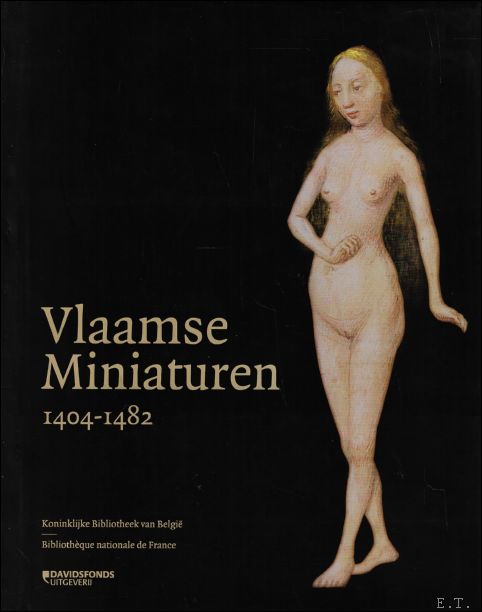
Bernard Bousmanne,Thierry Delcourt ; Ilona Hans-Collas,Pascal Schandel,Celine Van Hoorebeeck,Michiel Verweij,Ann Kelders
Vlaamse miniaturen 1404-1482
Davidsfonds, 2011. 1. Hardcover, 464 pag. NL, 305 x 245 x 40 mm, stofomslag, **in Nieuwstaat, ill. in kleur / z/w ISBN: 9789058268426
De vijftiende eeuw was het hoogtepunt van de Vlaamse miniatuurkunst. De kunst van de verluchting, de schilderkunst in de boeken, genoot toen een succes zonder voorgaande in de Zuidelijke Nederlanden. Bibliofiel Filips de Goede was er een belangrijke impuls aan de miniatuurkunst. Hij deed een beroep op de beste verluchters om tegemoet te komen aan zijn wensen. In zijn spoor plaatsten ook ridders, geestelijken en de stedelijke bourgeoisie bestellingen bij talentrijke verluchters zoals Lieven Van Lathem, Willem Vrelant of de Meester van Wavrin, in die tijd even vertrouwde namen als Rogier van der Weyden of Hans Memling dat vandaag nog zijn. Het waren stuk voor stuk gerenommeerde kunstenaars die onvermoeibaar werkten aan het illustreren van kronieken, ridderromans, traktaten over de jacht of devotietraktaten. Zo ontstonden echte meesterwerken waarvan de artistieke kwaliteit amper haar gelijke vindt. Voor het eerst brengen de Koninklijke Bibliotheek van Belgie en de Bibliotheque nationale de France hun collecties samen en bundelen ze hun krachten om de bloeitijd van de Vlaamse miniatuurkunst in de kijker te zetten. Maar liefst 140 van de meest prestigieuze verluchte handschriften worden tijdens deze internationale dubbeltentoonstelling aan het publiek voorgesteld. In deze catalogus maak je kennis met de hoogtepunten van de tentoonstelling in meer dan 200 kleurenillustraties. Met teksten van dertig specialisten uit binnen- en buitenland.
Boeknummer: 32205 | Prijs: EUR 25.00
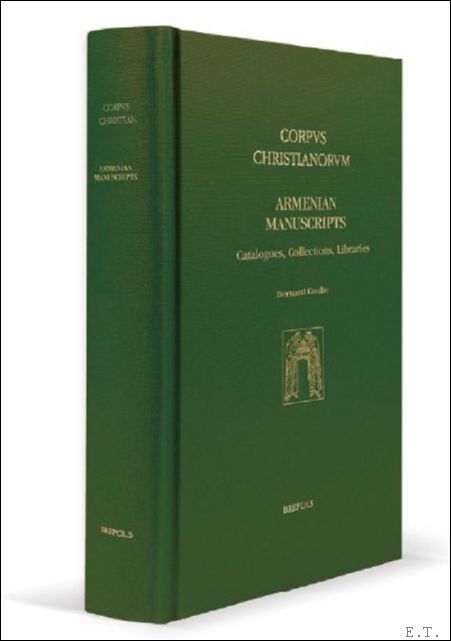
Bernard Coulie
Armenian Manuscripts. Catalogues, Collections, Libraries: 2nd revised edition
Brepols, 2021. Hardback, xix + 463 pages, Size:155 x 245 mm, Language(s):English, Armenian. ISBN: 9782503590349
Summary Hellenists know the services rendered by the Répertoire des catalogues de manuscrits grecs of Marcel Richard and Jean-Marie Olivier. It is an indispensable heuristic tool, but also a witness to the development of codicology and cultural history. Such a tool was lacking for specialists of Armenian manuscripts, philologists, linguists, and art historians. Armenian Manuscripts. Catalogues, Collections, Libraries (in English) is the second edition, revised and updated, of the Répertoire des bibliothèques et des catalogues de manuscrits arméniens first published in 1992. It includes the four supplements published in the journal Le Muséon in 1995, 2000, 2004, and 2019, as well as new sections devoted e.g. to the main copy centers of Armenian manuscripts. The book provides a full bibliography on all repositories of Armenian manuscripts in the world, public and private, large and small. It also gives many insights about the fate of Armenian manuscripts in the course of history: where and when they have been produced, mostly in medieval monastic centers, how they escaped invasions, fires, thefts and even destructions linked to the genocide of the Armenians, and finally how they ended up in private or public collections where they can be studied and admired today. Tables of concordance between current and old references enable one to locate manuscripts that are thought to have disappeared or to find more complete descriptions in an old catalogue than are given in recent lists. The volume also includes an impressive index of manuscripts. TABLE OF CONTENTS Introduction Bibliography Specialised catalogues National catalogues Topographic catalogue Index of manuscripts Table of contents
Boeknummer: 65432 | Prijs: EUR 195.00
Bernard Coulie
Armenian Manuscripts. Catalogues, Collections, Libraries: 2nd revised edition
Brepols, 2021. Hardback, xix + 463 pages, Size:155 x 245 mm, Language(s):English, Armenian. ISBN: 9782503590349
Summary Hellenists know the services rendered by the Répertoire des catalogues de manuscrits grecs of Marcel Richard and Jean-Marie Olivier. It is an indispensable heuristic tool, but also a witness to the development of codicology and cultural history. Such a tool was lacking for specialists of Armenian manuscripts, philologists, linguists, and art historians. Armenian Manuscripts. Catalogues, Collections, Libraries (in English) is the second edition, revised and updated, of the Répertoire des bibliothèques et des catalogues de manuscrits arméniens first published in 1992. It includes the four supplements published in the journal Le Muséon in 1995, 2000, 2004, and 2019, as well as new sections devoted e.g. to the main copy centers of Armenian manuscripts. The book provides a full bibliography on all repositories of Armenian manuscripts in the world, public and private, large and small. It also gives many insights about the fate of Armenian manuscripts in the course of history: where and when they have been produced, mostly in medieval monastic centers, how they escaped invasions, fires, thefts and even destructions linked to the genocide of the Armenians, and finally how they ended up in private or public collections where they can be studied and admired today. Tables of concordance between current and old references enable one to locate manuscripts that are thought to have disappeared or to find more complete descriptions in an old catalogue than are given in recent lists. The volume also includes an impressive index of manuscripts. TABLE OF CONTENTS Introduction Bibliography Specialised catalogues National catalogues Topographic catalogue Index of manuscripts Table of contents
Boeknummer: 65432 | Prijs: EUR 195.00