




Brepols Publishers
111 Bücher gefunden








--
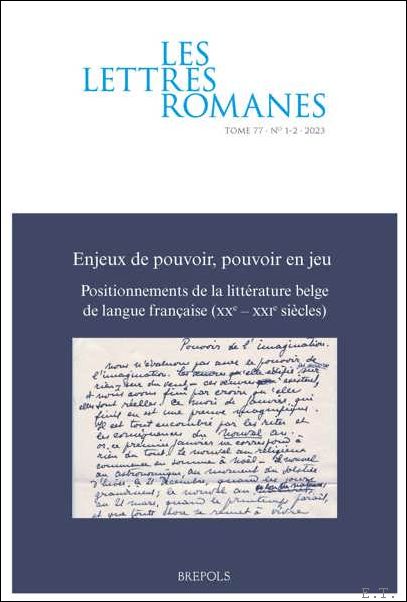
Les lettres romanes 77 1-2 (2023)
Enjeux de pouvoir, pouvoir en jeu. Positionnements de la littérature belge de langue française (XXe ? XXIe siècles)
Brepols - Harvey Miller, 2023. Pages: vi + 188 pages,Size:156 x 234 mm, Illustrations:3 b/w Language(s):French. ISBN: 9782503603834
Anna Loba, Christophe Meurée, Joanna Teklik et Maxime Thiry, Introduction Bernard Ribémont, Science, pouvoir dans la littérature francophone de Belgique. Quelques exemples en forme de contre-utopies Agnieszka Kukuryk, L?utopie fiumaine : fête révolutionnaire selon Léon Kochnitzky Maria Giovanna Petrillo, Jean-Philippe Toussaint : le pouvoir de la littérature belge dans une clé USB Marinella Termite, Un désir de communauté entre poétique et politique : Antoine Wauters Anna Loba, Marie Gevers : contre le pouvoir des grands sur les petits Catherine Gravet, Des romancières en lutte contre le patriarcat ? Les cas de Françoise Mallet-Joris (Trois âges de la nuit, 1968) et d?Adeline Dieudonné (La Vraie Vie, 2018) Marie Giraud-Claude-Lafontaine, « Les sexes politiques » de Lisette Lombé Laurence Boudart, Et si le pouvoir de l?entreprise pouvait vaciller ? Circuit de Charly Delwart Joanna Teklik, La mémoire en décalage. L?identité en jeu. Lettres belges au lendemain de la guerre Corentin Lahouste, Du protéiforme et du palpitant : Antoine Boute et l?hétérogénéisation jubilatoire du réel Maxime Thiry, (Se) Penser en décalé : esquives et adhérences du surréalisme bruxellois Les Livres
Buchnummer: 61550 | Preis: EUR 52.00
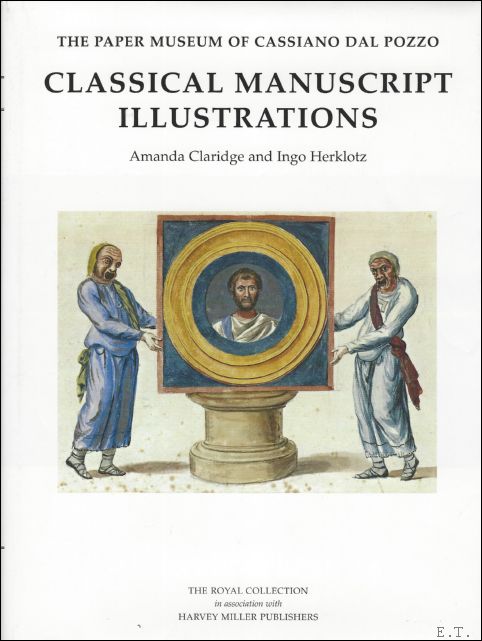
A. Claridge, I. Herklotz
Classical Manuscript Illustrations
Miller-brepols, 2012. Hardback with dusjacket in fine condition !!, Languages: English, 413pp. illustration in color. ISBN: 9781905375769
The Paper Museum (?Museo Cartaceo?) is a collection of some 10,000 drawings and prints assembled during the seventeenth century by the Roman patron and collector, Cassiano dal Pozzo, and his younger brother, Carlo Antonio. It represents one of the most significant attempts before the age of photography to embrace human knowledge in visual form, documenting ancient art and culture, architecture and topography, natural history and social customs.The 160 drawings catalogued in this volume are derived from five ancient manuscripts: the famous Vatican Vergil, the so-called ?Roman? Vergil, the Vatican Terence, and the less well-known Palatine Agrimensores, all in the Vatican Library, and from a fifth codex, now lost, known as the Chronography or Calendar of the year 354. The bulk of the drawings were copied for Cassiano between 1632 and 1634 for the purpose of studying both the characters depicted and the allied evidence of ancient costume and artefacts. By the later seventeenth century, when Pietro Santi Bartoli executed the last group of drawings in the present volume for Carlo Antonio, manuscript illustrations had come to be cherished as much for their rarity as examples of ancient painting as for their documentary value. Introductory essays provide an overview of the dal Pozzo commissions, the manuscripts and their history down to Cassiano?s day, as well as their study in the wider context of classical scholarship through to the eighteenth century. All the drawings are reproduced in colour at full page, with accompanying descriptions of the subjects or relevant ancient verses in modern translation and brief commentaries.
Buchnummer: 37625 | Preis: EUR 159.90
A. Minnis, R. Voaden (eds.)
Medieval Holy Women in the Christian Tradition c.1100-c.1500 9782503531809
Brepols Publishers, 2010. hardcover XI 748 p., 3 b/w ill., 7 b/w line art, 156 x 234 mm Languages: English, Latin, French . ISBN: 9782503531809
The first comprehensive survey of the major - but much neglected - contribution made by holy women to the religious culture of the later Middle Ages. Medieval Holy Women in the Christian Tradition offers the first wide-ranging study of the remarkable women who contributed to the efflorescence of female piety and visionary experience in Europe between 1100 and 1500. This volume offers essays by prominent scholars in the field which extend the boundaries of our previous knowledge and understanding of medieval holy women. While some essays provide new perspectives on the familiar names of the unofficial canon of mulieres sanctae, many others bring into the spotlight women less familiar now, but influential in their own time and richly deserving of scholarly attention. The five general essays establish a context for understanding the issues affecting female religious witness in the later Middle Ages. The geographical arrangement of the volume allows the reader to develop an awareness of the particular cultural and religious forces in seven different regions and to recognize how these influenced the writing and reception of the holy women of that area. Seventeen major figures have essays devoted exclusively to each of them; in addition, the survey chapters on each region introduce the reader to many more. The extensive bibliographies which follow each chapter encourage further reading and study. Alastair Minnis was Director of the Centre for Medieval Studies and Head of the Department of English at the University of York, and is currently Douglas Tracy Smith Professor of English at Yale University. A Fellow of the Medieval Academy of America and of the English Association, he is the author of six monographs and the editor or co-editor of fifteen further volumes. Rosalynn Voaden (D.Phil., University of York, UK) is the author of God?s Words, Women?s Voices: The Discernment of Spirits in the Writing of Late-Medieval Women Visionaries, and is the editor or co-editor of several volumes in the field. She was a Research Fellow at St Anne?s College, Oxford, and is currently Associate Professor of English at Arizona State University.
Buchnummer: 31307 | Preis: EUR 145.00
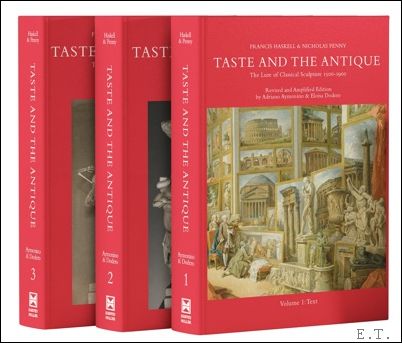
Adriano Aymonino, Eloisa Dodero, Nicholas Penny, Francis Haskell ?
Taste and the Antique The Lure of Classical Sculpture: 1500-1900. Revised and Amplified Edition. 3 vols
Brepols - Harvey Miller, 2024. hardcovers, 3 vols, 1684 pages, Size:220 x 280 mm, Illustrations:186 b/w, 1592 col. Language(s): English . ** new condition. ISBN: 9781909400252
For several hundred years, until about 1900, a limited number of antique sculptures were as much admired as are the Mona Lisa, Botticelli's Birth of Venus or Michelangelo's David today. They were reproduced in marble, bronze and lead, as plaster casts in academies and art schools, as porcelain figurines for chimneypieces and as cameos for bracelets and snuffboxes. They were celebrated by poets from Du Bellay and Marino to Byron and D?Annunzio, and memorably evoked by novelists as diverse as Marcel Proust and Nathaniel Hawthorne, George Eliot and Charles Dickens. Copies of some of these statues can be seen at Pavlosk and Madrid, at Stourhead, Charlottenburg, Malibu and Versailles, and in countless gardens, houses and museums throughout the world. How and when did these particular sculptures achieve such a special status? Who were the collectors, restorers, dealers, artists, dilettanti, scholars and archaeologists who created their reputations? Under what names (often wildly fanciful) did they first become famous? How were they interpreted, and how and when and why did their glamour begin to wane? These are some of the problems that are confronted in Taste and the Antique. Taste and the Antique has become a classic of art history since its original publication in 1981. This revised and amplified edition significantly updates the information based on new research undertaken in the last several decades, as well as expanding examples of the reception and influence of these works by artists and collectors from the Renaissance through to contemporary art. The original edition has been expanded into three volumes: Volume 1 is a revised and amplified version of the 1981 edition. Fifteen chapters trace in narrative form, with the support of a wide variety of plates, the rise and decline of this highly important episode in the history of taste. These chapters are followed by catalogue entries for 95 of the most celebrated sculptures, all of them illustrated, which provide information on when and where they were discovered, changes of ownership and nomenclature, as well as a record of varying critical fortunes designed to complement the more general discussion in the earlier chapters. Volume 2 contains especially commissioned new photography of over 90 statues catalogued in Volume 1. Volume 3 is entirely devoted to a visual survey of the full range of replicas and adaptations of the works catalogued and illustrated in the previous volumes. The book is indispensable for historians of taste, and to art historians concerned with the debt owed by numerous artists from the Renaissance onwards to the art of ancient Greece and Rome; and it is also of great value to students and collectors of the many surviving copies of the sculptures discussed. TABLE OF CONTENTS Volume I: Text Preface to the Revised and Amplified Edition An Updated Note on the Presentation of the Essay and Catalogue Introduction I. ?A New Rome? II. The Public and Private Collections of Rome III. Plaster Casts and Prints IV. Control and Codification V. Casts and Copies in Seventeenth-Century Courts VI. ?Tout ce qu?il y a de beau en Italie? VII. Erudite Interests VIII. Florence: The Impact of the Tribuna IX. Museums in Eighteenth-Century Rome X. The New Importance of Naples XI. The Proliferation of Casts and Copies XII. New Fashions in the Copying of Antiquities XIII. Reinterpretations of Antiquity XIV. The Last Dispersals XV. Epilogue Notes to the Text Updated Bibliography Catalogue Appendix Bibliography Index Volume II: Originals Volume III:Replicas and Adaptations
Buchnummer: 65711 | Preis: EUR 392.50
Adriano Prosperi
Infanticide, Secular Justice, and Religious Debate in Early Modern Europe
Brepols, 2016. Hardback, 407 pages, 156 x 234 mm, EN. *New. ISBN: 9782503531748
On 5 December 1709, in Bologna, Lucia Cremonini is accused of a terrible crime: the murder of her newborn son. This tragic episode, exhumed from the depths of time, is placed at the centre of an enthralling study by one of the leading scholars of modern history and the history of religious beliefs. During the course of a dramatic trial the crime is debated by representatives of religious, philosophical, moral, and scientific culture, all characteristic of the formative period of the modern world and all seeking a convincing answer to fundamental questions. When does life begin? When can a human being first be described as such, so that his or her killing is a crime punishable by the maximum penalty? What is the true role of baptism in the formation of the human person? These are all highly topical questions in an age like our own, where belief is subject to the powerful assaults of scientific research and new questions are being raised about the essence and the limits of human existence. TABLE OF CONTENTS: Acknowledgements Part I. The Story Chapter 1: From the Trial Records Chapter 2: Infanticide as an Obsession Chapter 3: Infanticide as a Social Practice: From a Sin to a Crime Part II. The Mother Chapter 4: Una figliola grande, giovane fatta (A Grown Girl, a Mature Young Woman) Chapter 5: ?A young priest? Chapter 6: Il Carnevale prossimo passato (The Last Carnival past) Chapter 7: ?He robbed me of my honour and took my virginity? Chapter 8: ?I was always on my own? Chapter 9: M?indussi col detto cortello a dare la morte a detto mio figlio partorito vivo mettendoli la punta di detto cortello nella gola (I Forced Myself with the Said Knife to Kill my Said Son whom I had given Birth to Alive, by putting the Point of the Said Knife into his Throat) Part III. The Son: The Seed and the Soul Chapter 10: Un puttino maschio (A Baby Boy) Chapter 11: Ben compito in tutte le sue parti (Well-Formed in All Its Parts) Chapter 12: A ?Creature? Without a Name, or When a Man is not a Man Chapter 13: Baptism Chapter 14: To Die Without a Soul Chapter 15: Ensoulment Chapter 16: The Person Part IV. Justice Chapter 17: The sentence: Ut moriatur et anima ab eius corpore separetur (That She Die and Her Soul be Separated from Her Body) Chapter 18: Accolta e Consolata (Received and Consoled) Chapter 19: Repentance and Forgiveness Afterword Bibliography
Buchnummer: 68847 | Preis: EUR 65.00
Agnès Guiderdoni-Bruslé, Ralph Dekoninck, Aline Smeesters
Otto Vaenius
Otto Van Veen, Physicæ et Theologicæ Conclusiones (1621)
Conclusions de Physique et de Théologie
Brepols, 2018. Paperback, 108 p., 216 x 280 mm, Illustrations:44 b/w, Latin, French. *NEW
. ISBN: 9782503569666 Le peintre Otto Vaenius (Leyde 1556 ? Bruxelles 1629) n?a longtemps été connu que comme le maître de Rubens. Depuis quelques décennies, le regain des études emblématiques a remis à l?honneur ses recueils à succès : Emblemata Horatiana, Amorum Emblemata et Amoris Divini Emblemata. Mais certains de ses ouvrages plus confidentiels restent encore largement méconnus. Tel est le cas des Physicae et theologicae conclusiones (1621), un petit opuscule d?une vingtaine de pages publié dans des circonstances mystérieuses, qui se propose rien moins que de résoudre « par des notes et des figures » le problème de la prédestination et du libre arbitre ? un sujet alors brûlant, qui a d?ailleurs valu à l?auteur des problèmes avec l?Inquisition. Mais l?intérêt de l?opuscule va bien au-delà de l?enjeu théologique : par l?invention d?un langage visuel inédit et déroutant (à mi-chemin entre le géométrique et le figuratif, entre le diagramme et l?emblème), ainsi que par plusieurs chapitres explicitement consacrés aux pouvoirs des images et de l?imagination, l?ouvrage offre une étonnante clé de lecture à l?ensemble de l??uvre de Vaenius, et constitue en même temps un témoignage frappant de la créativité d?une époque en pleine mutation épistémologique. La présente édition propose une reproduction en fac-similé de cet opuscule rarissime ainsi que, pour la première fois, une traduction intégrale en langue française. Le texte est précédé d?une introduction nourrie, fruit d?une collaboration entre cinq chercheurs croisant des approches historiques, littéraires, artistiques et sémiotiques. Les Conclusiones sont ainsi remises dans le contexte de leur époque, au c?ur des querelles théologiques mais aussi au croisement de deux courants de pensée majeurs qui ont imprégné la réflexion de Vaenius, le néo-stoïcisme de Juste Lipse et l?alchimie de Paracelse ; dans un second temps, elles sont étudiées en profondeur dans leur rapport particulier aux images, qui apparaissent à la fois comme le moyen et l?objet de la démonstration proposée. Enfin, l?ouvrage se clôture par une série d?outils facilitant la consultation de l?ensemble : trois index (des noms propres, des passages bibliques, des notions françaises et latines) ainsi qu?une abondante bibliographie. Buchnummer: 68865 | Preis: EUR 45.00
. ISBN: 9782503569666 Le peintre Otto Vaenius (Leyde 1556 ? Bruxelles 1629) n?a longtemps été connu que comme le maître de Rubens. Depuis quelques décennies, le regain des études emblématiques a remis à l?honneur ses recueils à succès : Emblemata Horatiana, Amorum Emblemata et Amoris Divini Emblemata. Mais certains de ses ouvrages plus confidentiels restent encore largement méconnus. Tel est le cas des Physicae et theologicae conclusiones (1621), un petit opuscule d?une vingtaine de pages publié dans des circonstances mystérieuses, qui se propose rien moins que de résoudre « par des notes et des figures » le problème de la prédestination et du libre arbitre ? un sujet alors brûlant, qui a d?ailleurs valu à l?auteur des problèmes avec l?Inquisition. Mais l?intérêt de l?opuscule va bien au-delà de l?enjeu théologique : par l?invention d?un langage visuel inédit et déroutant (à mi-chemin entre le géométrique et le figuratif, entre le diagramme et l?emblème), ainsi que par plusieurs chapitres explicitement consacrés aux pouvoirs des images et de l?imagination, l?ouvrage offre une étonnante clé de lecture à l?ensemble de l??uvre de Vaenius, et constitue en même temps un témoignage frappant de la créativité d?une époque en pleine mutation épistémologique. La présente édition propose une reproduction en fac-similé de cet opuscule rarissime ainsi que, pour la première fois, une traduction intégrale en langue française. Le texte est précédé d?une introduction nourrie, fruit d?une collaboration entre cinq chercheurs croisant des approches historiques, littéraires, artistiques et sémiotiques. Les Conclusiones sont ainsi remises dans le contexte de leur époque, au c?ur des querelles théologiques mais aussi au croisement de deux courants de pensée majeurs qui ont imprégné la réflexion de Vaenius, le néo-stoïcisme de Juste Lipse et l?alchimie de Paracelse ; dans un second temps, elles sont étudiées en profondeur dans leur rapport particulier aux images, qui apparaissent à la fois comme le moyen et l?objet de la démonstration proposée. Enfin, l?ouvrage se clôture par une série d?outils facilitant la consultation de l?ensemble : trois index (des noms propres, des passages bibliques, des notions françaises et latines) ainsi qu?une abondante bibliographie. Buchnummer: 68865 | Preis: EUR 45.00
Alessio Assonitis, Brian Sandberg (eds)
The Grand Ducal Medici and their Archive (1537-1743)
Brepols - Harvey Miller, 2016. Hardback, 222 pages, 220 x 280 mm, Illustrations: 41b/w, 5 col., English/Italian. *NEW. ISBN: 9781909400344
The Grand Ducal Medici and their Archive offers a unique window into early modern Florentine society through an exploration of the archives of the Medici ruling family. Teeming with circa three million letters, the archival collection of the Medici grand dukes housed at the Archivio di Stato in Florence chronicles the culture and history of Europe and beyond, across a span of over two hundred years. The letters of this collection, known as the Mediceo del Principato, embrace a great variety of themes including diplomacy, art, medicine, food, science, and warfare. Since its contents originate from a court archive that served both the state and a ruling family, this collection comprises administrative, political, and financial correspondence, as well as more private and intimate accounts of the Medici themselves and their activity at court. At the same time, it would be a great misconception to assume that this enormous archival corpus pertains just to Florence or just to the Medici, given that the vast majority of these missives were written by ambassadors, agents, and informants stationed throughout Europe. This volume, The Grand Ducal Medici and their Archive, aims to unlock not only the complex structure of the Mediceo del Principato but also the richness of its content. The sixteen essays address a variety of topics ? book history, Ottoman relations, collections of New World artifacts, medical history, gender studies, and material culture ? all with direct reference to the Medici grand duchy. The original research that supports these studies was drawn in part from the Medici Archive Project's online platform (BIA) for querying over 350,000 digitized and/or transcribed letters. Making use of these and other original sources, the essays in The Grand Ducal Medici and their Archive shed new light on the mechanisms and strategies that enabled Florence to emerge from decades of internecine confl ict and diplomatic chaos in order to enjoy cultural and political prominence. TABLE OF CONTENTS Introduction Alessio Assonitis (The Medici Archive Project) 1. The Revenge of the Emperor: Rewriting the Story of Lorenzino de? Medici?s Assassination Stefano Dall?Aglio (University of Leeds) 2. Searching for Cosimo?s Books? Alessio Assonitis (The Medici Archive Project) 3. Le ?spoglie? invisibili.?Note a margine di alcuni documenti relativi al reimpiego dei materiali nei cantieri orentini di Giorgio Vasari Francesca Funis (The Medici Archive Project) 4. "When He Becomes Pope ?" The Rise and Fall of Don Luis de Toledo at the Medici Court (1545-1579) Anatole Tchikine (Dumbarton Oaks) 5. Jacobiglio Hebreo.?Mercante, antiquario, informatore di Cosimo I de? Medici Piergabriele Mancuso (The Medici Archive Project) 6. Political Meddling in Women?s Lives: Sienese and Florentine Solutions in Difficult Times (1490-1560) Elena Brizio (The Medici Archive Project) 7. Sofonisba Anguissola, Francesco de? Medici and Chiappino Vitelli: a Lady-in-waiting, a Prince and a General at the Spanish Court? Maurizio Arfaioli (The Medici Archive Project) 8. Medical Culture and the Women of the Medici Grand Ducal Court Sheila Barker (The Medici Archive Project) 9. The Riches of the Indies: Francesco and Ferdinando de? Medici and the Americas? Lia Markey (Villa I Tatti - The Harvard Center for Italian Renaissance Studies) 10. "Al certo che questa corte ha un bel misto": Mapping the Artistic Relations between the Medici and the Savoia Roberta Piccinelli (Università degli studi di Teramo) 11. Jachia ben Mehmet and the Medici Court? Mark Rosen (University of Texas at Dallas) 12. Donna Livia?s New Clothes Brendan Dooley (University College Cork) 13. Of Mothers and Aunts: Regency Government and Performance in Early Modern France and Tuscany under Maria de? Medici and Christine de Lorraine? Brian Sandberg (Northern Illinois University) 14. A Grand Duchess and her Painters as Matchmakers: Maria Magdalena of Austria, Tiberio Titi, Giusto Suttermans and the Betrothal of Empress Eleonora Gonzaga? Lisa Goldenberg Stoppato (The Medici Archive Project) 15. "What news abroad?": Florentine Avvisi from London, 1614-1622 Lisa Kaborycha (University of California Education Abroad Program) 16. A Medici Agent?s Newsletters to Florence during the Leghorn Crisis of 1653 Nicholas Brownlees (Università degli Studi di Firenze)
Buchnummer: 68849 | Preis: EUR 65.00
Amee Yunn
The Bargello Palace
The Invention of Civic Architecture in Florence
Brepols, 2016. 267 p240 x 240 mmIllustrations:152 b/wEnglish, Latin, Italian. ISBN: 9781909400313
This book offers a new, revised building history of the Bargello, the first town hall of Florence. A careful analysis of documents, fabric, and restoration allows us to reconstruct the original site. It reveals two previously unidentified building stages. The first palace, begun in 1255, adapted an ex-neighborhood consortium, reusing an old tower and three houses. In the 1280s, a second palace arose next to it, thus creating a twin-palace complex for the Podestà and Capitano, the highest-ranking public officials. Long misidentified as the 1255 palace, the front wing's lower two stories were actually built in 1291-1308. An unroofed precinct wall enclosed the older structures behind a monumental facade, forming an open-air courtyard used for tribunals and stables. This part became known as the ?old palace? when the large, arcaded courtyard and rear wing were addded in 1316-1322. The "new palace" containing the Magdalen Chapel was designed for the Angevin court in residence, not for the communal administration of justice as generally believed. After a 1332 fire devastated the upper stories, the front wing was covered with two immense roof vaults in 1332-1346. Inside, many old dividing walls survived until the nineteenth century. They were demolished with the prisons during the building's conversion into the present national museum, concocting the two vast exhibition halls. This book illustrates the Bargello's early architecture. Reinterpreting the timeline radically changes our understanding of the palace's construction, function, and urban context during the formation of early modern Florence. TABLE OF CONTENTS Introduction 1. Surviving Monument 2. Site and Neighborhood, 1255 3. Disentangling the Evidence 4. Old Bargello: A Palace for the Florentine Popolo, 1255?1308 5. New Bargello: Court of Lords, 1316?1346 6. Function, Iconography, and Urbanism Conclusion Appendix Bibliography Photo Credits Index
Buchnummer: 68848 | Preis: EUR 95.00
Amélie Bernazzani (ed)
Les enfants de Caïn
La représentation du criminel en France et en Italie, de la Renaissance au début du XXe siècle
Brepols, 2017. Hardback, 358 pages, 156 x 234 mm, Illustrations:72 b/w, 12 col., 2 tables b/w., French, Italian. *NEW
. ISBN: 9782503569314 Jephonias, Damiens, Caravage, Lantier, Troppman, réels ou imaginaires, connus ou anonymes, les criminels son présents dans un éventail extraordinaire d?images et de textes qui tentent à leur manière de dresser leur portrait moral et physique. Mais, ces représentations du criminel, où se conjuguent peinture, dessin, gravure, photographie, descriptions littéraires, journalistiques, médicales ou judiciaires laissent-elles entrevoir un visage spécifique du crime ? un « criminel né » ? qui serait facilement reconnaissable grâce à un ou plusieurs signes distinctifs, telle la marque apposée par Dieu sur le front de Caïn ? Fruit des réflexions menées lors d?un colloque international tenu à l?Académie de France à Rome ? Villa Médicis en 2015, cet ouvrage pose quelques jalons de réponse en croisant les approches d'historiens de l?art, d'historiens, de juristes, d'anatomistes ou de spécialistes de la littérature dans une période chronologique volontairement étendue allant du début du XVe siècle au début du XXe siècle. Ce faisceau de points de vue montre que la figure du criminel se déploie en une myriade de portraits possibles, sans véritable typicité, ce qui fait de lui un outil de persuasion efficace, régulièrement utilisé en tant que tel, notamment par les représentants des pouvoirs politique et religieux. Amélie Bernazzani Préambule Amélie Bernazzani & Dominique Kalifa Introduction I- L?impossible portrait type Jean-Claude Arnould La figure du criminel dans les Histoires tragiques françaises du xvie siècle Fabienne Huard-Hardy L?image du violeur d?après les arrêts du Parlement de Paris sous Louis XV Vincent Denis Le portrait sans l?image : la signalétique des criminels en France, 1720-1820 Marc Renneville Quand le signe fait science : de la bosse du crime au criminel né Pierre Piazza L?iconographie criminelle d?Alphonse Bertillon Gaëtane Maës Comment représenter un criminel dans la France des Lumières ? L?exemple de Damiens II- Une figure à plusieurs visages Sophie Guermès La monstruosité physique du « criminel né » où la tentation repoussée d?Émile Zola Isabelle Percebois L?Autre en nous : la figure du criminel dans le fantastique fin de siècle Giovanna Perini-Folesani Caravaggio non era il solo. Profili criminali di artisti Bolognesi di antico regime Anna Maria Migdal Animalisation de l?individu criminel Marie Piccoli-Wentzo Ordre et désordre. Les imaginaires antagonistes de la figure érémitique dans l?Italie de la Renaissance Bruno Bertherat Le criminel à la Morgue (Paris xixe siècle) : pratiques et représentations Fabio Cafagna Condannati alla dissezione : criminali, anatomia, Belle Arti III- L?utilisation du criminel Lisa Roscioni Il criminale processato. Alle origini della cronaca giudiziaria Maria Portmann Des Juifs criminels à Sienne autour de 1400 Valentin Chémery Le criminel arabe : construction d?une figure de criminel dans l?Algérie coloniale de la fin du xixe siècle Pierluigi Cervelli Criminels à peine nés : enfants « irréguliers » dans les premières années de gouvernement du régime fasciste en Italie (1925-1930) Index Buchnummer: 68859 | Preis: EUR 40.00
. ISBN: 9782503569314 Jephonias, Damiens, Caravage, Lantier, Troppman, réels ou imaginaires, connus ou anonymes, les criminels son présents dans un éventail extraordinaire d?images et de textes qui tentent à leur manière de dresser leur portrait moral et physique. Mais, ces représentations du criminel, où se conjuguent peinture, dessin, gravure, photographie, descriptions littéraires, journalistiques, médicales ou judiciaires laissent-elles entrevoir un visage spécifique du crime ? un « criminel né » ? qui serait facilement reconnaissable grâce à un ou plusieurs signes distinctifs, telle la marque apposée par Dieu sur le front de Caïn ? Fruit des réflexions menées lors d?un colloque international tenu à l?Académie de France à Rome ? Villa Médicis en 2015, cet ouvrage pose quelques jalons de réponse en croisant les approches d'historiens de l?art, d'historiens, de juristes, d'anatomistes ou de spécialistes de la littérature dans une période chronologique volontairement étendue allant du début du XVe siècle au début du XXe siècle. Ce faisceau de points de vue montre que la figure du criminel se déploie en une myriade de portraits possibles, sans véritable typicité, ce qui fait de lui un outil de persuasion efficace, régulièrement utilisé en tant que tel, notamment par les représentants des pouvoirs politique et religieux. Amélie Bernazzani Préambule Amélie Bernazzani & Dominique Kalifa Introduction I- L?impossible portrait type Jean-Claude Arnould La figure du criminel dans les Histoires tragiques françaises du xvie siècle Fabienne Huard-Hardy L?image du violeur d?après les arrêts du Parlement de Paris sous Louis XV Vincent Denis Le portrait sans l?image : la signalétique des criminels en France, 1720-1820 Marc Renneville Quand le signe fait science : de la bosse du crime au criminel né Pierre Piazza L?iconographie criminelle d?Alphonse Bertillon Gaëtane Maës Comment représenter un criminel dans la France des Lumières ? L?exemple de Damiens II- Une figure à plusieurs visages Sophie Guermès La monstruosité physique du « criminel né » où la tentation repoussée d?Émile Zola Isabelle Percebois L?Autre en nous : la figure du criminel dans le fantastique fin de siècle Giovanna Perini-Folesani Caravaggio non era il solo. Profili criminali di artisti Bolognesi di antico regime Anna Maria Migdal Animalisation de l?individu criminel Marie Piccoli-Wentzo Ordre et désordre. Les imaginaires antagonistes de la figure érémitique dans l?Italie de la Renaissance Bruno Bertherat Le criminel à la Morgue (Paris xixe siècle) : pratiques et représentations Fabio Cafagna Condannati alla dissezione : criminali, anatomia, Belle Arti III- L?utilisation du criminel Lisa Roscioni Il criminale processato. Alle origini della cronaca giudiziaria Maria Portmann Des Juifs criminels à Sienne autour de 1400 Valentin Chémery Le criminel arabe : construction d?une figure de criminel dans l?Algérie coloniale de la fin du xixe siècle Pierluigi Cervelli Criminels à peine nés : enfants « irréguliers » dans les premières années de gouvernement du régime fasciste en Italie (1925-1930) Index Buchnummer: 68859 | Preis: EUR 40.00
Andrea Bonaccorsi
The Knowledge of Humanities
A Comparative Epistemology of Historiography, Literary Criticism, History of Art, and History of Architecture
2026. Paperback, 323 p., 178 x 254 mm, Language(s):English. *New
. ISBN: 9782503618746 Are humanities scientific disciplines? This book offers compelling arguments for reopening the issue of the relations between humanities and natural sciences. It criticizes the current trend of defending humanities on the basis of their expected social or economic impact, in terms of cultural heritage, wellness, mass culture or democratic habits. The book vigorously calls for a new epistemological reflection, which addresses the issues left open by the XX century: Do humanities produce valid knowledge or just culture and informed opinion? How do researchers in humanities advance explanations and causal statements? How do they build up the proofs for their statements, given that they deal with objects and events buried in the past? Do we have science for individual cases? The author suggests a novel approach, based on the comparative analysis of various disciplines in humanities. They deal with historiography in the first place and with the main historical objects of investigation: the text (literary criticism), the image (history of art), the building (history of architecture). The book dives deep into some of the most authoritative works of researchers of the XX century in these fields, reading them from the perspective of epistemology. It then identifies a number of scientific principles and procedures that meet the highest requirements for reliability and validity. Recent epistemological developments in theories of causality, nature of scientific laws, and history-dependent natural sciences suggest that a new type of dialogue between humanities and hard sciences is possible. A dialogue between peers. Buchnummer: 69225 | Preis: EUR 102.50
. ISBN: 9782503618746 Are humanities scientific disciplines? This book offers compelling arguments for reopening the issue of the relations between humanities and natural sciences. It criticizes the current trend of defending humanities on the basis of their expected social or economic impact, in terms of cultural heritage, wellness, mass culture or democratic habits. The book vigorously calls for a new epistemological reflection, which addresses the issues left open by the XX century: Do humanities produce valid knowledge or just culture and informed opinion? How do researchers in humanities advance explanations and causal statements? How do they build up the proofs for their statements, given that they deal with objects and events buried in the past? Do we have science for individual cases? The author suggests a novel approach, based on the comparative analysis of various disciplines in humanities. They deal with historiography in the first place and with the main historical objects of investigation: the text (literary criticism), the image (history of art), the building (history of architecture). The book dives deep into some of the most authoritative works of researchers of the XX century in these fields, reading them from the perspective of epistemology. It then identifies a number of scientific principles and procedures that meet the highest requirements for reliability and validity. Recent epistemological developments in theories of causality, nature of scientific laws, and history-dependent natural sciences suggest that a new type of dialogue between humanities and hard sciences is possible. A dialogue between peers. Buchnummer: 69225 | Preis: EUR 102.50
Angéline Rais
The Antiquarian Book Trade in Switzerland
Sir Thomas Phillipps's Acquisitions in the 1820s and their Later Dispersal
Brepols, 2026. Hardback, 430 p., 216 x 280 mm, Illustrations:14 b/w, 7 col., 3 tables b/w, .Language(s):English *New
. ISBN: 9782503616209 In 1822?1823, the obsessive British collector Sir Thomas Phillipps (1792?1872) spent a year in Switzerland planning to reduce his spending on books. Yet, by the time he returned to England, he had bought some 850 manuscripts and printed volumes. The historical context of these acquisitions offers a unique case study of the workings of the Swiss market in rare books in the first half of the nineteenth century. The Antiquarian Book Trade in Switzerland shows how this market was organised, how booksellers gathered and sold their stock, what kinds of books were available for sale, and the repercussions of Phillipps?s purchases on the formation of libraries in the twentieth century. Combining archival research, the survey of sale and library catalogues, and the material analysis of books, this monograph argues that the Swiss book trade was a thriving business led by professional and amateur dealers who sold rare and modern volumes in shops, private houses, and religious institutions. Phillipps?s motives for obtaining these items (and those of the owners who bought them after his death) also indicate that books were acquired for their aesthetic quality and prestige, historical and literary research, and political purposes. Illustrating the changing values assigned to books, this study demonstrates how many of these volumes became treasures of the world?s cultural heritage. Buchnummer: 69265 | Preis: EUR 122.50
. ISBN: 9782503616209 In 1822?1823, the obsessive British collector Sir Thomas Phillipps (1792?1872) spent a year in Switzerland planning to reduce his spending on books. Yet, by the time he returned to England, he had bought some 850 manuscripts and printed volumes. The historical context of these acquisitions offers a unique case study of the workings of the Swiss market in rare books in the first half of the nineteenth century. The Antiquarian Book Trade in Switzerland shows how this market was organised, how booksellers gathered and sold their stock, what kinds of books were available for sale, and the repercussions of Phillipps?s purchases on the formation of libraries in the twentieth century. Combining archival research, the survey of sale and library catalogues, and the material analysis of books, this monograph argues that the Swiss book trade was a thriving business led by professional and amateur dealers who sold rare and modern volumes in shops, private houses, and religious institutions. Phillipps?s motives for obtaining these items (and those of the owners who bought them after his death) also indicate that books were acquired for their aesthetic quality and prestige, historical and literary research, and political purposes. Illustrating the changing values assigned to books, this study demonstrates how many of these volumes became treasures of the world?s cultural heritage. Buchnummer: 69265 | Preis: EUR 122.50
Anna Zajchowska-Bo?tromiuk, Anna Ledzi?ska (eds)
Henricus Bitterfeld
De formatione et reformatione Ordinis Fratrum Praedicatorum
Brepols, 2026. Hardback, lvi + 117 pages, 155 x 245 mm, Latin text. *new. ISBN: 9782503620961
Henry Bitterfeld?s De formatione et reformatione Ordinis Fratrum Praedicatorum was the first work of its kind written in support of the Observant Reform of the Dominican Order, which took off in the late fourteenth century. It was probably composed around 1388-1389 at the request of the Order?s Master General, Raymond of Capua, who formally launched the reform in 1390. The treatise is organized into three parts: first, the principles of religious life in general; second, the causes of the crisis within the Order of Preachers; and third, the remedies by which it might be resolved. It concludes with a commentary on the prologue to the Dominican Constitutions. Bitterfeld?s work survives in four manuscript copies, along with three distinct medieval abridgements. Taken together, these testify not only to the reception of the text itself but also to the spread of Observant Reform ideals both within and beyond the Dominican Order.
Buchnummer: 69208 | Preis: EUR 142.50
Anna Zhyrkova, Marcin Podbielski
The Discovery of the Individual
Post-Chalcedonian Christological Debates and the Dawn of Scholasticism in Early-Byzantine Thought
2026. Paperback, 664 p., 156 x 234 mm, Language(s):English. *New
. ISBN: 9782503618333 In the central chapters of this book, Marcin Podbielski and Anna Zhyrkova examine the work of John the Grammarian, Leontius of Byzantium, and Leontius of Jerusalem, showing how, in their writings, a philosophical innovation only associated significantly later with Medieval Latin discourse was brought into existence and clearly formulated: the discovery of the individual, and of the problem of individuation. This discovery, expressed in terms of a radically existential conceptualization of the hypostasis of Christ, as well as of hypostases of created beings, is discussed in counterpoint to the proposals of John Philoponus and Boethius, and also as synthesized, codified and preserved by Maximus the Confessor and John Damascene. Such a diverse group of five early-Byzantine authors, animated by a shared concern to preserve and clarify the Christological doctrine of Chalcedon, resorted to speculative philosophy to create a conceptual vehicle for the Christian doctrine of there being one Christ both truly divine and truly human. Their notion of ?hypostasis? came to designate the subject of natures, existent in its own right and exhibiting all the hallmarks of individuality, found in later Medieval investigations. An inquiry into the philosophical and theological background of this discovery, including a comprehensive historical reconstruction of the concept of hypostasis, makes it possible to show the philosophical and theological novelty of the authors studied, which consists also in their creating a properly Christian approach to philosophical speculation that foreshadows Scholasticism and can be considered a kind of Proto-Scholasticism. The book concludes with an exploration of the philosophical import of the discovery and the model of Christian philosophy it furnishes. Buchnummer: 69228 | Preis: EUR 127.50
. ISBN: 9782503618333 In the central chapters of this book, Marcin Podbielski and Anna Zhyrkova examine the work of John the Grammarian, Leontius of Byzantium, and Leontius of Jerusalem, showing how, in their writings, a philosophical innovation only associated significantly later with Medieval Latin discourse was brought into existence and clearly formulated: the discovery of the individual, and of the problem of individuation. This discovery, expressed in terms of a radically existential conceptualization of the hypostasis of Christ, as well as of hypostases of created beings, is discussed in counterpoint to the proposals of John Philoponus and Boethius, and also as synthesized, codified and preserved by Maximus the Confessor and John Damascene. Such a diverse group of five early-Byzantine authors, animated by a shared concern to preserve and clarify the Christological doctrine of Chalcedon, resorted to speculative philosophy to create a conceptual vehicle for the Christian doctrine of there being one Christ both truly divine and truly human. Their notion of ?hypostasis? came to designate the subject of natures, existent in its own right and exhibiting all the hallmarks of individuality, found in later Medieval investigations. An inquiry into the philosophical and theological background of this discovery, including a comprehensive historical reconstruction of the concept of hypostasis, makes it possible to show the philosophical and theological novelty of the authors studied, which consists also in their creating a properly Christian approach to philosophical speculation that foreshadows Scholasticism and can be considered a kind of Proto-Scholasticism. The book concludes with an exploration of the philosophical import of the discovery and the model of Christian philosophy it furnishes. Buchnummer: 69228 | Preis: EUR 127.50
Athanassios Vergados, Anke Walter (eds)
???? and Origo
The Power of Origins
Brepols, 2026. Paperback, 415 p., 156 x 234 mm, Illustrations:2 b/w, 9 col., Language(s):English, Greek, Latin. *New
. ISBN: 9782503596556 This interdisciplinary volume sheds light on the fascination with origins from different perspectives. The international team of contributors investigate how the power of origins is employed in historiography, in ancient literature, in religious contexts, in philosophy, and in political debate. What is it that makes origins such a fascinating form of discourse? The contributions explore, from very different angles, how aetiology works as a creative process that collapses temporal categories (present/past) and forges the past in order to legitimise the present, ultimately establishing cultural identity. Other topics include the interaction of time and space in the discourse of origins and the different ways in which aitia can bolster or undermine political power, of an elite or of the people. Origins, it is shown, are a multi-faceted and fluid form of discourse: inherent in them is the possibility of constantly re-reading and re-shaping the past, and thus they are also a site of competition and correction. Attention is also paid to the functioning of origins in different media, both literary and iconographical. It becomes clear that the appeal to origins is a highly versatile mode of discourse that can express a wide range of meanings. Buchnummer: 69222 | Preis: EUR 100.00
. ISBN: 9782503596556 This interdisciplinary volume sheds light on the fascination with origins from different perspectives. The international team of contributors investigate how the power of origins is employed in historiography, in ancient literature, in religious contexts, in philosophy, and in political debate. What is it that makes origins such a fascinating form of discourse? The contributions explore, from very different angles, how aetiology works as a creative process that collapses temporal categories (present/past) and forges the past in order to legitimise the present, ultimately establishing cultural identity. Other topics include the interaction of time and space in the discourse of origins and the different ways in which aitia can bolster or undermine political power, of an elite or of the people. Origins, it is shown, are a multi-faceted and fluid form of discourse: inherent in them is the possibility of constantly re-reading and re-shaping the past, and thus they are also a site of competition and correction. Attention is also paid to the functioning of origins in different media, both literary and iconographical. It becomes clear that the appeal to origins is a highly versatile mode of discourse that can express a wide range of meanings. Buchnummer: 69222 | Preis: EUR 100.00
Bea De Cupere
Studies in Eastern Mediterranean Archaeology, vol. 4: Animals at Ancient Sagalassos
Evidence of the Faunal Remains
Leuven, Brepols, 2001. Softcover, 271 pages, 29.5 x 21 cm, English text. *very fine condition. ISBN: 9782503510620
This volume deals with the exploitation of animals at Sagalassos (SW-Turkey) during Roman and early Byzantine times (1st to 7th centuries AD). The archaeological excavations at this site yield large quantities of animal remains that represent mainly consumption refuse of its former inhabitants. The bones, teeth and molluscs are described, as well as the various traces left by animals and man on these remains. The importance of herding versus hunting and fishing is discussed, as well as the composition of the live-stock. An analysis of the mortality profiles, sex distributions and pathologies allow inferences about the use of the domestic species as a source of meat or of secondary products (wool, dairy products and animal power). Attention is paid to butchery practices, bone-working techniques and to the use of animal remains as a means of reconstructing former trade connections. The former environment is reconstructed, using the habitat preferences of the identified species.
Buchnummer: 67073 | Preis: EUR 55.00
Ben Allport, Alison Finlay (eds)
Time, Space, and Narrative in Medieval Icelandic Literature
Brepols, 2026. Hardback, 372 p., 156 x 234 mm, Illustrations:6 b/w, 22 col., 5 tables b/w., Language(s):English. *New
. ISBN: 9782503612232 From the twelfth to the fourteenth centuries, Icelanders were responsible for a vast output of literature, extending well beyond the Sagas of Icelanders for which they are most well-known. These varied widely in style and subject, composed in different contexts by different members of society for differing purposes. Time and space formed central thematic and structural pillars in many of these texts as they explored the profound effects wrought on their society over time and reconciled their peripheral position in relation to the world?s perceived Mediterranean centre. How did these medieval Icelandic authors understand time and space? How did they portray, employ, and manipulate these concepts in order to craft their narratives? By bringing together genre-spanning articles from a broad range of Norse scholars, this collection offers a comprehensive treatment of these questions. Exploring genres ranging from the Sagas of Icelanders to hagiography and from Eddic poetry to ecclesiastical history, the contributions gathered here apply varied theoretical frameworks, digital methodologies, and episodic analyses to draw new conclusions and shed new light on this intriguing corpus. Buchnummer: 69226 | Preis: EUR 128.00
. ISBN: 9782503612232 From the twelfth to the fourteenth centuries, Icelanders were responsible for a vast output of literature, extending well beyond the Sagas of Icelanders for which they are most well-known. These varied widely in style and subject, composed in different contexts by different members of society for differing purposes. Time and space formed central thematic and structural pillars in many of these texts as they explored the profound effects wrought on their society over time and reconciled their peripheral position in relation to the world?s perceived Mediterranean centre. How did these medieval Icelandic authors understand time and space? How did they portray, employ, and manipulate these concepts in order to craft their narratives? By bringing together genre-spanning articles from a broad range of Norse scholars, this collection offers a comprehensive treatment of these questions. Exploring genres ranging from the Sagas of Icelanders to hagiography and from Eddic poetry to ecclesiastical history, the contributions gathered here apply varied theoretical frameworks, digital methodologies, and episodic analyses to draw new conclusions and shed new light on this intriguing corpus. Buchnummer: 69226 | Preis: EUR 128.00
BERSERIK, C.J.; CAEN, J.;
Silver-Stained Roundels and Unipartite Panels before the French Revolution Flanders, Vol. 2: The Provinces of East and West Flanders
Brepols Publishers, 2011. Hardcover, XIV 631 pages., 300 b/w ill. 900 colour ill., 230 x 315 mm, English. ISBN: 9781905375318
This checklist is the second in a series of volumes describing the silver-stained glass roundels and unipartite panels from the Middle Ages to the 18th century found in public buildings, museums and private collections in the present five provinces of Flanders (Belgium). It also includes documented roundels and unipartite panels whose whereabouts are presently unknown and those which have been removed to other locations or collections in the past. The checklist also mentions all known related material. Where possible, photographs of this material have been added. As far as the related material is concerned, the relevant publications are also mentioned. This material includes models, drawings, engravings, and roundels which belong either to the same series or to those which are copies of these series. The present volume covers the Provinces of East and West Flanders (more or less the former County of Flanders). The first checklist, concerning the Province of Antwerp, was published in 2007. Additional volumes for the Provinces of Flemish Brabant and Limburg (Vol. 3), and the one with Addenda (Vol. 4) are in the planning stage. The former County of Flanders, with the cities of Bruges and Ghent, must once have displayed huge quantities of stained glass, which for the most part have been lost or relocated. The causes and reasons for this loss include natural calamities, fires, deliberate destruction and neglect. Most of the surviving roundels are now in foreign collections: on the continent; in Great Britain; or in the United States of America. It is worthy of note that great efforts have been made in the USA and Great Britain to compile and publish checklists of silver-stained roundels and other small panels, originating from the Low Countries, whilst here, where they were produced, this series is the first genuine overview that has ever been published. During the 15th and 16th centuries roundels and small panels played an important role as 'public relations' gifts among the upper classes, the church and its associated religious orders. As these gifts played a very significant role in social life, demand for these items was very high. It is clear that the manufacture of roundels and small panels was a substantial part of the earnings of these glass workshops, which also produced monumental windows. The most popular themes were predominantly religious, but also included heraldic, secular, mythological and allegorical subjects. The seasons and months and labours of the year were also commonly found. In the late 16th and the 17th centuries the range of iconographical subjects became more secular with, among other themes, representations of professions. Heraldry also remained very important, and in the second half of the 17th and the beginning of the 18th centuries nearly all roundels and panels depicted armorials and included the name of their donors.
Buchnummer: 31303 | Preis: EUR 95.00
Brent Elliott, Luigi Guerrini, David Pegler
Flora: Federico Cesi's Botanical Manuscripts
Brepols, 2015. 3 vols, Hardback, 1328 p., 220 x 285 mm, Illustrations:869 col. *NEW
. ISBN: 9781905375783 This three-volume catalogue presents five manuscripts containing some 780 mainly botanical drawings, now in the library of the Institut de France. They were produced for Federico Cesi in the 1620s to further the researches of the scientific society he had founded in Rome, the Accademia dei Lincei, of which Cassiano dal Pozzo was a member. The manuscripts were acquired by Cassiano in 1633 following Cesi?s death, together with three companion manuscripts dedicated to drawings of fungi (published in Part B.II of the catalogue raisonné). Many of the drawings depict plants such as ferns, bryophytes, mosses and liverworts, which had been considered ?imperfect? because (like fungi) they seemed to lack reproductive structures ? flowers, fruit or seeds. In 1624 Galileo gave his fellow academicians a microscope, and with this novel ?aid to the eyes?, wrote another Linceo, ?our Prince Cesi saw to it that many plants hitherto believed by botanists to be lacking in seeds were drawn on paper?. Indeed, these drawings constitute some of the earliest microscopic studies in the history of science. One manuscript is dedicated to illustrations of seaweeds and is the first known sustained study of this subject, while another is a miscellaneous volume that includes 30 prints as well as drawings of fungi and lichen, insects, a bat, a hermaphrodite rat and other curiosities. Introductory essays discuss the importance of these drawings to Cesi?s researches and how the manuscripts made their way into the collections of the Institut de France, their botanical content and place in the history of botanical illustration. All drawings are reproduced as full-plate colour illustrations and accompanied by botanical identifications and commentary. Buchnummer: 68864 | Preis: EUR 145.00
. ISBN: 9781905375783 This three-volume catalogue presents five manuscripts containing some 780 mainly botanical drawings, now in the library of the Institut de France. They were produced for Federico Cesi in the 1620s to further the researches of the scientific society he had founded in Rome, the Accademia dei Lincei, of which Cassiano dal Pozzo was a member. The manuscripts were acquired by Cassiano in 1633 following Cesi?s death, together with three companion manuscripts dedicated to drawings of fungi (published in Part B.II of the catalogue raisonné). Many of the drawings depict plants such as ferns, bryophytes, mosses and liverworts, which had been considered ?imperfect? because (like fungi) they seemed to lack reproductive structures ? flowers, fruit or seeds. In 1624 Galileo gave his fellow academicians a microscope, and with this novel ?aid to the eyes?, wrote another Linceo, ?our Prince Cesi saw to it that many plants hitherto believed by botanists to be lacking in seeds were drawn on paper?. Indeed, these drawings constitute some of the earliest microscopic studies in the history of science. One manuscript is dedicated to illustrations of seaweeds and is the first known sustained study of this subject, while another is a miscellaneous volume that includes 30 prints as well as drawings of fungi and lichen, insects, a bat, a hermaphrodite rat and other curiosities. Introductory essays discuss the importance of these drawings to Cesi?s researches and how the manuscripts made their way into the collections of the Institut de France, their botanical content and place in the history of botanical illustration. All drawings are reproduced as full-plate colour illustrations and accompanied by botanical identifications and commentary. Buchnummer: 68864 | Preis: EUR 145.00
Bulckens, K.
The Life of Christ before the Passion. The Ministry of Christ . Corpus Rubenianum Ludwig Burchard volume V -2.
Brepols - Harvey Miller, 2017. Hardcover with dusjacket. 360 p., 149 b/w ill. + 46 colour ill., 180 x 265 mm, Languages: English. ISBN: 9781909400863
The works discussed span the entirety of Rubens?s career and attest to the complexity of the iconographic division in which the depictions of Jesus Christ?s public life were thought and created. The present volume V - 2 of the Corpus Rubenianum catalogues Rubens?s exploration and representation of the theme of the public life of Christ. The period in Christ?s life during which he spread his message by wandering and preaching with the apostles in the Holy Land, offered a particularly poignant and important part of religious discourse within the context of the Counter-Reformation period in the Netherlands. In order to rebut the Calvinists and their call for the stripping of imagery and lavish decoration from churches, and the destruction of furniture and altarpieces that followed, the Roman Catholic Church sought to establish an innovative and powerful visual rhetoric with renewed urgency. The scenes from the ministry of Christ could serve as potent reminders of the core values of Roman Catholic spirituality. Rubens, as a devout Catholic, created a number of impressive paintings to express this, although most of the works he produced seem to have been intended for the open market. The works discussed span the entirety of Rubens?s career and attest to the complexity of the iconographic division in which the depictions of Jesus Christ?s public life were thought and created.
Buchnummer: 50406 | Preis: EUR 165.00
Bulletin
Bulletin de l'AIEP (n° 59, 2025)
Brepols, 2026. Paperback, 173 p., 150 x 210 mm, French text. *New. ISBN: 9782503615394
Christian Theology & Theologians Eastern Fathers Western Fathers (c. 160-735)
Buchnummer: 69214 | Preis: EUR 33.50
C. Deligne
Bruxelles et sa riviere. Genese d'un territoire urbain (12e - 18e siecle)
Brepols Publishers, 2003. paperback IV 272 p., 26 b/w ill. 10 colour ill., 180 x 250 mm francais Cet ouvrage a obtenu le prix Dexia 2002. Bon etat. *out of print ISBN: 9782503513829
Le controle et le partage de l'eau sont d'importants outils du pouvoir, qu'il s'agisse d'orienter le developpement d'une ville, de maitriser certaines activites ou de soutenir la stabilisation des populations. L'etude de la gestion de l'eau, trop souvent oubliee des grandes syntheses historiques, merite un regard approfondi, tant elle eclaire d'un jour nouveau l'histoire de nos villes. Cet ouvrage, dans lequel la Senne, riviere de Bruxelles, sert de fil conducteur a un periple historique renouvele, entraine le lecteur depuis le bassin des fontaines jusqu'a la roue des nombreux moulins de la region et montre que, quelles que soient l'epoque et l'echelle spatiale concernees, la maitrise de l'eau a ete au c?ur de logiques territoriales dont nous sommes encore les heritiers. A l'echelle du Brabant, le prince veilla des le 12e siecle a maximiser le potentiel economique de la Senne. Il cadenassa la riviere a l'amont de Bruxelles et etablit plusieurs moulins en son c?ur. A l'echelle de l'hinterland bruxellois, les capitaux urbains valoriserent les moindres affluents durant tout le Moyen Age par l'etablissement de longs chapelets d'etangs de pisciculture et d'innombrables moulins, tandis qu'au 16e siecle, le creusement du canal de Willebroek consacra l'emprise de la cite bien au-dela de ses murs. Enfin, a l'interieur de la ville, la geographie de la distribution de l'eau quotidienne traduisait bien l'emprise des differents pouvoirs urbains. Les grandes familles bruxelloises controlaient les premiers points d'eau disperses dans les quartiers urbanises, les autorites communales etalaient la magnificience de la ville dans un reseau de fontaines d'apparat erigees aux points nevralgiques de la cite, tandis qu'au 17e siecle, la Cour developpait son propre reseau au depart de la machine hydraulique de Saint-Josse. Ces amenagements hydrauliques provoquaient bien souvent des reactions imprevues dans le milieu. Inondations, tarissements, ensablement, etc. venaient regulierement contrecarrer les desirs des gestionnaires, entraines malgre eux dans de nouveaux cycles d'interventions. Ce livre, richement illustre, montre que les dynamiques environnementales participent pleinement a la construction des rapports socio-economiques, souvent conflictuels, qui se nouent autour de la gestion de l'eau. Cet ouvrage a obtenu le prix Dexia 2002. "L'ouvrage ouvre de nombreuses pistes de reflexion dans des domaines demeures jusqu'a present mal connus et sa valeur est d'autant plus grande qu'il est base fondamentalement sur le depouillement d'importantes sources d'archives." (Y. Leblicq dans Scriptorium, 2005, 1, p.28*-29*, n°73)
Buchnummer: 31355 | Preis: EUR 69.00
C. Dupont
Cartographie et pouvoir au XVIe siècle
L'atlas de Jacques de Deventer
Brepols 2019, 2019. Hardcover, 351 pages, 89 illustrations de couleur, Texte en Francais, 275 x 220 mm, tres bon etat, . ISBN: 9782503586069
Une interprétation novatrice de l?atlas de Jacques de Deventer et de sa place au sein de l?histoire de la cartographie. Dans la seconde moitié du XVIe siècle, Jacques de Deventer a réalisé, à la demande de Philippe II, les plans de plus de 250 villes des Pays-Bas espagnols. Cette collection est exceptionnelle par son ampleur, son homogénéité et sa précision. De plus, pour la plupart des localités, il s?agit de la plus ancienne représentation cartographique conservée. Enfin, ces plans de «?villes?» figurent également une partie des terres alentour. Depuis leur redécouverte au XIXe siècle, ces documents ont suscité de nombreuses recherches. Cependant, la plupart les considéraient comme des instruments militaires ou comme le pur produit d?une «?cartographie?scientifique?». Mais, est-ce réellement la seule manière de les comprendre?? Grâce à une déconstruction approfondie d?une série de plans, la présente étude cherche à comprendre ce caractère exceptionnel. Vision de la ville, perception de l?espace, rôle de l?hinterland, procédés de représentation ou profil du cartographe sont autant d?aspects analysés. Ils permettent de comprendre que, malgré un résultat troublant de modernité, cette collection est largement tributaire des codes de son époque et relève plus du document politique que militaire. Plus largement, il s?agit de voir ce que cette réévaluation apporte à l?histoire du développement de la cartographie au XVIe siècle.
Buchnummer: 57298 | Preis: EUR 120.00
C. Stroo
The Flemish Primitives III, Hieronymus Bosch, Albrecht Bouts, Gerard David, Colijn de Coter, Goossen van der Weyden.
Brepols Publishers, 2002. hardcover, 392 p., 223 b/w ill. 140 colour ill., ills., 210 x 297 mm, English. ISBN: 9782503512297
The third volume comprises investigations on seventeen paintings by a final group of preeminent, identified artists from the period of transition at the end of the fifteenth and the beginning of the sixteenth century, to which the authors adjust various attributions and interpretations. The third volume includes a final group of preeminent, identified artists from the period of transition at the end of the 15th and the beginning of the 16th century. Artistic production at this time was still rooted in late medieval thought, yet more and more seized with new renaissance developments, and at a permanent state of ferment with constantly changing needs of society. The catalogue deals with correspondingly complex issues of interpretation through the works of Hieronymus Bosch, Albrecht Bouts, Gerard David, Colijn de Coter and Goossen van der Weyden. It comprises a technical, stylistic and iconographical investigation of seventeen paintings on the basis of a scientific research method, which has been fully established over the years. The authors have been able to adjust various attributions and interpretations. At the same time most valuable discoveries have been made with regard to the provenance of some work belonging to the Albrecht Bouts and Colijn de Coter Groups. "Fur die weitere Forschung zu den betreffenden Kunstlern oder den fraglichen Werken wird der Band eine unverzichtbare Basis darstellen." (S. Kemperdick in Sehepunkte, 3 (2003), nr. 1, 15.01.2003)
Buchnummer: 31374 | Preis: EUR 115.00
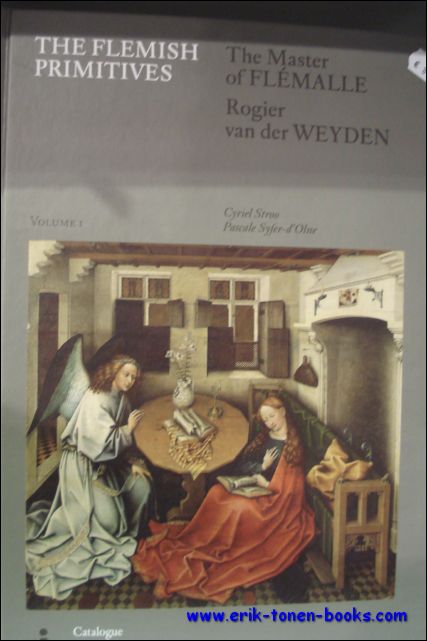
C. Stroo, P. Syfer-d'Olne
The Flemish Primitives I. The Master of Flemalle and Rogier van der Weyden Groups.
Brepols Publishers, 1996. hardback 308 pages ., incl. 67 colour ill. and 174 halftones, 210 x 297 mm, English Catalogue of Early Netherlandish Painting: Royal Museums of Fine Arts of Belgium (CENP 1)
. ISBN: 9782503505015 This catalogue includes paintings by the Master of Flemalle and Rogier van der Weyden Groups, now in the Royal Museums of Fine Arts of Belgium in Brussels, as well as thourough analyses and colour reproductions. The publication of the first in a five-volume scholarly catalogue of the 15th-century southern Netherlandish paintings in the Royal Museums of Fine Arts of Belgium in Brussels is a long awaited event. The museums' rich collection of Flemish Primitives boasts paintings by Rogier van der Weyden, Gerard David, Petrus Christus, Dirk Bouts, Hans Memling and Hieronymus Bosch. It also includes several important works by artists with provisional names from the schools of Tournai, Bruges and Brussels, such as the Master of Flemalle, the Master of the St Lucy Legend and the Master of the Life of Joseph. This multi-volume English-language catalogue will include approximately 100 paintings. Each work is the subject of a thourough analysis covering technical, historical, iconographical and stylistic aspects. The catalogue contains colour reproductions of each painting as well as other visual documentation from laboratory investigations (infrared reflectograms, ultra-violet fluorescence photographs; X-radiographs, macro photographs), photographs of related works and diagrams of the original frames. The wealth of documentation presented in this volumes makes it an indispensable reference for both scholars and amateurs interested in 15th-century painting. Buchnummer: 31316 | Preis: EUR 99.00
. ISBN: 9782503505015 This catalogue includes paintings by the Master of Flemalle and Rogier van der Weyden Groups, now in the Royal Museums of Fine Arts of Belgium in Brussels, as well as thourough analyses and colour reproductions. The publication of the first in a five-volume scholarly catalogue of the 15th-century southern Netherlandish paintings in the Royal Museums of Fine Arts of Belgium in Brussels is a long awaited event. The museums' rich collection of Flemish Primitives boasts paintings by Rogier van der Weyden, Gerard David, Petrus Christus, Dirk Bouts, Hans Memling and Hieronymus Bosch. It also includes several important works by artists with provisional names from the schools of Tournai, Bruges and Brussels, such as the Master of Flemalle, the Master of the St Lucy Legend and the Master of the Life of Joseph. This multi-volume English-language catalogue will include approximately 100 paintings. Each work is the subject of a thourough analysis covering technical, historical, iconographical and stylistic aspects. The catalogue contains colour reproductions of each painting as well as other visual documentation from laboratory investigations (infrared reflectograms, ultra-violet fluorescence photographs; X-radiographs, macro photographs), photographs of related works and diagrams of the original frames. The wealth of documentation presented in this volumes makes it an indispensable reference for both scholars and amateurs interested in 15th-century painting. Buchnummer: 31316 | Preis: EUR 99.00
Carla Compagno (ed)
Raimundus Lullus
Opera latina XLI (80-85)
Parisiis anno 1299 composita
Brepols, 2026. Hardback, cvi + 634 p., 155 x 245 mm, Illustrations:54 b/w, 4 col., 5 tables b/w., Language(s):Latin, Italian. *New
. ISBN: 9782503617961 This volume brings together the critical editions of the works composed by Ramon Llull in Paris in 1299. During this period, Llull engaged more closely with the university milieu and had the opportunity to devote particular attention to Euclidean geometry. He authored two geometric treatises: De quadratura et triangulatura circuli sive De principiis theologiae (op. 82) and Liber de geometria nova et compendiosa (op. 84). These texts are linked to the artistic work Brevis practica Tabulae generalis seu Ars compendiosa (op. 80), also written in the same year. This latter work builds upon the Tabula generalis (op. 53) and represents a version of the Ars that would serve as a reference for all subsequent works leading up to the Ars generalis ultima (op. 128). In 1299, Llull also composed the Ars electionis (op. 83), preserved in the manuscript Bernkastel-Kues, St. Nikolaus-Hospital, ms. 83, formerly belonging to Nicholas of Cusa, and the Liber super quaestiones Magistri Thomae Attrebatensis (op. 85), which addresses questions of natural philosophy alongside theological concerns. Finally, the volume includes the edition of the Quaestio de congruo adducto ad necessariam rationem (op. 81). Although apocryphal, this work has been edited as evidence of the reception and application of Llull?s argumentative style within the theological discourse of his time. Buchnummer: 69264 | Preis: EUR 425.00
. ISBN: 9782503617961 This volume brings together the critical editions of the works composed by Ramon Llull in Paris in 1299. During this period, Llull engaged more closely with the university milieu and had the opportunity to devote particular attention to Euclidean geometry. He authored two geometric treatises: De quadratura et triangulatura circuli sive De principiis theologiae (op. 82) and Liber de geometria nova et compendiosa (op. 84). These texts are linked to the artistic work Brevis practica Tabulae generalis seu Ars compendiosa (op. 80), also written in the same year. This latter work builds upon the Tabula generalis (op. 53) and represents a version of the Ars that would serve as a reference for all subsequent works leading up to the Ars generalis ultima (op. 128). In 1299, Llull also composed the Ars electionis (op. 83), preserved in the manuscript Bernkastel-Kues, St. Nikolaus-Hospital, ms. 83, formerly belonging to Nicholas of Cusa, and the Liber super quaestiones Magistri Thomae Attrebatensis (op. 85), which addresses questions of natural philosophy alongside theological concerns. Finally, the volume includes the edition of the Quaestio de congruo adducto ad necessariam rationem (op. 81). Although apocryphal, this work has been edited as evidence of the reception and application of Llull?s argumentative style within the theological discourse of his time. Buchnummer: 69264 | Preis: EUR 425.00
Catherine Gaullier-Bougassas (ed)
La fascination pour Alexandre le Grand dans les littératures européennes (Xe-XVIe siècle)
Réinventions d?un mythe
2015. 4 vols, hardback, 2572 pages, 156 x 234 mm, French. *NEW. ISBN: 9782503549309
La destinée d?Alexandre le Grand est à l?origine de l?un des mythes historico-littéraires qui a joui de la plus remarquable diffusion dans le temps et dans l?espace. Dans ce champ d?investigation très vaste, l?objet des trois premiers tomes de notre ouvrage n?est pas d?étudier la naissance de l?écriture sur le Macédonien, mais d?analyser comment la transmission et la réécriture des textes antiques en Europe, à partir du Xe siècle et jusque dans la première moitié du XVIe siècle, sont à l?origine d?une floraison d??uvres littéraires qui montrent la création d?une figure médiévale et renaissante d?Alexandre, à la fois une et multiple. Le corpus choisi s?inscrit donc dans une longue durée ? six siècles et demi? et il prend en compte les littératures de l?Europe occidentale (médio-latine, française, italienne, hispanique et aljamiada, hébraïque, anglaise, allemande, néerlandaise et scandinave) et celles de l?Europe orientale (slaves, avant tout tchèque, serbe et russe, byzantine avec son développement arménien). La nécessité s?impose en effet de dépasser les frontières entre les langues et les littératures, pour comprendre le sens des réinventions du mythe d?Alexandre à l?échelle du continent européen. Nos recherches ont permis d?analyser les modalités et les ressorts de cette effervescence créatrice sans précédent autour du souvenir d?Alexandre, de comparer les couleurs spécifiques de chacune des littératures européennes et de mettre au jour leurs interactions, en lien avec la naissance d?un vaste espace littéraire européen. Le quatrième tome de notre ouvrage constitue un répertoire des principaux textes du corpus européen sur Alexandre, qui rassemble les données factuelles les plus importantes sur chacun d?entre eux, notamment la liste des épisodes narrés, les manuscrits conservés, les éventuelles traductions, adaptations ou continuations, et la bibliographie. Cet ouvrage, réalisé par une équipe internationale et pluridisciplinaire de dix-sept chercheurs littéraires et historiens, dans un programme sélectionné par le Contrat Plan État Région (CPER), puis par l?Agence nationale de la recherche française (ANR), est la première étude d?ensemble du corpus européen médiéval sur Alexandre le Grand, de l?Espagne à la Russie, de la Grande-Bretagne à la Grèce byzantine. Ouvrage publié avec le soutien de l?Agence nationale de la Recherche (ANR-O9BLANC-0307-01, projet CREAMYTHALEX), de la Région Nord Pas de Calais (CPER 2009-2010), de la Maison européenne des sciences de l?homme et de la société ? MESHS (USR 3185), du CNRS et de l?Université de Lille 3. TABLE OF CONTENTS Introduction PREMIÈRE PARTIE Panorama des littératures européennes I ? La littérature latine II ? La littérature de langue française III ? La littérature italienne IV ? La littérature de languehispanique V ? Les littératures arabe et aljamiada VI ? La littérature hébraïque VII ? La littérature anglaise VIII ? La littérature allemande IX ? La littérature néerlandaise X ? La littérature scandinave XI ? La littérature tchèque XII ? Les littératures serbe et russe XIII ? La littérature arménienne XIV ? La littérature gréco-byzantine DEUXIÈME PARTIE La traduction et l?adaptation aux sources de la création sur Alexandre dans les littératures européennes I ? Les réécritures médio-latines du Roman d?Alexandre II ? L?Alexandreis de Gautier de Châtillon III ? L?Alexandre en français et ses univers littéraires multiples IV ? Langues et genres littéraires de l?Alexandre italien V ? Alexandre aux origines de la langue et de la littérature hispanique VI ? Entre langues arabe et hispaniques : la littérature aljamiada VII ? La littérature hébraïque VIII ? Lettres anglaises dans une culture plurilingue IX ? Alexandre ou l?affirmation d?une identité littéraire en langue allemande X ? Les adaptations néerlandaises XI ? Langues scandinaves et adaptations du latin sur Alexandre XII ? Alexandre et la littérature de langue tchèque dans la Bohême médiévale XIII? Aspects linguistiques et littéraires de l?Alexandre russe XIV ? Alexandre dans la tradition médiévale arménienne XV ? Mutations grecques tardives du Roman d?Alexandre TROISIÈME PARTIE Le pouvoir royal d?Alexandre: littérature et politique Les auteurs, leurs mécènes et leurs publics Introduction I ? La royauté d?Alexandre dans la littérature médio-latine II ? Les exemplarités politiques de l?Alexandre français et leurs mises à l?épreuve III ? Les multiples portraits du roi Alexandre en Italie IV ? Alexandre le Grand et les idéaux politiques de la cour de Castille et Léon V ? Le Rrekontamiento del rrey Ali?andere: un exempe de bon gouvernement musulman VI ? Un Alexandre « populaire » en Angleterre: écrire la royauté au pays des couronnes vacillantes VII ? L?image royale changeante d?Alexandre dans le context du Saint Empire VIII ? Le roi Alexandre dans l?espace scandinave IX ? Du Moyen Âge au Renouveau national tchèque, l?incroyable malléabilité d?Alexandre en Bohême X ? Le politique et le sacré: les facettes multiples du roi Alexandre en Russie XI ? Alexandre en Arménie: de l?historiographie à la christianisation XII ? Alexandre en Grèce: roi de guerre, homme de boue QUATRIÈME PARTIE L?Alexandre scientifique et aventurier Un imaginaire de la connaissance savante et des lointains exotiques Introduction I ? Alexandre explorateur des merveilles de l?Orient dans l?Historia de preliis II ? Rex illiteratus. Alexandre et le savoir, selon Gautier de Châtillon III ? Rêves de connaissance et d?exotisme : l?Alexandre aventurier en français IV ? Science, magie et exploration : Alexandre et la connaissance en Italie V ? La cristallisation des savoirs : Alexandre, vecteur de connaissances dans l?Espagne médiévale VI ? Alexandre aljamiado, rey ?abidor VII ? Un parcours anglais difficile, de la méfiance et du mépris VIII ? Savoir et merveilles dans les textes en langue allemande IX ? Alexandre en Orient : deux lectures opposées de la merveille en Russie X ?Voyages de l?Alexandre grec : le goût des merveilles et sa mise en question CINQUIÈME PARTIE Alexandre et la formation d?un espace littéraire européen I ? Rythmes comparés de la création littéraire sur Alexandre en Europe du Xe au XVIe siècle II ? Rayonnement des littératures et espace littéraire européen III ? Milieux d?écriture et publics IV ? Alexandre, entre histoire et fiction V ? Les raisons du succès : le prestige d?un héros toujours d?actualité Alexandre et l?illustration de nouvelles écritures et de nouvelles langues littéraires Bibliographie Index des oeuvres et des auteurs
Buchnummer: 68851 | Preis: EUR 180.00
Catherine Gaullier-Bougassas (ed)
Postérités européennes de Quinte-Curce
De l'humanisme aux Lumières (XIVe-XVIIIe siècle)
2018. Paperback, 628 pages, 156 x 234 mm, Illustrations:15 col., French, English, Italian. *NEW
. ISBN: 9782503578255 Pendant des siècles, Quinte-Curce a été l?un des historiens d'Alexandre le Grand les plus lus en Europe. Limitée jusqu'au XIVe siècle, la diffusion de ses Historiae s'amplifie grâce à la lecture et à la plume d'humanistes italiens ; les copies manuscrites, puis les traductions et les éditions se multiplient en Europe. Le présent ouvrage se donne pour objet d'étude leurs réceptions multiples du XIVe au XVIIIe siècle, c'est-à-dire durant les siècles de leur plus grand succès, il étudie les modalités de leur transmission et ses acteurs, ainsi que leurs exploitations politiques, historiques, linguistiques, littéraires et esthétiques. Au-delà de ses usages scolaires, l'oeuvre de Quinte-Curce a en effet suscité des jugements divers et des adaptions variées, qui interrogent le statut que les auteurs et les peintres lui ont donné, ainsi que les finalités de leurs appropriations. Alors que leur célébration comme modèle historique et stylistique domine jusqu'au XVIIe siècle, philosophes et historiens les contestent ensuite pour leurs inexactitudes et leurs enjolivements romanesques, même si ce rejet des savants n'entame pas leur succès auprès des écrivains, des lecteurs, des peintres et des artistes passionnés d'Alexandre. Les réceptions ont été d'autant plus nombreuses que les Historiae ont été prises dans des réflexions et des démarches créatrices multiples, durant plusieurs siècles : la pensée politique sur le pouvoir royal et la conquête ; les débats autour de l'écriture de l'histoire ; les réflexions sur les méthodes et les enjeux de la traduction ; la question de l'illustration des langues et l'élaboration de modèles stylistiques ; les transpositions et les recréations de l'histoire et d'un texte historique dans des genres littéraires fictionnels, le théâtre et le roman, et aussi dans les arts visuels, avec les illustrations des manuscrits et plus encore les peintures d'histoire. TABLE OF CONTENTS Catherine Gaullier-Bougassas, Lectures des Historiae de Quinte-Curce du XIVe au XVIIIe siècle Transmissions et lectures du texte latin : manuscrits, éditions et annotations Silverio Franzoni, La tradition manuscrite des Historiae de Quinte-Curce au Bas Moyen Âge Enrico Fenzi, Petrarca e Alessandro : dal mito alla storia Lucie Claire, Les éditions latines des Historiae de Quinte-Curce, de la princeps à Johannes Freinsheim Lucie Claire, Bibliographie des éditions latines des Historiae de Quinte-Curce, de la princeps à Johannes Freinsheim Alain Legros, Montaigne lecteur et annotateur de Quinte-Curce Les traductions des Historiae et les humanismes vernaculaires des XVe et XVIe siècles Marta Materni, Pier Candido Decembrio : un émule de Plutarque entraîné à l?école de Quinte-Curce Clara Pascual-Argente, Rosa Rodriguez, Ad Hispaniae fines : The Iberian Translations of Quintus Curtius Rufus and Fifteenth-century Vernacular Humanism Catherine Gaullier-Bougassas, Le projet humaniste de Vasque de Lucène dans sa traduction de Quinte-Curce : les Faicts et Gestes d?Alexandre le Grand (1468) Moreno Campetella, Les Historiae de Quinte-Curce : la traduction de Tommaso Porcacchi (1558) comme speculum principis. Étude des rapports entre la littérature classique et la propagande politique dans l?Italie du XVIe siècle Elena Koroleva, Traduire Quite-Curce à la fin du XVIe siècle : les préfaces de l?Histoire des faicts d?Alexandre le Grand, Roi de Macedoine de Nicolas Séguier (1598) Quinte-Curce et la réflexion sur la traduction du XVIe au XVIIIe siècle : illustration des langues et promotion de modèles d?écriture Margaret Bridges, Englishing Quintus Curtius in the Sixteenth and Seventeenth Centuries : John Brende and his Posterity Hélène Rabaey, Les traductions espagnoles de Quinte-Curce aux XVIe et XVIIe siècles, Dinah Ribard, Hélène Fernandez, Le « Quinte-Curce de Vaugelas » Hélène Michon, La réception du Quinte-Curce de Vaugelas : une unanimité ambiguë Florent Gabaude, La traduction allemande des Historiae de Quinte-Curce par Hans Friedrich von Lehsten Roland Behar, Le Quinte-Curce espagnol de Matheo Ibáñez de Segovia (1699) et sa réception au XVIIIe siècle : un manifeste stylistique ? Quinte-Curce et la réflexion sur l?écriture de l?histoire Pierre Briant, Quinte-Curce vs. Arrien : polémiques et controverses autour des sources de l?histoire d?Alexandre (XVIIe-XVIIIe siècles) Gabriel Simoneit, Legitimus historicus : Lipsius, Candidus and Puteanus on Curtius Rufus? historiographical skills Laétitia Lagarde, Du présage heureux à la mise en garde : Le portrait d?Alexandre le Grand par Puget de la Serre (1641) Frédéric Charbonneau, Les sciences auxiliaires et le statut de l?histoire dans la critique de Quinte-Curce à l?Académie des Inscriptions et Belles-Lettres Fiona McIntosh-Varjabédian, Quinte-Curce à l?aune de l?histoire critique et la réévaluation d?une lecture morale d?Alexandre dans The History of Ancient Greece de John Gillies Transpositions des Historiae dans les arts visuels, le théâtre et le roman Claudia Daniotti, Curtius Rufus, Pier Candido Decembrio and the Impact of the Historiae Alexandri Magni on Fifteenth-Century Italian Art Marianne Cojannot-Le Blanc, Traduire des dialogues en peinture ? L?histoire d?Alexandre de Le Brun à la lumière du Quinte-Curce de Vaugelas Liliane Picciola, Quinte-Curce, source de créativité pour les auteurs dramatiques français du XVIIe siècle Roberto Romagnino, Réécritures de l?éloquence. Quinte-Curce dans Cassandre de La Calprenède, au prisme des « beaux endroits » du roman Baudouin Millet, Postérités anglaises de Quinte-Curce : Les influences non avouées de Cassandre (1642-1645) de La Calprenède dans la tragédie de Nathaniel Lee The Rival Queens (1677) Index des noms des auteurs et des ?uvres Buchnummer: 68850 | Preis: EUR 70.00
. ISBN: 9782503578255 Pendant des siècles, Quinte-Curce a été l?un des historiens d'Alexandre le Grand les plus lus en Europe. Limitée jusqu'au XIVe siècle, la diffusion de ses Historiae s'amplifie grâce à la lecture et à la plume d'humanistes italiens ; les copies manuscrites, puis les traductions et les éditions se multiplient en Europe. Le présent ouvrage se donne pour objet d'étude leurs réceptions multiples du XIVe au XVIIIe siècle, c'est-à-dire durant les siècles de leur plus grand succès, il étudie les modalités de leur transmission et ses acteurs, ainsi que leurs exploitations politiques, historiques, linguistiques, littéraires et esthétiques. Au-delà de ses usages scolaires, l'oeuvre de Quinte-Curce a en effet suscité des jugements divers et des adaptions variées, qui interrogent le statut que les auteurs et les peintres lui ont donné, ainsi que les finalités de leurs appropriations. Alors que leur célébration comme modèle historique et stylistique domine jusqu'au XVIIe siècle, philosophes et historiens les contestent ensuite pour leurs inexactitudes et leurs enjolivements romanesques, même si ce rejet des savants n'entame pas leur succès auprès des écrivains, des lecteurs, des peintres et des artistes passionnés d'Alexandre. Les réceptions ont été d'autant plus nombreuses que les Historiae ont été prises dans des réflexions et des démarches créatrices multiples, durant plusieurs siècles : la pensée politique sur le pouvoir royal et la conquête ; les débats autour de l'écriture de l'histoire ; les réflexions sur les méthodes et les enjeux de la traduction ; la question de l'illustration des langues et l'élaboration de modèles stylistiques ; les transpositions et les recréations de l'histoire et d'un texte historique dans des genres littéraires fictionnels, le théâtre et le roman, et aussi dans les arts visuels, avec les illustrations des manuscrits et plus encore les peintures d'histoire. TABLE OF CONTENTS Catherine Gaullier-Bougassas, Lectures des Historiae de Quinte-Curce du XIVe au XVIIIe siècle Transmissions et lectures du texte latin : manuscrits, éditions et annotations Silverio Franzoni, La tradition manuscrite des Historiae de Quinte-Curce au Bas Moyen Âge Enrico Fenzi, Petrarca e Alessandro : dal mito alla storia Lucie Claire, Les éditions latines des Historiae de Quinte-Curce, de la princeps à Johannes Freinsheim Lucie Claire, Bibliographie des éditions latines des Historiae de Quinte-Curce, de la princeps à Johannes Freinsheim Alain Legros, Montaigne lecteur et annotateur de Quinte-Curce Les traductions des Historiae et les humanismes vernaculaires des XVe et XVIe siècles Marta Materni, Pier Candido Decembrio : un émule de Plutarque entraîné à l?école de Quinte-Curce Clara Pascual-Argente, Rosa Rodriguez, Ad Hispaniae fines : The Iberian Translations of Quintus Curtius Rufus and Fifteenth-century Vernacular Humanism Catherine Gaullier-Bougassas, Le projet humaniste de Vasque de Lucène dans sa traduction de Quinte-Curce : les Faicts et Gestes d?Alexandre le Grand (1468) Moreno Campetella, Les Historiae de Quinte-Curce : la traduction de Tommaso Porcacchi (1558) comme speculum principis. Étude des rapports entre la littérature classique et la propagande politique dans l?Italie du XVIe siècle Elena Koroleva, Traduire Quite-Curce à la fin du XVIe siècle : les préfaces de l?Histoire des faicts d?Alexandre le Grand, Roi de Macedoine de Nicolas Séguier (1598) Quinte-Curce et la réflexion sur la traduction du XVIe au XVIIIe siècle : illustration des langues et promotion de modèles d?écriture Margaret Bridges, Englishing Quintus Curtius in the Sixteenth and Seventeenth Centuries : John Brende and his Posterity Hélène Rabaey, Les traductions espagnoles de Quinte-Curce aux XVIe et XVIIe siècles, Dinah Ribard, Hélène Fernandez, Le « Quinte-Curce de Vaugelas » Hélène Michon, La réception du Quinte-Curce de Vaugelas : une unanimité ambiguë Florent Gabaude, La traduction allemande des Historiae de Quinte-Curce par Hans Friedrich von Lehsten Roland Behar, Le Quinte-Curce espagnol de Matheo Ibáñez de Segovia (1699) et sa réception au XVIIIe siècle : un manifeste stylistique ? Quinte-Curce et la réflexion sur l?écriture de l?histoire Pierre Briant, Quinte-Curce vs. Arrien : polémiques et controverses autour des sources de l?histoire d?Alexandre (XVIIe-XVIIIe siècles) Gabriel Simoneit, Legitimus historicus : Lipsius, Candidus and Puteanus on Curtius Rufus? historiographical skills Laétitia Lagarde, Du présage heureux à la mise en garde : Le portrait d?Alexandre le Grand par Puget de la Serre (1641) Frédéric Charbonneau, Les sciences auxiliaires et le statut de l?histoire dans la critique de Quinte-Curce à l?Académie des Inscriptions et Belles-Lettres Fiona McIntosh-Varjabédian, Quinte-Curce à l?aune de l?histoire critique et la réévaluation d?une lecture morale d?Alexandre dans The History of Ancient Greece de John Gillies Transpositions des Historiae dans les arts visuels, le théâtre et le roman Claudia Daniotti, Curtius Rufus, Pier Candido Decembrio and the Impact of the Historiae Alexandri Magni on Fifteenth-Century Italian Art Marianne Cojannot-Le Blanc, Traduire des dialogues en peinture ? L?histoire d?Alexandre de Le Brun à la lumière du Quinte-Curce de Vaugelas Liliane Picciola, Quinte-Curce, source de créativité pour les auteurs dramatiques français du XVIIe siècle Roberto Romagnino, Réécritures de l?éloquence. Quinte-Curce dans Cassandre de La Calprenède, au prisme des « beaux endroits » du roman Baudouin Millet, Postérités anglaises de Quinte-Curce : Les influences non avouées de Cassandre (1642-1645) de La Calprenède dans la tragédie de Nathaniel Lee The Rival Queens (1677) Index des noms des auteurs et des ?uvres Buchnummer: 68850 | Preis: EUR 70.00
Christian Meyer, Boudeau Océane
Paris, Bibliothèque nationale de France
Départements des manuscrits. Ancien fonds Latin (Lat. 1-8822)
Brepols, 2026. Paperback, xxiii + 568 p., 210 x 270 mm, Language(s):French. *New
. ISBN: 9782503617756 Le premier tome de ce neuvième volume décrit l?ensemble des manuscrits notés de l?ancien fonds latin de la Bibliothèque nationale de France (Lat. 1-8822) formé vers 1740 à partir des collections de la Bibliothèque royale des xviie et xviiie siècles. Il complète et développe la présentation sommaire de ce fonds décrit dans le septième volume de la présente collection (CMN 7, p. 155-240). Pour les manuscrits notés, cette collection doit en grande partie sa richesse aux très nombreux manuscrits originaires d?Aquitaine et d?Occitanie acquis au xviie siècle par Jean-Baptiste Colbert (1619-1683) ou en 1730 lors de la vente des manuscrits de la bibliothèque de l?abbaye Saint-Martial de Limoges. Ces manuscrits qui ont fait, depuis les années 1960, l?objet de nombreux travaux, sont ici désormais décrits et analysés dans leur intégralité. Ils révèlent l?ampleur et la richesse de la poésie liturgique élaborée en Aquitaine dont les collections régionales (cf. CMN 6) ne donnent qu?un très faible aperçu. Cette collection, enrichie au demeurant par de nombreux dons et acquisitions, complète aussi notre connaissance des répertoires liturgiques cultivés dans bien d?autres régions de France et dont les témoins ont été décrits dans les premiers volumes de la présente collection. Une introduction substantielle, enrichie d?annexes, aborde en particulier divers aspects des traditions musicales du domaine aquitain. Chaque notice comporte une description sommaire du manuscrit, une présentation des éléments permettant de préciser l?origine ou la provenance du volume, la date de sa rédaction et son histoire. Index général des pièces citées dans les notices. Buchnummer: 69219 | Preis: EUR 132.00
. ISBN: 9782503617756 Le premier tome de ce neuvième volume décrit l?ensemble des manuscrits notés de l?ancien fonds latin de la Bibliothèque nationale de France (Lat. 1-8822) formé vers 1740 à partir des collections de la Bibliothèque royale des xviie et xviiie siècles. Il complète et développe la présentation sommaire de ce fonds décrit dans le septième volume de la présente collection (CMN 7, p. 155-240). Pour les manuscrits notés, cette collection doit en grande partie sa richesse aux très nombreux manuscrits originaires d?Aquitaine et d?Occitanie acquis au xviie siècle par Jean-Baptiste Colbert (1619-1683) ou en 1730 lors de la vente des manuscrits de la bibliothèque de l?abbaye Saint-Martial de Limoges. Ces manuscrits qui ont fait, depuis les années 1960, l?objet de nombreux travaux, sont ici désormais décrits et analysés dans leur intégralité. Ils révèlent l?ampleur et la richesse de la poésie liturgique élaborée en Aquitaine dont les collections régionales (cf. CMN 6) ne donnent qu?un très faible aperçu. Cette collection, enrichie au demeurant par de nombreux dons et acquisitions, complète aussi notre connaissance des répertoires liturgiques cultivés dans bien d?autres régions de France et dont les témoins ont été décrits dans les premiers volumes de la présente collection. Une introduction substantielle, enrichie d?annexes, aborde en particulier divers aspects des traditions musicales du domaine aquitain. Chaque notice comporte une description sommaire du manuscrit, une présentation des éléments permettant de préciser l?origine ou la provenance du volume, la date de sa rédaction et son histoire. Index général des pièces citées dans les notices. Buchnummer: 69219 | Preis: EUR 132.00
Christine Bénévent, Isabelle Diu, Chiara Lastraioli (eds)
Gens du livre et gens de lettres à la Renaissance
Brepols, 2014. Paperback, 430 pages, 210 x 270 mm, Illustrations:75 b/w, 10 col., French, Italian. *NEW
. ISBN: 9782503552422 Les articles rassemblés dans ce volume portent sur l?ensemble des « gens du livre » et des « gens de lettres » à la Renaissance, pour reprendre les termes de Robert Darnton: graveurs de caractères, voyageurs, colporteurs, auteurs, philologues et traducteurs ? tous ces artisans ou ces érudits qui ont contribué, dans la fièvre des ateliers de libraires-imprimeurs, à la circulation des textes. Autour de la figure, à la fois centrale et excentrée, du « passeur de textes », capable de faire franchir au savoir obstacles et frontières, les contributeurs de ce livre se sont interrogés sur la matérialité des textes qui circulent, leurs itinéraires géographiques, leurs cheminements intellectuels; ils ont aussi cherché à retrouver les motivations de tous les acteurs qui ont patiemment rassemblé le patrimoine culturel de la Renaissance. Buchnummer: 68857 | Preis: EUR 65.00
. ISBN: 9782503552422 Les articles rassemblés dans ce volume portent sur l?ensemble des « gens du livre » et des « gens de lettres » à la Renaissance, pour reprendre les termes de Robert Darnton: graveurs de caractères, voyageurs, colporteurs, auteurs, philologues et traducteurs ? tous ces artisans ou ces érudits qui ont contribué, dans la fièvre des ateliers de libraires-imprimeurs, à la circulation des textes. Autour de la figure, à la fois centrale et excentrée, du « passeur de textes », capable de faire franchir au savoir obstacles et frontières, les contributeurs de ce livre se sont interrogés sur la matérialité des textes qui circulent, leurs itinéraires géographiques, leurs cheminements intellectuels; ils ont aussi cherché à retrouver les motivations de tous les acteurs qui ont patiemment rassemblé le patrimoine culturel de la Renaissance. Buchnummer: 68857 | Preis: EUR 65.00
Claudio Galderisi, Jean-Jacques Vincensini (eds)
La traduction entre Moyen Âge et Renaissance
Médiations, auto-traductions et traductions secondes
2017. Paperback, 268 pages, 156 x 234 mm, Illustrations:6 b/w, French. *NEW
. ISBN: 9782503569710 Après deux premiers volumes consacrés à la traduction intralinguale de l?ancien français au français moderne et aux questions concernant la traduction empêchée et la traduction manipulée, ce troisième ouvrage entend sillonner deux domaines mal connus de la traduction au Moyen Âge et à la Renaissance, domaines que seules les apparences distinguent : la réception des traductions médiévales au XVIe siècle et la pratique de l?auto-traduction. La Journée d?étude dont ce livre recueille les contributions a permis de dénouer les nombreux liens qui lient ces deux thématiques autour des notions centrales de rupture et de continuité, de fidélité idéalisée et d?infidélité impossible. D?un côté, on voit que le traducteur de la Renaissance qui a accès aux traductions médiévales est poussé à en prendre le contre-pied pour marquer une nouvelle subalternité alors que, en même temps, il peut en subir profondément l?influence. De l?autre côté, l?auto-traducteur est pensé comme incapable de se trahir lui-même. La relation au texte initial et, en conséquence, la contrainte de fidélité ne sont-elles pas différentes selon que le traducteur translate sa propre création ou qu?il auto-traduit une ?uvre originale ? Les quatre théorèmes exposés ici dans l?article d?ouverture de la section consacrée à l?auto-traduction au Moyen Âge et à la Renaissance montrent comment les caractères spécifiques de l?écriture médiévale et l?usage social et culturel des langues ont façonné la pratique de l?auto-traduction. Les liens sont serrés entre les deux thèmes du présent ouvrage : dans les deux cas, le traducteur est confronté à la question de la médiation de ce qui existe déjà, médiation qui ne peut se comprendre qu?au regard des aires culturelles privilégiées dans lesquelles elle s?effectue. Les deux volets de ce troisième volume jettent une lumière originale sur une des raisons internes de la traduction : elle ne peut vivre que dans un perpétuel renouvellement. Buchnummer: 68853 | Preis: EUR 45.00
. ISBN: 9782503569710 Après deux premiers volumes consacrés à la traduction intralinguale de l?ancien français au français moderne et aux questions concernant la traduction empêchée et la traduction manipulée, ce troisième ouvrage entend sillonner deux domaines mal connus de la traduction au Moyen Âge et à la Renaissance, domaines que seules les apparences distinguent : la réception des traductions médiévales au XVIe siècle et la pratique de l?auto-traduction. La Journée d?étude dont ce livre recueille les contributions a permis de dénouer les nombreux liens qui lient ces deux thématiques autour des notions centrales de rupture et de continuité, de fidélité idéalisée et d?infidélité impossible. D?un côté, on voit que le traducteur de la Renaissance qui a accès aux traductions médiévales est poussé à en prendre le contre-pied pour marquer une nouvelle subalternité alors que, en même temps, il peut en subir profondément l?influence. De l?autre côté, l?auto-traducteur est pensé comme incapable de se trahir lui-même. La relation au texte initial et, en conséquence, la contrainte de fidélité ne sont-elles pas différentes selon que le traducteur translate sa propre création ou qu?il auto-traduit une ?uvre originale ? Les quatre théorèmes exposés ici dans l?article d?ouverture de la section consacrée à l?auto-traduction au Moyen Âge et à la Renaissance montrent comment les caractères spécifiques de l?écriture médiévale et l?usage social et culturel des langues ont façonné la pratique de l?auto-traduction. Les liens sont serrés entre les deux thèmes du présent ouvrage : dans les deux cas, le traducteur est confronté à la question de la médiation de ce qui existe déjà, médiation qui ne peut se comprendre qu?au regard des aires culturelles privilégiées dans lesquelles elle s?effectue. Les deux volets de ce troisième volume jettent une lumière originale sur une des raisons internes de la traduction : elle ne peut vivre que dans un perpétuel renouvellement. Buchnummer: 68853 | Preis: EUR 45.00
Collective
AL. Rivista di studi di Anthologia Latina 16 (2025)
Journal of Philology applied to Late Latin Poetry
2026. Paperback, 216 pages, 160 x 240 mm, Illustrations:31 b/w, Italian text. *NEW ISBN: 9791280365620
Articoli Il De remediis salutaribus Salmasiano. Introduzione, edizione critica e traduzione (Paola Paolucci) Su una corruttela complessa: Anthologia Vossiana 54 (= 804 Riese = 72 Prato), 5-6. Questione di metodo (Loriano Zurli) La cagnolina Mus (Lux. 359 Happ) (Daniele Ceccarani) La musa ritrosa di Foca (Tiziana Privitera) AL 686 R.: uno pseudo-Virgilio? (Fabio Stok) AL 745 R2 De Vinalibus (= Claud. carm. min. app. 13 Hall = 7 Charlet): invettiva contro un astemio in un epigramma calendariale? (Alessia Prontera) Note e contributi Anthologia Vossiana 40 (= 447 R = 445 SB): un titolo probabilmente autentico (Loriano Zurli) Pervigilium Veneris, 74: «an insoluble crux»? (Loriano Zurli) Trasmissione manoscritta Sulla competenza del copista Salmasiano: lo scambio tra la legatura ?rI? e ?n? nella tradizione antica di anthologia Salmasiana (con una premessa metodologica). Appendice: una conferma del compendio ?er? (Loriano Zurli & Michele Carmeli) Sui legamenti di T nel Codex Salmasianus (Par. Lat. 10318) (Margherita De Laurentiis) Tradizione letteraria L?inafferrabile dio Vertumno. A proposito di Properzio, el. IV 2, 34 Heyworth e la poesia calendariale (Paola Paolucci) «Excerpta» Miscellanee umanistiche di autori classici: il progetto EXCERPTA (Orazio Portuese) Un testimone trascurato del Moretum: il ms. 10 di Nicosia (Giandamiano Bovi) Una tradizione ignota di AL 250-251 S.-B. e 630-631 R2 nel ms. 2 Qq D 71 della Biblioteca Comunale di Palermo (Alessio Ruta) Un negletto index metrico anonimo delle Satire di Giovenale nel Messan. F.V. 14 (XV sec.) (Orazio Portuese)
Buchnummer: 69201 | Preis: EUR 54.00
Collective
ALMAGEST, Journal for the Transnational History of Technoscience, 2025/2
Brepols, 2026. Paperback, 133 p., 160 x 240 mm, Language(s):English. *New
. ISBN: 9782503615264 TABLE OF CONTENTS Plog Nicola Vuolo, ?Data, diplomacy and deep time: building a map of international scientific collaborations in palaeontology? Articles Michel Blay, ?Nature, science, industrialisme. Aspects historiques et conceptuels? Alberto Bardi, ?Intelligence Beyond the Algorithms: Network Shape Intelligence and the Historicity of AI? Sandra Klos, ?Androcentrism in science. What autobiographies reveal about "men of science" in Austria, 1847-1955? Azeddine Cahi, ?The ?Copernican? astronomical revolution of Philolaus? Visual History Loukas Freris, ?Uncovering Greece?s Atomic History Through Postal Artifacts? Alma-guest: In Conversation: Abel Julio Gonzalez and Kapil Patil Buchnummer: 69257 | Preis: EUR 47.00
. ISBN: 9782503615264 TABLE OF CONTENTS Plog Nicola Vuolo, ?Data, diplomacy and deep time: building a map of international scientific collaborations in palaeontology? Articles Michel Blay, ?Nature, science, industrialisme. Aspects historiques et conceptuels? Alberto Bardi, ?Intelligence Beyond the Algorithms: Network Shape Intelligence and the Historicity of AI? Sandra Klos, ?Androcentrism in science. What autobiographies reveal about "men of science" in Austria, 1847-1955? Azeddine Cahi, ?The ?Copernican? astronomical revolution of Philolaus? Visual History Loukas Freris, ?Uncovering Greece?s Atomic History Through Postal Artifacts? Alma-guest: In Conversation: Abel Julio Gonzalez and Kapil Patil Buchnummer: 69257 | Preis: EUR 47.00
collective
Apocrypha 35
Brepols, 2026. Paperback, 259 pages, 156 x 234 mm, Illustrations:9 col.French, English, German. *New
. ISBN: 9782503615301 Pier Franco Beatrice ?, Chromatius of Aquileia and the Apocryphal Acts of the Apostles Vittorio Secco, Zur Frage eines möglichen Verweises auf die sogenannte Epistula Apostolorum bei Schenute von Atripe Witold Witakowski & Ewa Balicka-Witakowska, The Miracle of the Mixed Inks: A Rare Episode of the Ethiopic Infancy Gospel Lukas J. Dorfbauer, A New Witness to the Insular Tradition of the Apocryphal Letter Exchange between King Abgar and Jesus Christ Alexis Balmont, L?influence des écrits apocryphes dans les textes des manuscrits chrétiens chinois Takakusu et Tomioka Alain Corbellari, La Venjance Nostre Seigneur : un apocryphe en forme de chanson de geste Dario Bullitta, Date and Sources of the Transitus beatae Mariae Virginis by Pseudo-Joseph of Arimathea Buchnummer: 69202 | Preis: EUR 94.00
. ISBN: 9782503615301 Pier Franco Beatrice ?, Chromatius of Aquileia and the Apocryphal Acts of the Apostles Vittorio Secco, Zur Frage eines möglichen Verweises auf die sogenannte Epistula Apostolorum bei Schenute von Atripe Witold Witakowski & Ewa Balicka-Witakowska, The Miracle of the Mixed Inks: A Rare Episode of the Ethiopic Infancy Gospel Lukas J. Dorfbauer, A New Witness to the Insular Tradition of the Apocryphal Letter Exchange between King Abgar and Jesus Christ Alexis Balmont, L?influence des écrits apocryphes dans les textes des manuscrits chrétiens chinois Takakusu et Tomioka Alain Corbellari, La Venjance Nostre Seigneur : un apocryphe en forme de chanson de geste Dario Bullitta, Date and Sources of the Transitus beatae Mariae Virginis by Pseudo-Joseph of Arimathea Buchnummer: 69202 | Preis: EUR 94.00
collective
Bibliographie Internationale de l?Humanisme et de la Renaissance, 57 (2025, publ 2026)
Brepols, 2026. Paperback, lxxxi + 941 p., 156 x 234 mm, Language(s):French. *New
. ISBN: 9782503621227 Bibliographie Internationale de l?Humanisme et de la Renaissance, 57 (2025, publ 2026) Buchnummer: 69223 | Preis: EUR 426.00
. ISBN: 9782503621227 Bibliographie Internationale de l?Humanisme et de la Renaissance, 57 (2025, publ 2026) Buchnummer: 69223 | Preis: EUR 426.00
collective
European Medieval Drama 29 (2025)
Brepols, 2026. Paperback, 317 p., 156 x 234 mm, Illustrations:58 b/w, Language(s):English, German, French. *New
. ISBN: 9782503615462 When is a Prologue (Not) a Prologue? The Second Prologue in Cornelis van Ghistele?s Van Eneas en Dido CHARLOTTE STEENBRUGGE ?Die weil sie also sawgen hie, Das wir das geltlein von in schwaissen?. Überlegungen zur Adaption der ?Judensauskulptur? durch das Fastnachtspiel Der Herzog von Burgund aus dem letzten Viertel des 15. Jahrhunderts CLAUDIA DAIBER Winkelweiber, Kupplerin und Hurenwirt: Prostitution in den vorreformatorischen Nürnberger Fastnachtspielen BEATRICE VON LÜPKE Performances of La Condamnation de Banquet (around 1500) and Convivii Process (1593). Dining Culture, Theatre, and Music in Courtly and Urban Contexts HEIDY GRECO-KAUFMANN Blindman Farce as Comic Prosthesis in the Angers Résurrection Play MARLA CARLSON Die Bewahrung des ?Samens? trotz gefährdeter genealogischer Kontinuität im Isaac des Christoph Stymmelius CORA DIETL Incentivizing Devotion: Processional Play Pardons and Indulgenced Spectatorship in York and the Holy Roman Empire GLENN EHRSTINE Doe, Dragon, and Dove: Nonhuman Characters in Late Medieval Catalan Drama LENKE KOVACS Entre deux cultures: danse et mort en Provence et Catalogne FRANCESC MASSIP BONET Lo iudicio de la fine del mondo: une représentation sacrée illustrée SONIA MAURA BARILLARI Buchnummer: 69216 | Preis: EUR 109.00
. ISBN: 9782503615462 When is a Prologue (Not) a Prologue? The Second Prologue in Cornelis van Ghistele?s Van Eneas en Dido CHARLOTTE STEENBRUGGE ?Die weil sie also sawgen hie, Das wir das geltlein von in schwaissen?. Überlegungen zur Adaption der ?Judensauskulptur? durch das Fastnachtspiel Der Herzog von Burgund aus dem letzten Viertel des 15. Jahrhunderts CLAUDIA DAIBER Winkelweiber, Kupplerin und Hurenwirt: Prostitution in den vorreformatorischen Nürnberger Fastnachtspielen BEATRICE VON LÜPKE Performances of La Condamnation de Banquet (around 1500) and Convivii Process (1593). Dining Culture, Theatre, and Music in Courtly and Urban Contexts HEIDY GRECO-KAUFMANN Blindman Farce as Comic Prosthesis in the Angers Résurrection Play MARLA CARLSON Die Bewahrung des ?Samens? trotz gefährdeter genealogischer Kontinuität im Isaac des Christoph Stymmelius CORA DIETL Incentivizing Devotion: Processional Play Pardons and Indulgenced Spectatorship in York and the Holy Roman Empire GLENN EHRSTINE Doe, Dragon, and Dove: Nonhuman Characters in Late Medieval Catalan Drama LENKE KOVACS Entre deux cultures: danse et mort en Provence et Catalogne FRANCESC MASSIP BONET Lo iudicio de la fine del mondo: une représentation sacrée illustrée SONIA MAURA BARILLARI Buchnummer: 69216 | Preis: EUR 109.00
collective
Giornale storico della letteratura italiana, Volume 202, Issue 679 / 2025
Brepols, 2026. Paperback, 164 p., 156 x 234 mm, Language(s):Italian. *New
. LAURA PAOLINO, Lingue, atomi e faville per il poeta incoronato. Il sonetto di Giacomo Colonna a Petrarca ?Se le parti del corpo mio destrutte? GRETA M.A. REDAELLI, Un nuovo autografo di ?Dualismo? di Arrigo Boito ROBERTO GALBIATI, Quattro ?Visite? di Montale VARIETÀ ROSARIO LANCELLOTTI, Sul carteggio di Giovanni Della Casa con Piero Vettori: due autografi ritrovati NOTE E DISCUSSIONI PAOLO CHERCHI, Gilbert Cousin e la fonte di un ?Dialogo? di Lucio Paolo Rosello ELISABETTA GRAZIOSI, Nozze in casa Carducci: Cafiero, Costa, Kuliscioff concordi e discordi BABIO DANELON, «Quella poi, la vita, è tutta una combinazione». La scena coniugale in ?Filumena Marturano? COMUNICAZIONI E APPUNTI FIAMMETTA PAPI, Dispute sulla cortesia nella Siena del Rinascimento BOLLETTINO BIBLIOGRAFICO BASINIO DA PARMA, Astronomicon libri duo, a cura di ANNA GABRIELLA CHISENA (Rita Bennardello). ? DONATO GIANNOTTI, Della republica ecclesiastica, a cura di WILLIAM J. CONNEL (Jean-Louis Fournel). ? GIOSUE CARDUCCI, La libertà perpetua di San Marino, a cura di ANGELO COLOMBO (Federica Marinoni). ? IER VINCENZO, Saggi e note su Saba (Stefano Carrai). ANNUNZI, a cura di, STEFANO CARRAI, MARIA LUISA DOGLIO, ENRICO MATTIODA, LUCA MAZZONI Si parla di: E. MOETTI. ? G.B. DELLA PORTA. ?Erudizione ed eruditi. ? Dal Barocco a Manzoni. ? «Atti e memorie dell?Arcadia». ? L.A. MURATORI. ? «Epistolographia». ? A. BOITO. ?F. FORTINI-V.SERENI. RIASSUNTI - ABSTRACTS Buchnummer: 69258 | Preis: EUR 37.50
. LAURA PAOLINO, Lingue, atomi e faville per il poeta incoronato. Il sonetto di Giacomo Colonna a Petrarca ?Se le parti del corpo mio destrutte? GRETA M.A. REDAELLI, Un nuovo autografo di ?Dualismo? di Arrigo Boito ROBERTO GALBIATI, Quattro ?Visite? di Montale VARIETÀ ROSARIO LANCELLOTTI, Sul carteggio di Giovanni Della Casa con Piero Vettori: due autografi ritrovati NOTE E DISCUSSIONI PAOLO CHERCHI, Gilbert Cousin e la fonte di un ?Dialogo? di Lucio Paolo Rosello ELISABETTA GRAZIOSI, Nozze in casa Carducci: Cafiero, Costa, Kuliscioff concordi e discordi BABIO DANELON, «Quella poi, la vita, è tutta una combinazione». La scena coniugale in ?Filumena Marturano? COMUNICAZIONI E APPUNTI FIAMMETTA PAPI, Dispute sulla cortesia nella Siena del Rinascimento BOLLETTINO BIBLIOGRAFICO BASINIO DA PARMA, Astronomicon libri duo, a cura di ANNA GABRIELLA CHISENA (Rita Bennardello). ? DONATO GIANNOTTI, Della republica ecclesiastica, a cura di WILLIAM J. CONNEL (Jean-Louis Fournel). ? GIOSUE CARDUCCI, La libertà perpetua di San Marino, a cura di ANGELO COLOMBO (Federica Marinoni). ? IER VINCENZO, Saggi e note su Saba (Stefano Carrai). ANNUNZI, a cura di, STEFANO CARRAI, MARIA LUISA DOGLIO, ENRICO MATTIODA, LUCA MAZZONI Si parla di: E. MOETTI. ? G.B. DELLA PORTA. ?Erudizione ed eruditi. ? Dal Barocco a Manzoni. ? «Atti e memorie dell?Arcadia». ? L.A. MURATORI. ? «Epistolographia». ? A. BOITO. ?F. FORTINI-V.SERENI. RIASSUNTI - ABSTRACTS Buchnummer: 69258 | Preis: EUR 37.50
collective
Journal for the History of Knowledge 6 (2025)
Brepols, :2026. Paperback, 328 p., 178 x 254 mm, Illustrations:4 b/w, 28 col., Language(s):English. *New
. ISBN: 9782503615592 Special Issue: Knowledge and Power: Projecting the Modern World Vera Keller, Ted McCormick and Kelly J. Whitmer, Projects in the History of Knowledge. An Introduction Vera Keller, Great Designs and Global Colonialism. Sir Balthazar Gerbier (1592?1663), El Dorado, and the Transnational Politics of Knowledge Ted McCormick, Reclaimed Land. Natural History and Seventeenth-Century Projecting, with Particular Attention to Ireland Kathleen S. Murphy, Projects of Nutmeg and Indigo. Knowledge and Ignorance in a Late-Seventeenth-Century Slaving Company William Cavert, The Improvement Police. Nehemiah Grew on Knowledge, Nature, and Power Kelly J. Whitmer, Youth, Happiness, and Institutional Projects in the Early Eighteenth-Century German Lands Keith Pluymers, Regulating the City. Streetscaping, Sewers, and the Project of Universal Drainage in Philadelphia Reut Ullman, Projecting Chemistry in Lomonosov?s Russia (1741?1765) Meagan Wierda, Population Projections. Demographic Fearmongering and "Uterine Colonization" During the Age of Gradual Emancipation Christine Keiner, The Nuclear Sea-Level Canal Engineering Feasibility Field Studies and Epistemic Risk in the Darién, 1965?1970 Matthew David Mitchell, Afterword. Projectors and the Manipulation of Power/Knowledge in the Rise of Capitalism Research Articles Björn Lundberg, Global Knowledge Rituals. United Nations Day and the Global Fifties Eva Andersen, From Spectacle to Specimen. Exploring Itinerant Showpeople?s Roles in Circulating Natural History Knowledge in Nineteenth-Century Western Europe Alexander Campolo, Loss. A Notion of Error in Machine Learning Buchnummer: 69260 | Preis: EUR 96.00
. ISBN: 9782503615592 Special Issue: Knowledge and Power: Projecting the Modern World Vera Keller, Ted McCormick and Kelly J. Whitmer, Projects in the History of Knowledge. An Introduction Vera Keller, Great Designs and Global Colonialism. Sir Balthazar Gerbier (1592?1663), El Dorado, and the Transnational Politics of Knowledge Ted McCormick, Reclaimed Land. Natural History and Seventeenth-Century Projecting, with Particular Attention to Ireland Kathleen S. Murphy, Projects of Nutmeg and Indigo. Knowledge and Ignorance in a Late-Seventeenth-Century Slaving Company William Cavert, The Improvement Police. Nehemiah Grew on Knowledge, Nature, and Power Kelly J. Whitmer, Youth, Happiness, and Institutional Projects in the Early Eighteenth-Century German Lands Keith Pluymers, Regulating the City. Streetscaping, Sewers, and the Project of Universal Drainage in Philadelphia Reut Ullman, Projecting Chemistry in Lomonosov?s Russia (1741?1765) Meagan Wierda, Population Projections. Demographic Fearmongering and "Uterine Colonization" During the Age of Gradual Emancipation Christine Keiner, The Nuclear Sea-Level Canal Engineering Feasibility Field Studies and Epistemic Risk in the Darién, 1965?1970 Matthew David Mitchell, Afterword. Projectors and the Manipulation of Power/Knowledge in the Rise of Capitalism Research Articles Björn Lundberg, Global Knowledge Rituals. United Nations Day and the Global Fifties Eva Andersen, From Spectacle to Specimen. Exploring Itinerant Showpeople?s Roles in Circulating Natural History Knowledge in Nineteenth-Century Western Europe Alexander Campolo, Loss. A Notion of Error in Machine Learning Buchnummer: 69260 | Preis: EUR 96.00
collective
Nottingham Medieval Studies 69 (2025)
Special Issue: Spirits and Spirituality in Medieval England from the Tenth to the Fourteenth Century, edited by Eleni Ponirakis
Brepols, 2026. Hardback, 263 pages, 156 x 234 mm, Illustrations:5 b/w, 2 col. English text. *New
. ISBN: 9782503616698 Foreword ? Louise Nelstrop Introduction ? Eleni Ponirakis Part One. Monastic Poetics and Mystical Union The Exeter Book?s Fish in the River Riddle and its Contemplative Turn ? MICHAEL TRESCHOW Cynewulf?s Resonance within the Vercelli Book: Linguistic and Spiritual Perspectives Performed across Poetry and Prose ? JACOB W. RUNNER Gathering Up The Fragments: Homiletic Fragment II ? PAUL CAVILL Part Two. Mystical Devotion and the Maternal Divine Early English Mariology in Genesis A, the Order of the World, the Alfredian ?Boethius? Metre 29, the Apostles? Creed and the Advent Lyrics: ??????, ????? ?????????? ? TATYANA SOLOMONIK-PANKRASHOVA Seeking the Mother-God: Divine Maternity in Islamic and Christian Contemplative Texts ? AYOUSH LAZIKANI Love Conquers All: Chaucer?s Prioress as a Mystic ? RICHARD NORTH Part Three. Presence in Absence: Spirits of the Dead in Space and Time Temporal and Spiritual Disjuncture in The Prioress?s Tale ? LUCY TURTON The Depiction of Ghosts in Two Middle English Romances ? LIDÓN PRADES-YERVES Gasts and Gaps: Making Space for Souls in the Middle English Gast of Gy and an Illumination in Simon Marmion?s La Vision de l'âme de Guy de Thurno ? CORINNE CLARK Buchnummer: 69204 | Preis: EUR 85.00
. ISBN: 9782503616698 Foreword ? Louise Nelstrop Introduction ? Eleni Ponirakis Part One. Monastic Poetics and Mystical Union The Exeter Book?s Fish in the River Riddle and its Contemplative Turn ? MICHAEL TRESCHOW Cynewulf?s Resonance within the Vercelli Book: Linguistic and Spiritual Perspectives Performed across Poetry and Prose ? JACOB W. RUNNER Gathering Up The Fragments: Homiletic Fragment II ? PAUL CAVILL Part Two. Mystical Devotion and the Maternal Divine Early English Mariology in Genesis A, the Order of the World, the Alfredian ?Boethius? Metre 29, the Apostles? Creed and the Advent Lyrics: ??????, ????? ?????????? ? TATYANA SOLOMONIK-PANKRASHOVA Seeking the Mother-God: Divine Maternity in Islamic and Christian Contemplative Texts ? AYOUSH LAZIKANI Love Conquers All: Chaucer?s Prioress as a Mystic ? RICHARD NORTH Part Three. Presence in Absence: Spirits of the Dead in Space and Time Temporal and Spiritual Disjuncture in The Prioress?s Tale ? LUCY TURTON The Depiction of Ghosts in Two Middle English Romances ? LIDÓN PRADES-YERVES Gasts and Gaps: Making Space for Souls in the Middle English Gast of Gy and an Illumination in Simon Marmion?s La Vision de l'âme de Guy de Thurno ? CORINNE CLARK Buchnummer: 69204 | Preis: EUR 85.00
collective
Revue d'Histoire de l'Eglise de France, vol. 111 (267)
Brepols, 2026. Paperback, 316 pages, 155 x 240 mm. FR. *NEW.
Michèle GAILLARD et Françoise PRÉVOT Retour sur la liste des évêques signataires du pseudo-concile de Cologne de 346 Yoann PAYSSERAND Les Assemblées générales du clergé et la caisse des pasteurs convertis sous l?édit de Nantes (1598-1685) Philippe CHENAUX Sortir de la guerre. Les débuts difficiles de la nonciature Roncalli (1944-1946)
Buchnummer: 69195 | Preis: EUR 50.00
collective
Yearbook of Langland Studies 39 (2025)
:2026. Hardback, 164 pages, 156 x 234 mm, illustrations: 4 b/w, English text. *NEW. ISBN: 9782503621289
TABLE OF CONTENTS Commentary Degrees of Embodiment, or The Personifications? New Clothes Keynote Address, Eighth International Piers Plowman Society Conference, London KATHARINE BREEN Typological Time in Piers Plowman ANNE SCHUURMAN Langlandian Ecclesiology in The Lantern of Li?t LORA WALSH What Owen Rogers Really Did to Piers Plowman THOMAS A. PRENDERGAST Note Half-Acre Half Biscuit: Langland in the Lyrics of Nigel Blackwell BEN PARSONS Reviews Literatures of the Hundred Years War (edited by Daniel Davies and R. D. Perry) JOANNA BELLIS Preaching and Narrative in ?Piers Plowman? (by Alastair Bennett) MARY RASCHKO The Making of Felony Procedure in Middle English Literature (by Elise Wang) ARVIND THOMAS Apocalyptic Ecologies: From Creation to Doom in Middle English Literature (by Shannon Gayk) JOHN YARGO **** Annual Bibliography, 2024 PATRICK OUTHWAITE
Buchnummer: 69196 | Preis: EUR 115.00